In 2025, wrist-wearable devices are no longer just fitness toys.
They track your health, guide your workouts, receive messages, make payments,
and even replace part of your smartphone usage.
But one question keeps coming back:
“Should I buy a smartwatch or a smart band? Aren’t they basically the same?”
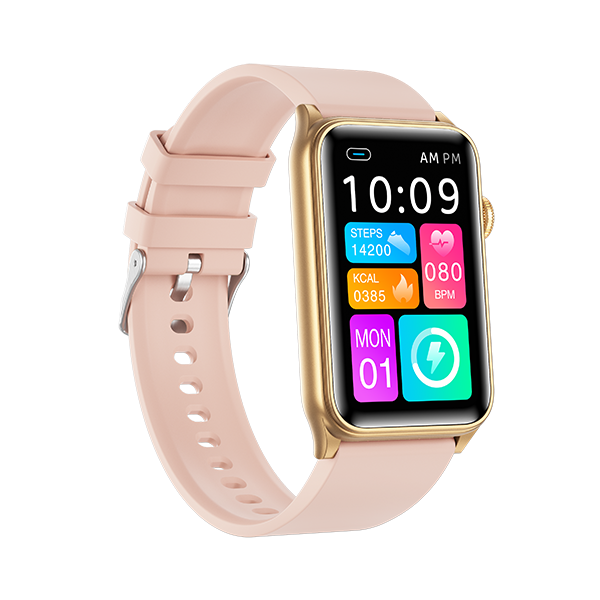
Actually, no. Their purpose, capability and user group are completely
different.
|
Core Position |
Smart Band |
Smartwatch |
|
Product philosophy |
Lightweight health tracker |
Wrist-based smart terminal |
|
Main focus |
Daily health & basic fitness |
Communication, apps, payments, navigation, sports analysis |
|
Works without phone? |
❌ No |
✅ Yes (with eSIM, GPS, apps) |

Simple conclusion:
· Smart Band = Helps you see your health data
· Smartwatch = Helps you do things without your phone
|
Feature Category |
Smart Band (2025 standard) |
Smartwatch (independent OS / eSIM) |
|
Messages & Calls |
Only notification view |
Call, reply messages, voice assistant |
|
Apps |
Fixed system, no app install |
Music, maps, payment, third-party apps |
|
Health tracking |
HR, SpO₂, sleep, steps |
ECG, blood pressure trend, body temp, stress, glucose risk |
|
Sports tracking |
Basic sports + phone GPS |
Built-in GPS, VO₂Max, running form, swimming stroke |
|
Interaction |
Touch only |
Touch + crown + gestures + voice |
2025
trend:
A new category — “long-battery smartwatches” — keeps smartwatch functions (GPS,
NFC, message reply) but offers 7–14 days of battery life. They sit between a
band and a full smartwatch.
· Ultra-light (15–30g)
· Minimal design
· Easy to wear while sleeping
· Suited for 24-hour health tracking
·
Smartwatch
· 40–60g with a stronger presence
· Premium materials (metal / ceramic / sapphire)
· Better for business, outdoor, lifestyle & fashion
If your wrist is small or you hate heavy devices while sleeping — a band feels almost invisible.
|
Type |
Typical Battery |
What You Get |
|
Smart Band |
7–21 days |
Charge once in 1–2 weeks |
|
Full Smartwatch |
1–5 days |
Powerful functions, higher power draw |
|
Long-battery Smartwatch |
7–14 days |
Balance of function + endurance |
Reality check:
Many smartwatches only reach “14 days battery” in power-saving mode — with most
smart features turned off.

|
Category |
Typical Price |
Best For |
|
Basic Smart Band |
$10–$30 |
Students, light users |
|
NFC / Advanced Bands |
$30–$60 |
Sleep tracking + contactless payment |
|
Entry Smartwatch |
$60–$120 |
Notifications, calls, casual fitness |
|
Mainstream Smartwatch |
$150–$300 |
Health + sport + messaging + GPS |
|
Premium Smartwatch |
$400+ |
Business, pro athletes, outdoor users |
Price is not about “better or worse”.
It’s about whether
you need phone-free usage.
Choose
a Smart Band if you:
1.Want sleep/heart health tracking
2.Prefer light and comfortable
3.Charge once every 1–2 weeks
4.Only need to read notifications
5.Budget-friendly choice
Choose
a Smartwatch if you:
1. Run, cycle, swim, hike
2. Want to answer messages or calls without phone
3.Need NFC payment, voice assistant, GPS
4. Care about business / fashion appearance
Choose
a Long-battery Smartwatch if you:
1.Want more functions than a band
2.But don’t want to charge every day
If you only check sleep, steps, heart rate → Smart Band is enough
If you want your wrist to replace part of your phone → Smartwatch makes a big difference
One
line summary:
A smart band
records your day.
A smartwatch lets
you manage your day.
Buy based on your lifestyle — not the hype.