Early smartwatches measured and displayed. Step counts, heart rate readings and sleep summaries stayed on the watch until the user scrolled past them. That model no longer fits most products. A smartwatch today is one node in a chain that includes a phone, a mobile app, a cloud account, and in many projects, third-party platforms.
Smartwatch data synchronization is the process of transferring supported device data between a smartwatch, a connected mobile application, and other compatible platforms.
The market explains why buyers should care. U.S. National Health Interview Survey data published in JAMA shows the share of adults using wearables to monitor health rose from 30.2% in 2020 to 41.1% in 2024, while only 19.2% of adults shared wearable data with a health professional in 2024. A 2026 U.S. Government Accountability Office assessment of wearable technology reached a similar conclusion, noting open questions around device data reliability and integration with other systems.
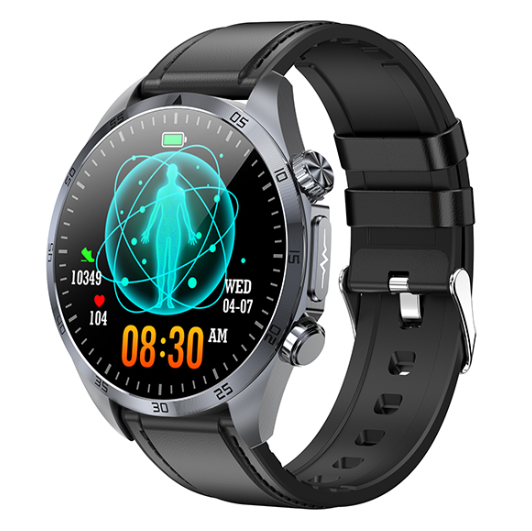
Device adoption is running ahead of data flow. For OEM buyers, the risk is concrete: a watch that cannot sync its data to the target app, or that syncs incompletely, breaks the product promise even when its sensors perform well.
Specifying synchronization requirements at the model-selection stage, before firmware and tooling decisions lock in, costs a conversation. Discovering the gap after tooling costs a project. This article explains how smartwatch data synchronization works, what data a custom smartwatch can sync, which sync-related trends matter in 2026, and how GEYAN evaluates data sync requirements in OEM/ODM smartwatch projects.
Data synchronization in custom smartwatches involves transferring supported wearable data between devices, mobile applications, and compatible cloud platforms. The actual synchronization method depends on the smartwatch hardware, firmware, communication protocols, and software architecture. Most projects follow a four-stage path.
The watch connects to a phone, typically over Bluetooth. Sensor data and device status collected on the watch transfer to the companion app. The connection layer handles pairing, reconnection after signal loss, and incremental updates, so the app receives new records without re-transferring the full history each time.
The app receives the data, stores it on the phone, and presents it: history charts, daily summaries, workout records, device settings. This is where users actually see their wearable data. App quality and the design of the data screens are common customization points in OEM projects, and they sit directly on top of the sync layer.
Where the project requires it, the app uploads qualifying data to a cloud account. This enables cross-device access, data backup, and account-based services such as long-term trend storage. Cloud sync needs network connectivity and a backend service; it is an optional layer decided by the product plan, not a default feature of every watch.
Some projects need watch data inside another system: a corporate wellness portal, a fitness platform, or the customer's own app. Integration runs through APIs, SDKs, or documented data interfaces, with agreed data formats, permission scopes, and sync mechanisms. Feasibility depends on the specific smartwatch model and its supported protocols.
The table below summarizes the four mechanisms:
Synchronization methods compared
|
Synchronization Method |
Main Purpose |
Typical Application |
|
Bluetooth Sync |
Device-to-phone communication |
Smartwatch and mobile app |
|
Cloud Sync |
Remote data storage and access |
User data management |
|
API Integration |
Software-to-software data exchange |
Third-party platforms |
|
SDK Integration |
Development and application integration |
Custom mobile applications |
The data a watch can sync is set by its sensors, firmware, and protocol support. A responsible specification conversation starts from the model, not the product category.
Synchronizable data types (subject to model support)
|
Data Type |
Possible Synchronization Content |
|
Heart Rate Data |
Heart rate records and trends |
|
Blood Oxygen Data |
SpO2 readings, where supported |
|
Sleep Data |
Sleep duration and sleep stages, where supported |
|
Activity Data |
Steps, calories and activity records |
|
Sports Data |
Workout duration and exercise records |
|
Device Data |
Battery status, connection status and device settings |
|
User Information |
User profiles and preferences, subject to permissions |
For each data type, the questions to ask a supplier are the same. Where does the data originate: which sensor, sampled at what rate? How does it travel: which protocol, triggered how? What does the app receive: raw records, processed summaries, or both? And what can a brand or platform developer build on top of it?
Heart rate is the common base across smartwatch platforms. Activity data such as steps and calories is nearly universal. SpO2, sleep staging, blood pressure and ECG depend on the sensor set of the specific model.
GEYAN's health and fitness watch lines support heart rate, SpO2, sleep monitoring, step and calorie tracking, and on selected models blood pressure and ECG. What synchronizes to the app, and in what format, is confirmed per model during project evaluation.
One point worth stating plainly: a feature list is not a sync specification. Two watches can both claim heart rate monitoring while one syncs minute-by-minute records to the app and the other syncs a daily summary. The difference decides what your app can display and what your platform can ingest, so it belongs in the written specification before sample orders.
Four trends now shape what buyers should expect from a smartwatch data pipeline: continuous tracking, multi-device setups, AI analysis running on synced history, and cross-platform interoperability under stricter privacy expectations.
Wearable health data is shifting from point-in-time readings toward long-term records. A single heart rate reading has limited value; months of resting heart rate data show trends a user, an app, or a coach can act on. This changes what buyers should expect from sync: regular automatic synchronization that accumulates history without user intervention, and app and cloud layers that can store and present years of records.
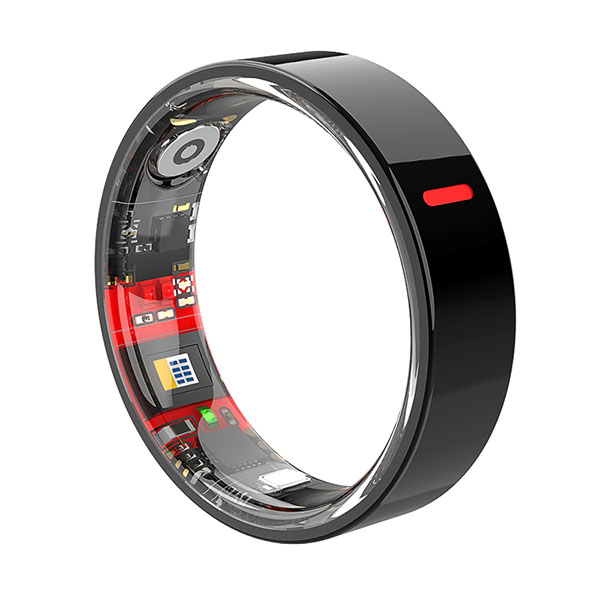
Users increasingly own more than one wearable: a watch during the day, a smart ring at night. Multi-device setups need data consolidated into a single account view, with consistent records across devices. For brands, this argues for platform-level thinking at selection time: whether a supplier's watch and ring data can land in the same app and cloud account, and how conflicts between devices are resolved.
AI features in consumer health apps, from trend analysis to personalized training suggestions, run on synchronized history, not on live sensor streams. Data synchronization is the transport process; AI analysis is an application of the synced data. The two are often conflated in marketing copy.
For a sourcing decision, the relevant question is whether the watch can deliver complete, well-structured historical data to the platform where analysis happens.
Health data now moves across operating systems and app boundaries. Apple's HealthKit lets apps read and write health and fitness data under explicit user authorization, with permissions defined per data type. Google's Health Connect gives Android a comparable mechanism for sharing health data between apps.
For custom watch projects, cross-platform reach means the companion app and its data model must be able to export or exchange data with these frameworks, subject to each platform's permission requirements.
Health data is sensitive data. Sync design now includes authorization (what the user consented to share), access control (which app can read which data type), protection in transit and at rest, and mechanisms for users to review and delete their data.
Regional privacy regulation, from GDPR in Europe to state-level health privacy laws in the United States, shapes what a product may collect and sync. Apple's developer requirements for HealthKit make the pattern explicit: apps must request authorization for each data type and respect the user's permission decisions. Buyers building health products should treat privacy design as a supplier-evaluation criterion, not a post-launch patch.
Six criteria cover most evaluation scenarios:
1. Bluetooth Connectivity. Does the watch support the Bluetooth version and profile your project needs, and how does it reconnect after the phone moves out of range?
2. Mobile App Compatibility. Which iOS and Android versions does the companion app support, and is the app available in your target markets' app stores?
3. Data Synchronization Frequency. Does the watch sync continuously, on a schedule, on demand, or a combination? Does the trigger model match how your users will consume the data?
4. API and SDK Availability. For the specific model under evaluation, does the supplier provide protocol documentation, an SDK, or API access? Which data fields are exposed?
5. Data Storage and Cloud Support. Does the solution include local caching on the phone, cloud storage under user accounts, and a data recovery path?
6. Customization Flexibility. Can firmware, app behavior, and sync behavior be adjusted for your project, or is the sync pipeline fixed?
|
Before selecting a smartwatch OEM supplier, buyers should test the actual data synchronization process using product samples rather than relying only on a feature list. |
A sample test plan for sync should cover connection stability across a full day of normal use, data completeness, sync timing, and behavior after the Bluetooth link drops and recovers. These tests are cheap at the sample stage and expensive after mass production.
Sync requirements differ by business model, and the right watch platform differs with them.
Data sync needs by customer type
|
Customer Type |
Data Sync Requirement |
Product Application |
|
Wearable Brands |
App data sync, activity records |
Branded smartwatches |
|
Health & Wellness Companies |
Health data recording and display |
Health management products |
|
Fitness Platforms |
Workout data, activity records |
Fitness service platforms |
|
IoT Solution Providers |
Device data and platform connection |
IoT projects |
|
Smartwatch Distributors |
App connectivity, user data experience |
Private label and wholesale products |
|
Software Developers |
SDK, API, data interfaces |
Third-party applications |
A wearable brand launching a consumer watch cares about the out-of-box app experience: fast pairing, automatic sync, clear history screens. A wellness company running corporate health programs cares about aggregated data reaching its management dashboard. A software developer building on top of watch data cares about interface documentation and data field availability.
A single watch platform cannot serve all of them equally well, so supplier selection should start from the business scenario and then narrow to the model.
Founded in 2012, Shenzhen Geyan Technology Innovation Co., Ltd. is a national high-tech enterprise specializing in the research, design, production, sales and after-sales service of smart wearable devices, with a focus on OEM and ODM smartwatch customization.
GEYAN was among the early entrants in China's smartwatch industry and initiated the founding of the Smart Wearable Industry Association and the Chip Industry Promotion Association, serving as a standing committee member in both.
GEYAN runs independent R&D alongside its own production facilities, covering product design, firmware development, precision manufacturing and quality control.
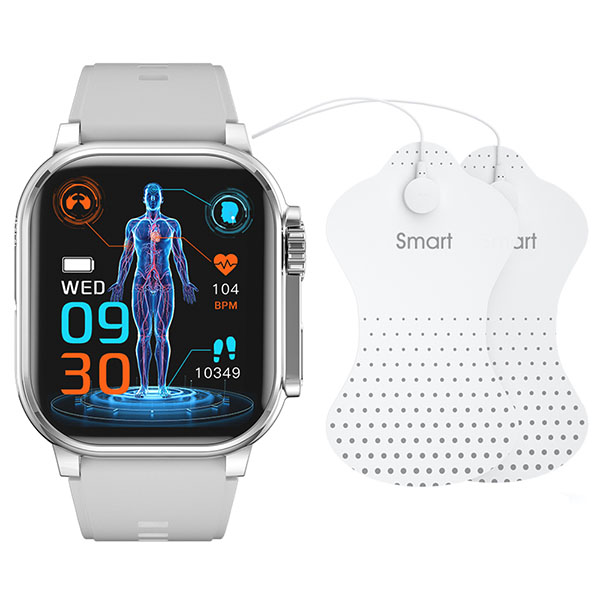
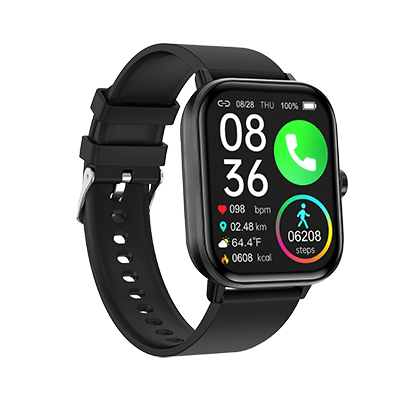
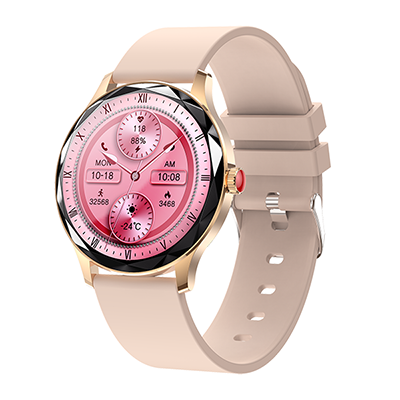
The product range covers health and fitness watches (heart rate, SpO2, sleep monitoring, steps, calories, and on selected models blood pressure and ECG), business and lifestyle watches with AMOLED displays and Bluetooth calling, sports watches with built-in GPS and waterproof housings, smart fitness bands, smart rings, and specialized custom watches.
Housing materials, strap options, colors, logo and brand marks, packaging and accessories are customizable per project. Hardware and PCB design adjustments are supported within the evaluated scope of each model.
Firmware adaptation, watch face and UI customization, companion app requirement evaluation, and data sync behavior review are handled by the R&D team. For projects that need a dedicated app, GEYAN evaluates the app and cloud integration scope against the selected hardware platform.
For supported models, GEYAN provides Bluetooth protocol documentation, SDK access and API support, and works with customers on third-party app integration: data field definitions, interface permissions and sync mechanisms are confirmed per model and per project. Not every model supports every integration path; feasibility is confirmed during evaluation and stated in the project documentation.
A typical project runs from sample testing and specification confirmation, through customization and sample approval, to production and quality inspection before delivery. GEYAN supports both small-batch customization and large-scale OEM orders, and delivers to overseas customers worldwide.
Six-step project flow
|
Step |
Project Content |
|
Step 1 |
Understand project requirements |
|
Step 2 |
Select a suitable smartwatch model |
|
Step 3 |
Confirm data synchronization requirements |
|
Step 4 |
Test device and app compatibility |
|
Step 5 |
Complete customization and sample approval |
|
Step 6 |
Production and quality inspection |
Steps 3 and 4 decide most project outcomes.
At Step 3, the buyer states specifically what should synchronize: which data types, which phone platforms, whether cloud accounts are needed, and whether an existing app or platform must receive the data. A vague requirement such as "syncs health data to our app" produces a vague commitment.
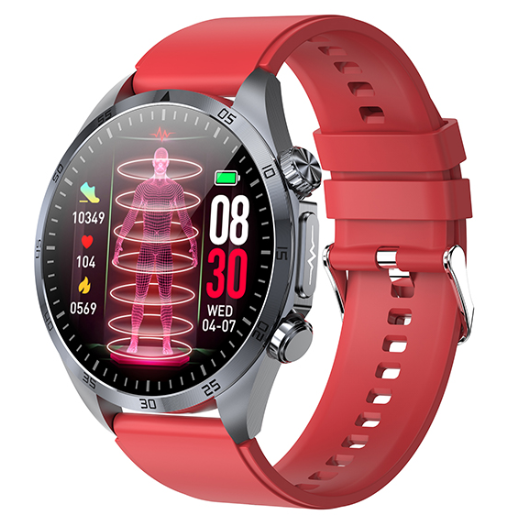
A precise list, covering heart rate granularity, sleep stages versus sleep duration, and workout record format, produces a specification both sides can test against.
At Step 4, sample testing verifies the full chain: connection stability over a normal day, data completeness, sync timing, and reconnection after the Bluetooth link drops. Connectivity testing at this stage, including Bluetooth behavior under interference and at range limits, is standard practice for wearable device programs.
Problems found here are firmware revisions. The same problems found after mass production are recalls.
Q1: What is data synchronization in a smartwatch?
Data synchronization is the transfer of supported device data between the smartwatch, a connected mobile app, and compatible platforms. The watch collects data through its sensors; synchronization moves that data to where it is displayed, stored, or used.
Q2: Can a custom smartwatch sync data with an Android or iOS app?
Most current smartwatch platforms support companion apps on both systems. The decisive details are the specific model's Bluetooth protocol, the app versions supported, and app store availability in your target markets. These are confirmed per model during evaluation.
Q3: What health data can a smartwatch synchronize?
Common sync data includes heart rate records, SpO2 readings, sleep duration and stages, steps, calories and workout records. The exact set depends on the sensors and firmware of the specific model. Blood pressure and ECG data are available on selected models only.
Q4: Can smartwatch data be synchronized to a cloud platform?
Yes, where the solution includes a companion app with cloud service support. Cloud sync requires network connectivity and backend services, and is specified as part of the project rather than assumed.
Q5: Can we integrate smartwatch data into our own application?
In many cases yes, through the model's SDK, API, or documented Bluetooth protocol. Integration scope, available data fields and permissions are confirmed per model. This is also the stage where the buyer's development team should join the conversation.
Q6: Does smartwatch data sync work without an internet connection?
Bluetooth sync between watch and phone works offline. Cloud synchronization and any feature that reaches a remote server require internet connectivity.
Q7: Can GEYAN customize smartwatch data synchronization functions?
Sync behavior can be adapted within the scope of the selected model's hardware and firmware platform. Feasibility depends on the model, the data types involved, and the project's development requirements, and is evaluated case by case.
Q8: How can I order a custom smartwatch with data sync support?
Send your product function requirements, target phone platforms, data sync requirements, branding needs and estimated order quantity. GEYAN's team responds with model recommendations, a customization evaluation and a quotation.
Looking for a Custom Smartwatch with Data Sync Support?
Whether you are developing a wearable technology brand, building a fitness application, or sourcing smartwatches for a connected device project, GEYAN can discuss your product requirements and evaluate suitable OEM/ODM options.
Contact our team to discuss:
l Custom smartwatch models and hardware specifications
l Bluetooth and mobile app compatibility
l Health and fitness data synchronization
l API, SDK and software integration requirements
l Private label branding and OEM manufacturing
Let's discuss your smartwatch project and find the right wearable solution for your business.
Shenzhen Geyan Technology Innovation Co., Ltd. (founded 2012) is a national high-tech enterprise specializing in smart wearable devices, offering OEM/ODM customization across health, sports, business and specialized smartwatch categories, plus smart bands and smart rings.
With nearly 15 years in the intelligent electronics industry, GEYAN integrates independent R&D, precision manufacturing and quality control, supports small-batch customization and large-scale OEM orders, and delivers to customers worldwide.