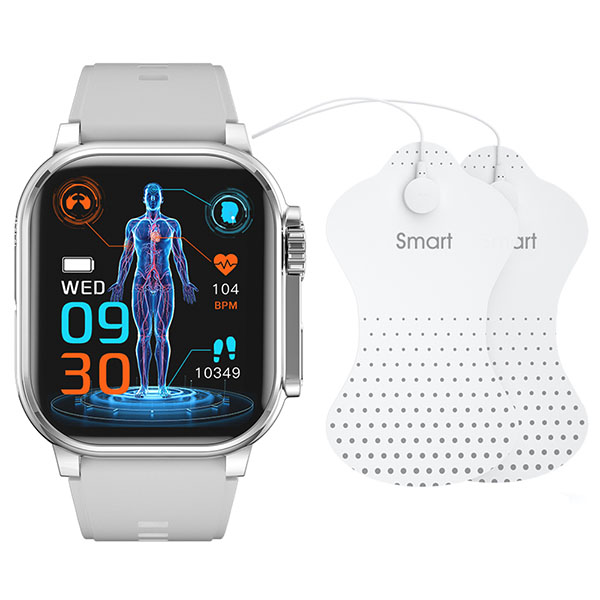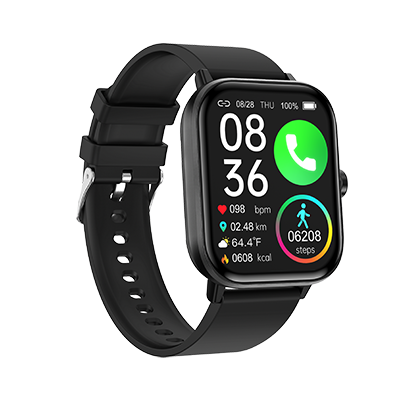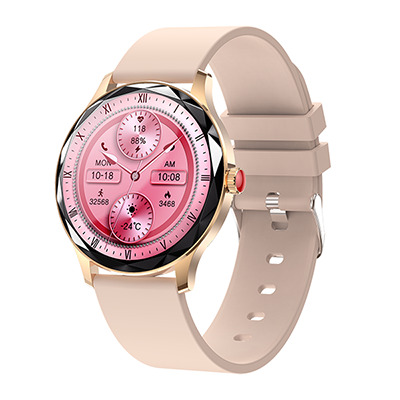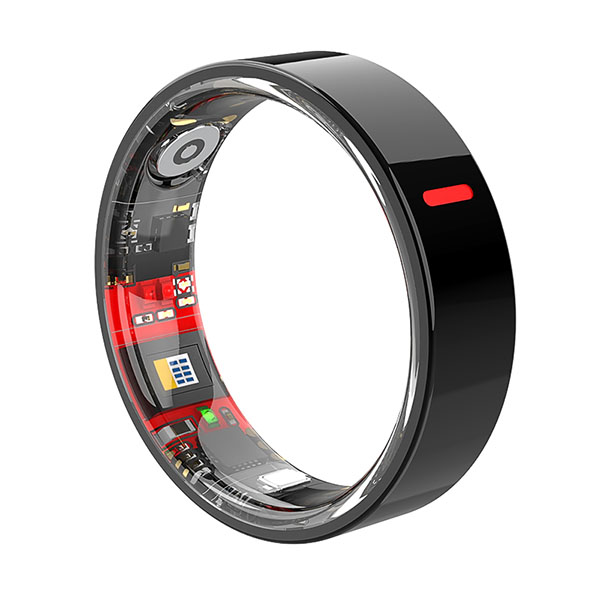
The elderly care wearable market is changing.
A senior smartwatch is no longer simply a wrist-worn device with a few health monitoring functions. For nursing homes, elderly care providers, home care companies and senior living organizations, the real value of a wearable device lies in how reliably it connects seniors, caregivers, families and support services.
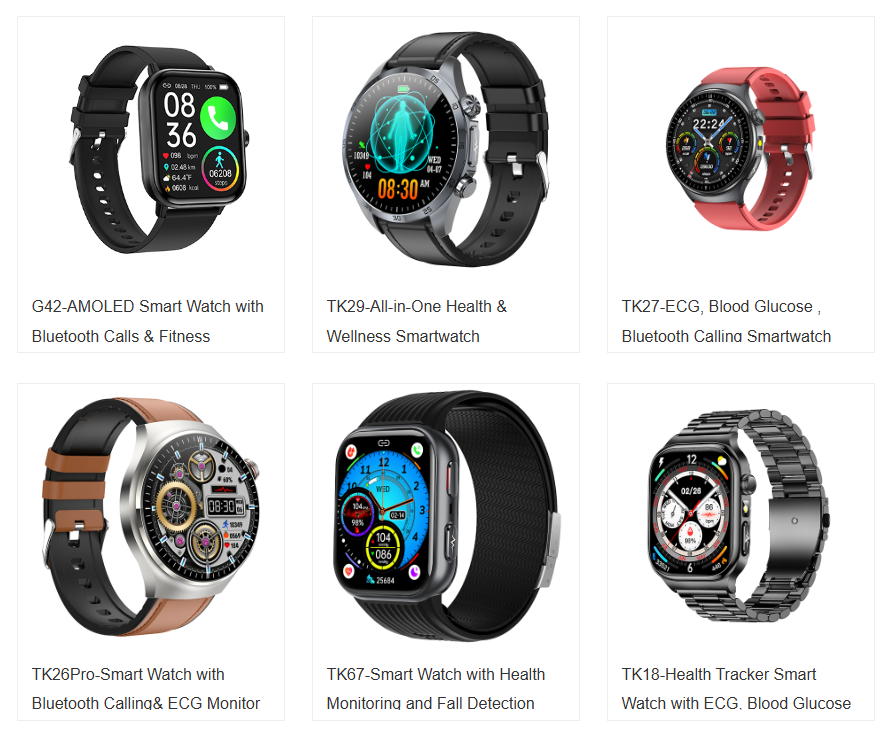
Modern elderly care solutions are increasingly moving from a single hardware product toward an integrated model combining:
Smartwatch + 4G Connectivity + GPS + SOS + Voice Communication + Health Monitoring + Family App + Care Services
This shift creates new opportunities for companies developing private-label elderly smartwatches and complete senior care solutions.
At the same time, it also creates higher requirements for manufacturers. A smartwatch may look impressive on a product specification sheet, but that does not necessarily mean it will work reliably in a real nursing home or home-care environment.
For elderly users, reliability matters more than the number of features.
The device needs to be easy to wear, easy to charge, easy to operate and capable of providing reliable communication and emergency assistance when it matters most.
As an experienced smartwatch OEM/ODM manufacturer, Shenzhen Geyan Technology Co., Ltd. supports brands and elderly care solution providers with customized hardware, firmware, connectivity, sensor integration, testing and mass production.
Why Elderly Care Smartwatches Are Becoming More Than Wearable Devices
Traditional senior watches mainly focused on basic functions such as:
These functions remain important, but the market is moving toward a broader elderly care ecosystem.
The key question is no longer:
“What functions does the smartwatch have?”
Instead, care providers are asking:
“Can this device reliably support elderly people in real-life care scenarios?”
This is a much more demanding question.
A complete elderly care wearable solution may need to connect the senior wearing the device with family members, caregivers, care centers and cloud-based services.
For example:
Senior → 4G Smartwatch → Cloud Platform → Family App / Care Center → Support Service
This architecture allows the smartwatch to become an access point to a broader elderly care service rather than simply another consumer electronics product.
From Smartwatch Hardware to “Hardware + Network + Service”
One of the most important developments in the elderly care market is the transition from standalone hardware to integrated service solutions.
A senior may wear a smartwatch, but the smartwatch itself cannot solve every care problem.
A useful elderly care solution may combine:
Hardware
Connectivity
Software
Human Support
This combination creates a much stronger value proposition than a smartwatch sold as a standalone consumer product.
What Should an Elderly Care Smartwatch Include?
The ideal configuration depends on the target market and care scenario.
However, several functions are particularly important for senior care applications.
|
Function |
Importance in Elderly Care |
|
4G LTE |
Enables independent communication without a smartphone |
|
SIM/eSIM |
Provides flexible cellular connectivity |
|
GPS |
Supports outdoor location tracking |
|
SOS Button |
Provides fast access to emergency contacts |
|
Two-Way Voice |
Allows direct communication with family or caregivers |
|
Fall Detection |
Provides an additional layer of safety monitoring |
|
Heart Rate |
Supports basic wellness monitoring |
|
SpO₂ |
Provides additional wellness information |
|
Long Battery Life |
Reduces the burden of frequent charging |
|
IP67/IP68 Protection |
Helps support everyday use |
|
Family App |
Connects seniors with family members |
|
OTA Updates |
Enables remote software maintenance |
However, adding more functions is not always the best solution.
For elderly care applications, the priority should be:
Reliability → Usability → Safety → Connectivity → Battery Life → Features
A device with fewer functions that consistently works may provide significantly more value than a device with dozens of features that users rarely understand or use.
4G and eSIM: The Foundation of an Independent Senior Smartwatch
Connectivity is one of the biggest differences between a basic Bluetooth smartwatch and a true standalone elderly care smartwatch.
Many consumer smartwatches rely heavily on a smartphone.
This may not be ideal for elderly users.
Some seniors may:
A 4G smartwatch can communicate independently through the cellular network.
This makes it possible to support functions such as:
SIM and eSIM options can also provide greater flexibility for different markets and deployment models.
However, simply installing a 4G module does not mean the project is complete.
A professional elderly care smartwatch project needs to consider:
This is why 4G/eSIM integration should be tested at the engineering stage rather than after mass production begins.
SOS and Two-Way Voice: Designing Around Real Emergency Scenarios
For elderly care applications, SOS is one of the most important functions.
But an SOS button is only the beginning.
A complete emergency communication process may look like:
SOS Button → Smartwatch → 4G Network → Cloud → Family / Caregiver → Response
Every part of this chain needs to work reliably.
A professional development project should therefore test:
SOS Trigger
Can the elderly user activate the SOS function easily?
Emergency Call
Can the device automatically call the configured emergency contact?
Voice Communication
Can the senior and caregiver hear each other clearly?
Location Sharing
Can the caregiver receive the senior's current location?
Notification
Can the family or care center receive an appropriate alert?
Repeated Emergency Attempts
What happens if the first call is unanswered?
These questions are much more important than simply writing “SOS function available” on a product specification sheet.
For elderly care products, the system needs to be designed around real emergency scenarios, not just technical specifications.
GPS Location Tracking for Senior Safety
GPS is another key function for elderly care smartwatches.
Outdoor location tracking can help family members and caregivers understand where a senior is when they are away from home or a care facility.
Potential applications include:
For some applications, geofencing can provide another layer of protection.
A care provider can define a virtual safe zone around a specific location.
If the senior leaves the predefined area, the system can potentially generate an alert for the designated caregiver or family member.
The actual location accuracy depends on the device, GPS environment, cellular network and software architecture, so these functions should be validated under real operating conditions.
Fall Detection and Health Monitoring
Fall detection is becoming increasingly relevant to elderly care applications.
A smartwatch equipped with motion sensors can analyze movement patterns and potentially identify events that may indicate a fall.
Depending on the product architecture, the device may combine:
with software algorithms to identify abnormal movement.
However, fall detection should be treated as a safety support function, rather than a replacement for professional medical assessment.
Similarly, health monitoring functions such as:
can provide useful wellness information.
The goal is to help seniors, families and caregivers better understand daily activity and potential changes—not to claim that a consumer wearable can diagnose medical conditions.
For healthcare-related projects, regulatory requirements and intended-use definitions should always be evaluated for the target market.
Battery Life Is a Care Feature
Battery life is often overlooked during smartwatch development.
For a typical consumer smartwatch, forgetting to charge the device may simply be inconvenient.
For an elderly care smartwatch, it can become a safety issue.
If the battery is empty:
Therefore, battery life should be treated as part of the safety architecture.
A good design needs to balance:
4G + GPS + Sensors + Display + Bluetooth + Battery Capacity + Power Management
Engineering teams may need to optimize:
The objective is not simply to install the largest possible battery.
The objective is to create a device that an elderly user can comfortably wear while maintaining reliable operating time.
A good senior smartwatch should be:
Easy to wear. Easy to charge. Easy to operate. Difficult to forget.
Elderly Care Smartwatch vs. Consumer Smartwatch
An elderly care smartwatch is not simply a consumer smartwatch with a larger SOS button.
The product development philosophy is different.
|
Consumer Smartwatch |
Elderly Care Smartwatch |
|
Fashion and lifestyle |
Safety and care |
|
Feature competition |
Reliability competition |
|
Individual consumer |
Senior + family + caregiver |
|
Short product cycles |
Long-term deployment |
|
Smartphone-connected |
Often standalone |
|
Personal fitness |
Safety and wellness |
|
Retail experience |
Care ecosystem |
|
More features |
More practical functions |
This difference is critical when selecting an OEM/ODM manufacturer.
A manufacturer may be very experienced in producing consumer smartwatches but still lack the engineering experience required for a reliable elderly care project.
Why Real-World Testing Matters More Than a Product Datasheet
A product specification can tell you:
4G supported.
But it cannot tell you whether the watch performs reliably inside a specific care center.
It can tell you:
GPS supported.
But it cannot tell you how the device behaves when a senior moves between indoor and outdoor environments.
It can tell you:
SOS supported.
But it cannot tell you whether the emergency call process is easy enough for an elderly user.
That is why real-world validation is critical.
Testing should cover different scenarios, including:
Indoor Testing
Outdoor Testing
Connectivity Testing
Emergency Testing
Battery Testing
Physical Testing
Golden Sample Validation Before Mass Production
For customized elderly care projects, the Golden Sample stage is particularly important.
The Golden Sample should represent the final agreed product configuration before mass production.
It should confirm:
Once the Golden Sample passes the agreed testing requirements, both parties can use it as the reference standard for mass production.
This helps reduce the risk of repeated modifications after production begins.
For projects with nursing homes or care centers waiting for deployment, this process is especially valuable because it helps engineering teams identify potential problems before large quantities of devices are manufactured.
Designing for Nursing Homes and Home Care
Different elderly care environments require different product configurations.
Nursing Home Applications
A nursing home may need:
The focus is often on centralized management and operational reliability.
Home Care Applications
Home care is more focused on:
The focus is often on family reassurance and independent living.
Community Elderly Care
Community-based elderly care may combine:
The exact solution should be designed according to the service provider's operational model.
From One Smartwatch to a Complete Elderly Care Ecosystem
The future of senior wearable technology is unlikely to be defined by the smartwatch alone.
The more valuable model is an ecosystem.
A typical architecture could be:
Senior
↓
4G Elderly Smartwatch
↓
Cloud Platform
↓
Family App / Care Platform
↓
Caregiver / Nursing Home
↓
Support or Emergency Service
This creates multiple possibilities for B2B2C business models.
For example, a care provider may offer the smartwatch as part of a monthly service package.
A telecom operator may bundle connectivity with the device.
A nursing home may deploy the device to residents.
A healthcare technology company may integrate the wearable with its own digital platform.
An insurance company may use wearable technology as part of a broader senior safety program.
This is why the opportunity extends beyond selling hardware.
The smartwatch can become the wearable interface of an elderly care service ecosystem.
Why Hong Kong Is an Important Market for Elderly Care Wearables
Hong Kong provides an interesting environment for testing elderly care wearable solutions.
The market has a mature service environment involving:
Recent market solutions have also demonstrated a shift toward combining wearable devices, home emergency equipment, connectivity, positioning, family applications and support services.
This indicates an important market trend:
The competition is moving from individual hardware products toward integrated elderly care solutions.
For a manufacturer, this means product development needs to consider the complete user journey.
A smartwatch may need to work:
Hong Kong can therefore serve not only as a sales market, but also as a valuable real-world pilot and validation environment.
If a product can achieve stable deployment among elderly users in nursing homes and home-care scenarios, the resulting case study can provide useful evidence for expansion into other markets.
Potential future markets may include:
How Geyan Supports Elderly Care Smartwatch OEM/ODM Projects
Founded in 2012, Shenzhen Geyan Technology Co., Ltd. is a national high-tech enterprise specializing in smart wearable product development and manufacturing.
Rather than treating an elderly smartwatch as simply another consumer electronics product, Geyan can support projects across multiple development stages.
Hardware Development
Our engineering capabilities can support customization of:
Firmware Development
Firmware can be developed around the specific requirements of the project, including:
App and Cloud Integration
For projects requiring software integration, the wearable can be connected to:
Smartwatch → Cloud → Family App / Care Platform
Depending on the project requirements, the integration architecture can be discussed and defined during the engineering stage.
Industrial Design and Private Label
Brands can also customize:
This allows elderly care providers and technology companies to develop products under their own brands.
A Practical OEM/ODM Development Process
A successful elderly care smartwatch project should begin with the application scenario rather than the product catalogue.
Step 1: Define the Application
First determine:
Step 2: Define the Hardware Architecture
Select:
Step 3: Develop Firmware and Software
Integrate:
Step 4: Build the Engineering Sample
The engineering sample should be tested for technical feasibility.
Step 5: Real-World Scenario Testing
Test the product in actual care environments whenever possible.
Step 6: Golden Sample Approval
Confirm the final configuration and testing requirements.
Step 7: Mass Production
After approval, the manufacturer can proceed with production based on the agreed specifications and quality standards.
Step 8: Continuous Improvement
After deployment, real user feedback can help improve:
This creates a long-term product development cycle rather than a one-time manufacturing transaction.
What Makes a Good Elderly Care Smartwatch OEM Partner?
When selecting an OEM/ODM manufacturer, price should not be the only consideration.
A serious buyer should evaluate at least six areas.
1. Hardware Engineering
Can the manufacturer customize the PCB, sensors, battery and communication modules?
2. Connectivity Experience
Can the team properly integrate and test 4G, SIM/eSIM, VoLTE and regional network requirements?
3. Firmware Capability
Can the manufacturer optimize power consumption, SOS, GPS, communication and device stability?
4. Real-World Testing
Does the manufacturer have a clear testing process before mass production?
5. Production Capability
Can the factory maintain consistent quality after the Golden Sample has been approved?
6. Long-Term Cooperation
Will the manufacturer continue supporting firmware updates, technical issues and future product development?
For elderly care applications, the last point is particularly important.
The product may remain in service for years.
The relationship between the brand and the OEM manufacturer therefore needs to extend beyond the first purchase order.
Frequently Asked Questions About Elderly Care Smartwatch OEM
Can you customize a 4G smartwatch for elderly care?
Yes. An elderly care smartwatch can be customized around the required 4G connectivity, GPS, SOS, voice communication, sensors, battery and software architecture.
Can an elderly smartwatch support SIM or eSIM?
Depending on the selected hardware architecture and target market, SIM or eSIM solutions can be considered.
The required cellular bands and carrier compatibility should be confirmed during the project definition stage.
Can you customize the SOS function?
Yes. SOS behavior can be designed according to the project's requirements, including emergency contacts, calling logic, notifications and location transmission.
Can the smartwatch connect to our own app or cloud platform?
This depends on the project architecture. API, cloud and application integration requirements should be defined during the technical development stage.
Can you customize the hardware and PCB?
Yes. Hardware and PCB customization can be part of an OEM/ODM development project depending on the required level of customization.
Can you integrate fall detection?
Fall detection can be implemented using motion sensors and appropriate software algorithms. The exact performance needs to be validated through real-world testing.
Can the smartwatch be used in nursing homes?
Yes. The product can be designed for nursing home, residential care and home-care applications, with the specific hardware and software configuration determined by the deployment scenario.
Can you provide a Golden Sample before mass production?
Yes. Golden Sample approval can be incorporated into the development process so that the final product configuration is confirmed before mass production.
What is more important for an elderly smartwatch: more functions or reliability?
Reliability should generally come first.
A senior care device needs to provide dependable communication, emergency assistance, battery life and usability. Additional functions should support these core objectives rather than make the product unnecessarily complicated.
Build an Elderly Care Smartwatch That Works in the Real World
The next generation of elderly care wearables will not be defined simply by the number of sensors inside the watch.
The real competitive advantage will come from the ability to combine:
Reliable Hardware
Stable 4G/eSIM Connectivity
GPS and Emergency Communication
Practical Health Monitoring
Long Battery Life
Simple User Experience
Family and Caregiver Connectivity
Professional OEM/ODM Development
For elderly users, a smartwatch should not feel like complicated technology.
It should feel simple, dependable and reassuring.
For families, it should provide greater peace of mind.
For caregivers, it should become a practical tool.
For care providers and technology companies, it should become a reliable part of a scalable service platform.
And for the manufacturer, the goal should not be simply to deliver another batch of smartwatches.
The goal should be to build a product that can survive real users, real environments and real emergency scenarios.
Looking for an Elderly Care Smartwatch OEM/ODM Manufacturer?
If you are developing a 4G elderly smartwatch, GPS senior watch, SOS smartwatch, nursing home wearable, home-care wearable or private-label senior smartwatch, Geyan can support the project from hardware architecture and connectivity integration through firmware development, sensor integration, Golden Sample validation and mass production.
Whether you are planning a pilot project for a nursing home, developing a family-oriented elderly care service, or building a private-label wearable brand, the first step is to clearly define the application scenario and technical requirements.
Tell us your target market, care scenario, required functions and expected deployment model. Our engineering team can evaluate the appropriate OEM/ODM development approach for your elderly care smartwatch project.