Building a custom smartwatch is one of the most powerful ways to differentiate your brand in the wearables market. But for those new to hardware product development, the process can seem opaque and overwhelming. How do you turn an idea into a finished product sitting in your customer's hand? This step-by-step guide demystifies the entire customization journey — from initial concept to final delivery — so you can approach the process with confidence.
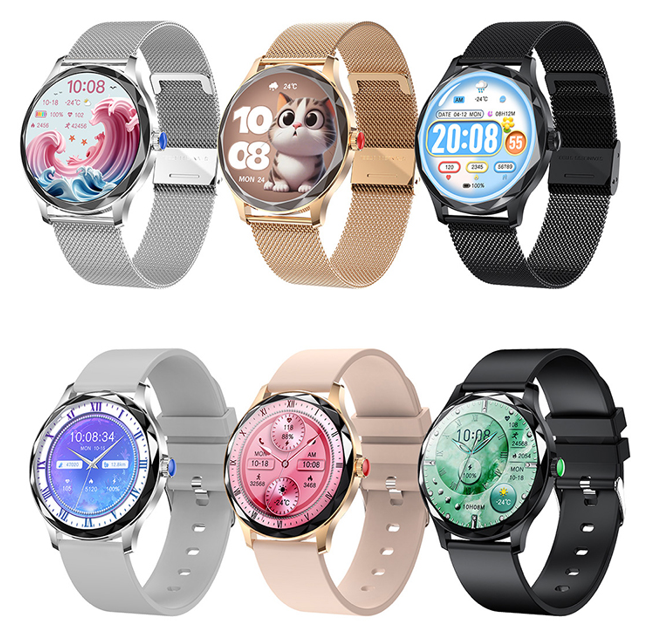
Why Customization Matters in 2026
The global smartwatch market is projected to reach $96.31 billion by 2027, growing at a CAGR of 19.6%. As the market grows, so does the pressure to differentiate. A generic white-label product competes only on price. A thoughtfully customized product — with a distinctive design, unique health features, and a branded app experience — can command premium positioning and build genuine customer loyalty.
Customization is not just about aesthetics. It's about designing a product experience that fits your specific audience, whether that's elite athletes, enterprise employees, elderly patients, or fashion-conscious consumers.
Phase 1: Define Your Product Vision
Identify Your Target User
Every successful product starts with a clear picture of who it serves. Before you spec out sensors or choose a display size, answer these questions:
● Who is your primary customer? (Age, lifestyle, tech-savviness)
● What problem does your smartwatch solve for them?
● What existing products do they currently use, and how will yours be better?
● What price are they willing to pay?
Your answers will drive every subsequent decision — from feature selection to form factor to pricing strategy.
Define Core Features and Must-Haves
With your user profile in hand, create a prioritized feature list. Separate must-have features (without which the product fails to serve its purpose) from nice-to-have features (which add value but are not essential). This prevents scope creep and keeps your development on budget.
Common feature categories include:
● Health monitoring: Heart rate, SpO2, sleep tracking, stress, temperature, ECG
● Activity tracking: Step counting, calorie estimation, sports modes, GPS
● Connectivity: Bluetooth notifications, NFC payments, Wi-Fi, standalone LTE
● Display: Size, resolution, always-on display, brightness levels
● Battery life: Target duration on a single charge
Phase 2: Choose Your Development Path
Based on your requirements and budget, select one of three development paths:
Path A: Platform Customization (Fastest)
Your manufacturer has a proven hardware platform with your core features already engineered. You customize the external design, watch faces, firmware branding, and companion app. Timeline: 60–90 days. Best for: fast market entry, limited budgets, initial product validation.
Path B: Module-Based Customization (Balanced)
Start with an existing PCB and sensor module set, but customize the mechanical housing, display configuration, and make targeted firmware modifications. Timeline: 90–120 days. Best for: brands wanting some hardware differentiation without full custom engineering costs.
Path C: Full Custom Development (Most Differentiated)
Full hardware design from the ground up — custom PCB, original enclosure design, proprietary sensor integration. This is true OEM development. Timeline: 150–200+ days. Best for: brands with specific technical requirements, medical/enterprise applications, long-term IP-driven strategies.
Phase 3: Work With Your Manufacturing Partner
Once you've selected your path, the real collaboration begins. A professional OEM manufacturer like Geyan Technology will guide you through a structured development process. Here's what to expect:
3.1 Design Brief and Specification Document
You and your engineering team (or the manufacturer's team, if you're using their design services) produce a formal product specification document. This covers:
● Dimensional requirements (case size, thickness, strap width)
● Materials and finishes (brushed aluminum, matte black, rose gold)
● Display specifications (size, type, resolution, brightness nits)
● Sensor and connectivity requirements
● Battery capacity and target charge time
● Firmware feature list and UI reference designs
3.2 Industrial Design (ID) Review
The manufacturer's industrial design team creates 3D renders and physical mockups based on your brief. Review these carefully — changes after tooling production begins are expensive. Look for ergonomic fit, strap attachment points, button placement, and crown/side button usability.
3.3 Prototype Development (EVT)
Engineering validation testing (EVT) units are produced — typically 10 to 30 units built by hand or on pilot production lines. These are used for:
● Functional testing of all sensors and connectivity features
● Software development and firmware debugging
● User testing with target audience members
● Stress testing (drop tests, water resistance, temperature cycling)
3.4 Design Validation (DVT)
Once EVT issues are resolved, a second prototype batch (DVT) is produced using production-representative tooling and assembly processes. DVT units are used for regulatory certification testing and final user acceptance testing.
3.5 Production Validation (PVT)
A pilot production run of 100–500 units validates that the mass production process can consistently produce units meeting specification. Any process issues discovered during PVT are resolved before full production begins.
Phase 4: Customize Your Software and App
Hardware gets people to your door. Software makes them stay. Custom software is often where the most meaningful product differentiation lives:
Watch Face and UI Design
Your watch face is the first thing users see every time they raise their wrist. Work with your manufacturer's UI design team to create faces that reflect your brand identity — colors, typography, logo placement, and data visualization style.
● Geyan Technology offers full UI customization including custom watch face design, menu layout, and icon sets
● Multiple watch face options (sports, business, minimal) keep users engaged
Companion Mobile App
A white-label companion app under your brand name is the digital heart of your product experience. Key customization elements include:
● App name and icon on the App Store / Google Play
● Brand colors, typography, and illustration style
● Dashboard layout and data visualization
● Notification settings, health report generation, goal tracking
● Third-party integrations (Apple Health, Google Fit, Strava)
Phase 5: Packaging and Brand Presentation
Don't underestimate packaging as part of the product experience. Unboxing is a powerful brand touchpoint, especially for products shared on social media. Work with your OEM partner to design:
● Retail box structure, dimensions, and material (cardboard, magnetic closure, plastic tray)
● Box graphics — brand color palette, hero product imagery, key feature callouts
● Included accessories — charging cable style, extra straps, screen protectors
● Quick-start guide and warranty card design
Phase 6: Certification and Compliance
Before your smartwatch can be sold in most markets, it must pass regulatory certification. Your OEM manufacturer handles the testing and submission process, but you need to understand what's required for your target markets:
● CE (Conformité Européenne) — Required for European Union markets
● FCC (Federal Communications Commission) — Required for United States markets
● SRRC — Required for China market wireless devices
● RoHS — Restriction of Hazardous Substances, required in most developed markets
● IP Rating — Water/dust resistance rating (e.g., IP67, IP68)
Geyan Technology maintains existing certifications on their platform models and manages new certification testing for custom designs, significantly reducing time and complexity for brand partners.
Phase 7: Mass Production and Delivery
With certifications secured and PVT completed, your product enters mass production. A capable manufacturer maintains:
● Inline QC inspections at multiple production stages
● AQL (Acceptable Quality Level) standard final inspection
● Functional testing of 100% of units before packaging
● Customized packaging line for your specific box and accessory configuration
Finished goods are shipped according to your incoterms (FOB, CIF, DDP) with full export documentation. Geyan Technology's logistics team coordinates both air and sea freight to destinations worldwide.
Frequently Asked Questions
Q: How much does smartwatch customization cost?
A: Costs depend heavily on the depth of customization. ODM/platform customization (branding, watch faces, packaging) typically costs $5,000–$20,000 in setup fees, plus per-unit manufacturing costs. Full custom OEM development can range from $50,000 to $200,000+ including tooling, engineering, and certification, but amortizes significantly at volumes of 5,000+ units.
Q: Can I add custom health sensors not in the standard platform?
A: Yes, with OEM development. Standard ODM platforms have fixed sensor configurations. For custom sensor integration — such as medical-grade ECG, blood glucose monitoring, or proprietary biometrics — you need a full OEM engineering engagement. Geyan Technology's hardware team specializes in custom sensor integration for health and medical applications.
Q: Do I need to provide my own design files?
A: Not necessarily. Many brands provide only a mood board, reference images, and a specification brief. The manufacturer's industrial design and UI teams create the detailed design files. If you have existing brand guidelines or design assets, sharing them ensures consistency.
Q: How do I protect my custom design from being copied?
A: Use a well-structured NDA and OEM contract that explicitly assigns ownership of all custom designs, firmware, and app code to your company. Consider registering industrial design patents in key markets. Work with manufacturers who have a track record of IP protection and who can provide verifiable client references.
Q: Can my smartwatch be sold on Amazon or through retail chains?
A: Yes, but retail channels have specific packaging, labeling, and documentation requirements. Inform your OEM manufacturer of your distribution channels early in the development process so packaging and compliance requirements are built in from the start.
Smartwatch customization is a multi-phase process that rewards careful planning and strong manufacturer relationships. From initial product vision to mass production, every decision builds on the last. The brands that succeed are those who invest time in getting the specification right, choose manufacturing partners with genuine engineering depth, and treat software and packaging as seriously as hardware.
With the right OEM partner, the customization process is not daunting — it's a structured, collaborative journey that transforms your vision into a finished product your customers will love.