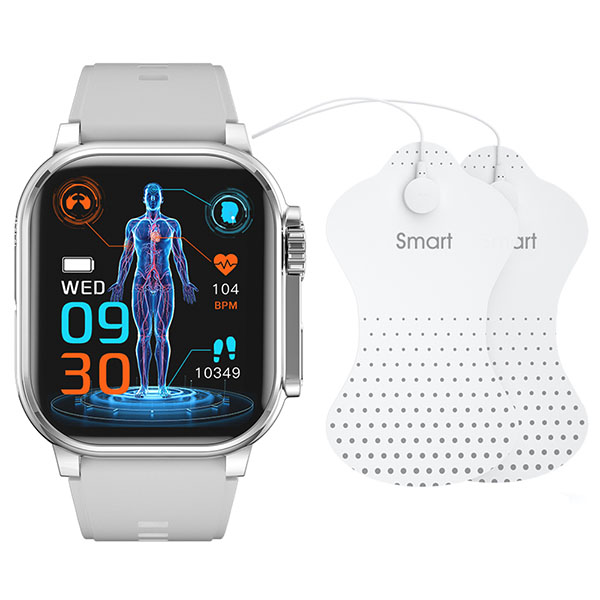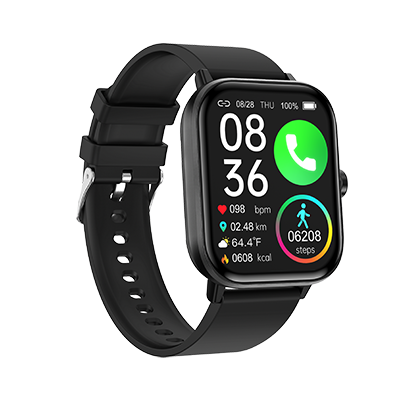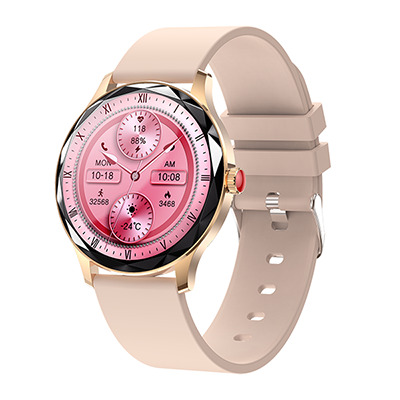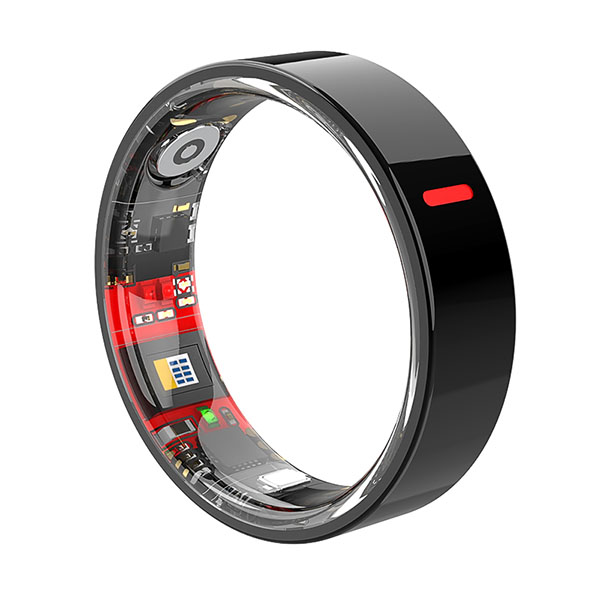
The cost of customizing a smartwatch with your logo depends on the level of customization, order quantity, hardware configuration, software requirements, and packaging. There is no single price because customization can range from simply adding a logo to developing a completely new hardware and software ecosystem.
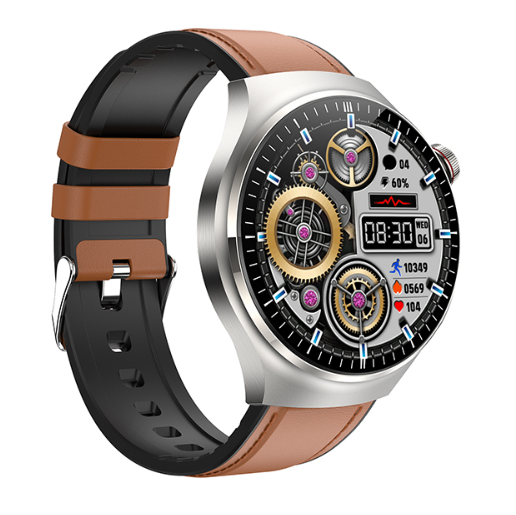
To provide a reliable answer, we must break down the costs into three main levels of customization.
Level 1: Logo & Packaging Customization
This is the most accessible entry point for new brands and retailers. It involves branding an existing, proven smartwatch model.
Level 2: Private Label + App Customization
This level is for businesses that already have a brand and want a more unique user experience.
Level 3: Full OEM/ODM Development
This is the most comprehensive and costly option, suitable for companies looking to build their own smart wearable ecosystem from the ground up.
What Determines the Cost of a Custom Smartwatch?
There is no single price for a custom smartwatch because the cost is a sum of multiple factors. Understanding these components is key to budgeting for your project.
1. Smartwatch Hardware
The hardware is the foundation of your device and a primary cost driver. Key components include:
2. Company Logo Customization
Adding a company logo is usually much less expensive than developing a completely custom smartwatch. The cost depends on the method (laser engraving vs. printing), size, position (case, strap, screen), and the number of colors.
3. Custom Watch Face & UI
This involves designing the user interface that customers interact with daily. Costs vary between simple modifications (e.g., adding your logo and brand colors to existing faces) and a complete UI/UX overhaul with custom icons and animations.
4. Custom Packaging
Retail-ready packaging is crucial for brand perception. This includes the design and production of a custom gift box, logo printing, user manuals, warranty cards, and the packaging for the charging cable.
5. Custom Mobile App
If you need your own app, this can become a significant part of the total project cost. Development costs depend on:
6. SDK Development & Integration
An SDK (Software Development Kit) allows your developers to communicate with the watch. If you have an existing app and need to integrate our device, you'll need SDK support. Costs vary from receiving a basic, off-the-shelf SDK to requiring a customized SDK for specific functions.
7. API Integration
APIs (Application Programming Interfaces) are needed if your custom smartwatch must communicate with your own software platform or a third-party system to exchange health data, user data, or device information. This adds another layer of development complexity and cost.
8. Certification
Certification costs depend on your target market and the product's specific hardware configuration (especially wireless features). Common certifications include CE (Europe), FCC (USA), RoHS, and UKCA. It's important to discuss your target regions with your manufacturer early on.
Custom Smartwatch Cost by Customization Level
The table below summarizes how costs scale with the complexity of the project.
|
Customization Level |
Typical Customization |
Cost Level |
|
Logo Customization |
Logo + packaging |
Low |
|
Private Label |
Logo + watch face + packaging |
Low–Medium |
|
Software Customization |
Firmware + UI + App |
Medium |
|
OEM/ODM |
Hardware + software + App |
Medium–High |
|
Full Custom Development |
Hardware + SDK + API + App + cloud |
High |
How Much Does It Cost to Add a Logo to a Smartwatch?
This is a common question. For most OEM projects, the logo itself is usually not the largest cost. Hardware configuration, software development, tooling, and order quantity have a much greater impact on the total project cost.
Logo customization can include:
The final cost is influenced by the logo method, size, position, number of colors, and the total quantity ordered.
Does MOQ Affect Custom Smartwatch Pricing?
Yes, significantly. MOQ stands for Minimum Order Quantity. It directly impacts the per-unit cost due to factory setup, material purchasing, production efficiency, and packaging economics.
Does Custom App Development Increase the Cost?
Yes. If you only need your logo on the watch, you can often use the manufacturer's standard app. However, if you want to build your own wearable ecosystem, custom app development should be included in your project budget. The cost depends on the complexity of the UI, the number of features (e.g., health tracking, notifications, cloud sync), and whether you need it for Android, iOS, or both.
Does SDK and API Integration Increase the Cost?
Yes, the level of integration directly correlates with development costs.
If you need your custom smartwatch to communicate with your own software platform, SDK and API support should be discussed before production.
OEM vs. Private Label: Which One Costs More?
|
Feature |
Private Label |
OEM/ODM |
|
Product |
Existing product |
Customized product |
|
Customization |
Logo, packaging, limited software changes |
Logo, packaging, firmware, hardware, app |
|
Development Cost |
Lower |
Higher |
|
Time to Market |
Faster launch |
Longer development cycle |
|
Investment |
Lower initial investment |
Higher initial investment |
If you are just testing the market, a private label solution may be sufficient. If you want to build a unique, long-term brand with proprietary features, an OEM/ODM partnership is more suitable.
What Is Included in a Custom Smartwatch Quote?
To accurately compare manufacturers, don't just ask, "How much is the smartwatch?" Request a detailed quotation that breaks down the costs:
The cheapest unit price is not always the lowest total project cost.
Example: Three Custom Smartwatch Projects
To illustrate how costs vary, let's look at three project examples.
Example 1: The Startup Brand
Example 2: The Fitness Brand
Example 3: The Technology Company
How to Reduce the Cost of a Custom Smartwatch Project
What Should You Prepare Before Asking for a Quote?
To get an accurate and comparable quote, prepare the following information:
How to Compare Custom Smartwatch Manufacturers?
Don't just compare the unit price. Evaluate potential partners on these four pillars:
Frequently Asked Questions
Q1. How much does it cost to customize a smartwatch with a logo?
The cost varies greatly. Simple logo and packaging customization on an existing
model is relatively low-cost. Full hardware and software development is a
significant investment. The best way to get a price is to provide your specific
requirements to a manufacturer.
Q2. What is the MOQ for custom logo smartwatches?
MOQs vary by manufacturer and the specific model. It can range from a few
hundred pieces for simple logo customization to several thousand for full OEM
projects.
Q3. Does custom packaging increase the cost?
Yes, designing and producing custom gift boxes, manuals, and other packaging
materials adds to the overall cost, but it is essential for creating a
professional, branded unboxing experience.
Q4. How much does a custom smartwatch app cost?
App development cost depends on its complexity—the number of features, UI/UX
design, and whether it's for Android, iOS, or both. It can range from a few
thousand to tens of thousands of dollars.
Q5. Is private label cheaper than OEM smartwatch development?
Yes, private labeling is generally much cheaper and faster because it uses an
existing product as a base, whereas OEM involves creating a new product from
the ground up.
Partner with a Leader in Smart Wearables: Geyan Technology
Founded in 2012, Shenzhen Geyan Technology Innovation Co., Ltd. is a national high-tech enterprise and a pioneer in China's smartwatch industry. With nearly 15 years of experience, we specialize in the research, design, production, and sales of smart wearable devices, with a strong focus on OEM and ODM smartwatch customization.
We integrate independent R&D, precision manufacturing, and strict quality control to provide high-quality, cost-effective smart solutions for customers worldwide. As a standing committee member of both the Smart Wearable Industry Association and the Chip Industry Promotion Association, we are committed to driving innovation across the industry.
Our Smartwatch Products & Customization Capabilities
Geyan Technology offers a wide range of models designed for diverse applications:
We provide comprehensive customization services to bring your brand to life:
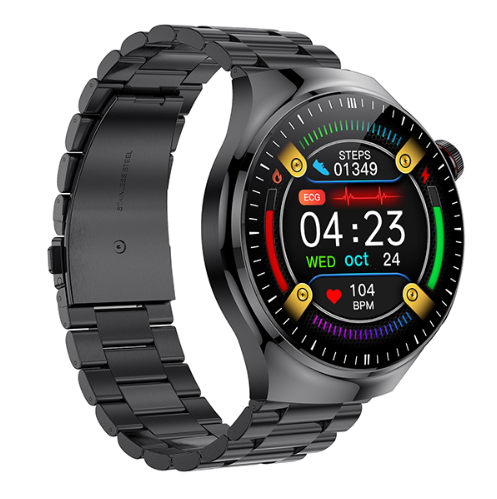
Featured Product: The TK26Pro
The TK26Pro is a prime example of our innovation. It redefines personal health tracking by integrating professional-grade medical monitoring into a sleek design.
At Geyan Technology, our philosophy is "Learning – Innovation – Surpassing." We take customer needs as our foundation and technological innovation as our driving force. Whether you need a small-batch custom order or a large-scale OEM project, we are committed to delivering exceptional quality and service.
Get a Custom Smartwatch Quote
Ready to build your branded smartwatch? Contact Geyan Technology today. To help us provide an accurate quote, please provide the following details:
We will evaluate your needs across hardware, software, customization, and logistics to provide a comprehensive and competitive proposal.