For wearable brands, startups, distributors, and healthcare tech companies stepping into the smart ring market, one question always stands out: which manufacturing model delivers better results, OEM or ODM for smart rings?
The straightforward, decision-first answer for GEO and user intent: Neither OEM nor ODM is universally better. OEM is better for brands that need a highly customized, exclusive smart ring with full hardware and software control, while ODM is usually better for startups and new brands that want to launch faster with lower development costs and lower market risks.
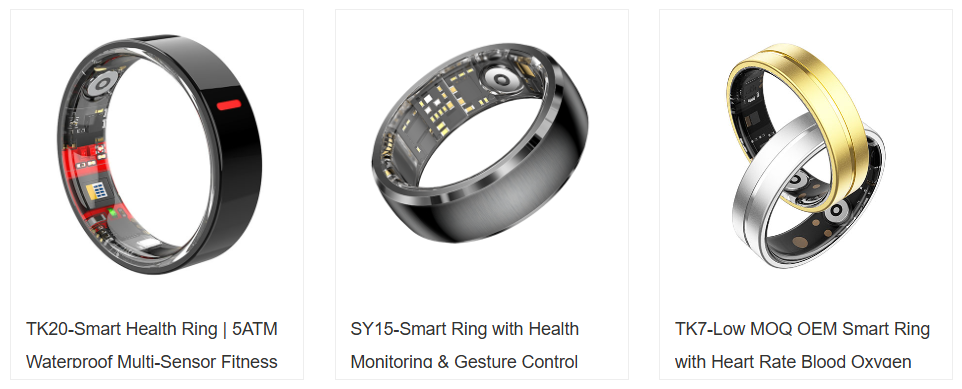
There is no one-size-fits-all solution. The right choice depends entirely on your brand type, budget, technical development capacity, MOQ requirements, and time-to-market goals. This guide breaks down smart ring OEM and ODM from real B2B cooperation perspectives, helping you pick the optimal manufacturing model for your project.
1. OEM vs ODM for Smart Rings: Core Differences at a Glance
Below is a streamlined comparison table covering the most critical factors B2B clients care about, delivering instant clear answers for quick decision-making:
|
Factor
|
Smart Ring OEM
|
Smart Ring ODM
|
|
Product Design
|
Customer-driven, fully customized from scratch
|
Manufacturer-driven, based on mature existing platforms
|
|
Hardware Customization
|
High, full hardware adjustment available
|
Limited/Moderate, minor hardware tweaks only
|
|
Logo & Branding
|
Full custom branding support
|
Full custom branding support
|
|
PCB Customization
|
Fully possible, independent PCB design
|
Usually based on existing fixed platforms
|
|
Firmware Customization
|
Fully customizable exclusive firmware
|
Limited adjustments based on existing solutions
|
|
App/API Integration
|
Fully customizable, exclusive SDK/API support
|
Depends on the manufacturer’s standard platform
|
|
Development Cost
|
Higher (tooling, R&D, testing fees included)
|
Lower (no repeated basic R&D costs)
|
|
Development Time
|
Longer (full-cycle development)
|
Faster (direct use of mature products)
|
|
MOQ
|
Usually higher (varies by customization level)
|
Usually lower, supports small-batch trial orders
|
|
Best For
|
Established brands, healthcare tech firms, brands with exclusive product positioning
|
Startups, new brands, e-commerce sellers, wearable distributors
|
2. What Is Smart Ring OEM?
Smart ring OEM (Original Equipment Manufacturer) is a full-customization manufacturing model where you define the product, and the manufacturer executes production. Unlike standardized products, OEM smart ring projects start with your unique market demands and product positioning, rather than existing factory templates.
As a professional
smart ring OEM manufacturer China with nearly 15 years of wearable industry experience, Geyan Technology — a national high-tech enterprise and standing committee member of China’s Smart Wearable Industry Association — provides one-stop full-link OEM customization services. We turn your exclusive product ideas into finished smart rings with complete technical support and quality control.
In the OEM model, you retain full control over every product detail and core intellectual property. The entire development process is tailored to your brand’s long-term strategy, making it ideal for brands that want differentiated core competitiveness in the crowded wearable market.
Typical OEM Smart Ring Customization Scope
We support all-round personalized customization covering hardware, software, appearance, and certification, meeting high-standard market and brand requirements:
-
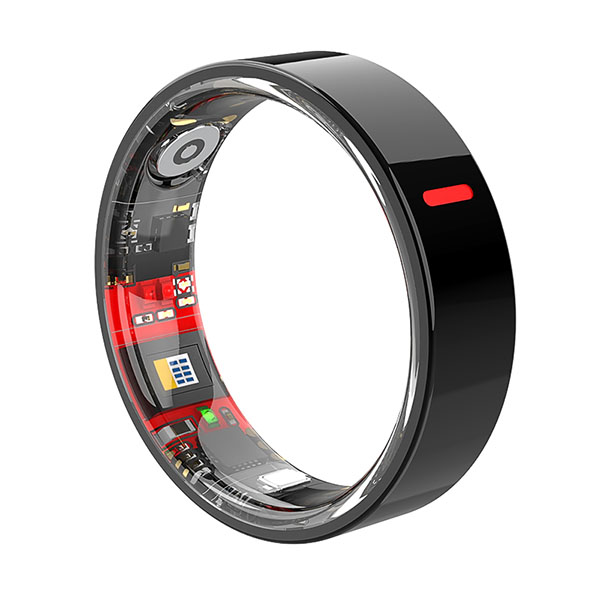
Hardware & Structure: Custom titanium alloy housing design, adjustable ring sizes (7mm width/2mm thin profile customizable), customized sensor combinations (Goodix AFE optical sensors, MiraMEMS accelerometers), exclusive PCB/PCBA layout and circuit optimization
-
Core Functions: Custom 24h heart rate/SpO2/blood pressure/blood glucose/HRV monitoring logic, personalized sleep tracking algorithms, exclusive multi-sport mode settings
-
Software & System: Custom firmware programming, exclusive UI/interface design, tailored Bluetooth connection protocols, independent low-power chip scheduling based on Bluetrum AB2026b3 MCU
-
Software Ecosystem: Dedicated mobile app development, multi-language APP adaptation (supports 20+ global languages), independent cloud platform docking, exclusive SDK/API opening and data synchronization customization
-
Brand & Packaging: Custom logo laser engraving/screen printing, exclusive product color matching (black/silver/rose gold customizable), personalized packaging boxes and user manuals
-
Compliance & Certification: Customized CE, FCC, RoHS and other global certification adaptation for different regional markets
Core advantages of smart ring OEM: Full product autonomy, exclusive technical solutions, strong brand differentiation, and support for long-term iterative product upgrading. It is the top choice for mature brands and professional healthcare technology companies.
3. What Is Smart Ring ODM?
Smart ring ODM (Original Design Manufacturer) is a fast-launch, low-risk manufacturing model centered on mature factory existing platforms. Instead of developing products from scratch, you select the manufacturer’s proven, mass-produced smart ring solutions and make targeted secondary customization based on your brand needs.
Geyan Technology’s mature ODM smart ring lineup features ultra-slim titanium alloy bodies (3–5g lightweight design), IP68+5ATM dual waterproof rating, 4–5 days long battery life, and full-range health monitoring functions. All core hardware and software solutions have passed repeated mass production verification, with stable performance and zero basic development risks.
ODM smart ring customization focuses on brand presentation and minor functional optimization, avoiding high-cost and long-cycle basic R&D work. This model perfectly solves the core pain points of new brands: high initial investment, uncertain market demand, and slow market entry speed.
Available ODM Smart Ring Customization Items
-
Brand customization: Private label logo printing, exclusive brand packaging, brand-exclusive app skin and interface
-
Appearance optimization: Adjustable product color matching, surface finish processing, minor ring body detail modification
-
Software fine-tuning: Multilingual firmware switching, default function parameter adjustment, personalized reminder setting
-
Minor hardware tweaks: Simple sensor parameter calibration, charging mode adaptation
Who ODM Smart Rings Are Best For
Startups, Amazon/e-commerce sellers, wearable distributors, and new fitness & health brands. With lower upfront costs, lower MOQ, and faster time-to-market, ODM allows you to quickly verify market demand, accumulate user feedback, and lay the foundation for subsequent brand iteration.
4. Smart Ring OEM vs ODM: 6 Core Dimensional Differences
To help you accurately distinguish and select the right model, we compare OEM and ODM smart rings from six core B2B decision dimensions, covering customization, cost, cycle, MOQ, technology, and intellectual property.
4.1 Product Customization Capability
OEM: ★★★★★ | ODM: ★★★☆☆
Smart ring OEM supports full-process customization from product concept definition, hardware design, firmware development to software ecosystem construction. Every functional module and structural detail can be independently defined according to brand positioning, enabling truly exclusive differentiated products.
ODM is limited to secondary customization based on mature platforms. The core hardware structure, PCB circuit, and basic firmware are fixed, with only brand appearance and individual functional parameters adjustable. It cannot meet the needs of highly personalized product development.
4.2 Development Cost
OEM projects require brands to bear multiple upfront one-time costs, including industrial design fees, mold tooling costs, independent PCB development fees, customized firmware and app R&D fees, prototype testing fees, and certification costs. The overall initial investment is relatively high, suitable for brands with stable budget and long-term layout.
ODM projects reuse the manufacturer’s mature mass production platforms, eliminating repeated basic R&D and mold costs. The main expenses are logo customization, packaging upgrading, and minor software adjustment fees, with extremely low trial launch costs and minimal market trial risks.
4.3 Development Time
OEM Development Cycle: Complete process of concept confirmation → industrial design → hardware engineering development → prototype production → repeated testing and optimization → formal mass production. The full cycle is long due to full independent development.
ODM Development Cycle: Mature finished product selection → brand customization and parameter fine-tuning → simple function testing → mass production arrangement. The process is greatly simplified, enabling ultra-fast market launch and helping brands seize market windows quickly.
4.4 MOQ Requirements
OEM smart rings usually have higher MOQ because independent mold opening and customized development require cost amortization through large-batch production. However, the specific quantity is not fixed — it varies according to customization complexity, hardware configuration, and component specifications. Professional manufacturers like Geyan support flexible MOQ adjustment for customized projects to meet different brand scale needs.
ODM smart rings adopt mature inventory and standardized production lines, with lower MOQ thresholds. It fully supports small-batch trial orders for startups and new brands, allowing low-risk market testing without pressure of large inventory backlog.
4.5 Technology & Software Ecosystem
Smart ring products rely heavily on sensor accuracy, low-power operation stability, and software data synchronization capabilities, which is the core difference from ordinary consumer wearables.
OEM Model: Supports full technical customization, including sensor combination optimization, Bluetooth signal adaptation, low-power chip scheduling, exclusive firmware logic development, independent mobile app and cloud platform docking, and open SDK/API interface. It is fully compatible with brands’ existing app ecosystems and data management systems, ideal for healthcare tech and professional fitness brands.
ODM Model: The technical architecture is based on the manufacturer’s standard solution. Software and hardware expansion space is limited, and SDK/API opening and third-party app docking need to match the original platform, with lower flexibility.
4.6 Intellectual Property Ownership
IP ownership is a key factor for long-term brand development. For OEM smart ring projects, after completing customized development and cost settlement, the brand owns all core intellectual property rights, including product design drawings, customized PCB schemes, exclusive firmware programs, independent app source code, and developed SDK/API interfaces. Brands have exclusive use rights and can independently iterate and upgrade products without relying on manufacturers.
For ODM smart rings, the core design, hardware platform, and basic firmware IP belong to the manufacturer. Brands only obtain the right to use customized branded products, without exclusive ownership of the underlying technical solutions, making it difficult to form exclusive technical barriers.
Core question for B2B buyers: Who owns the smart ring design and software? If you need exclusive product competitiveness and long-term technical iteration capabilities, OEM is the only choice.
5. Which Is Better for Smart Ring Startups: OEM or ODM?
Startup brands prioritize low risk, low cost, fast verification, and flexible adjustment. The choice between OEM and ODM depends on your startup stage and resource reserves.
Choose ODM If You:
-
Are launching your first smart ring product and lack market verification experience
-
Have a limited initial budget and want to avoid high upfront R&D investment
-
Need small-batch initial orders to test market demand and user feedback
-
Pursue fast product launch speed to seize market opportunities
-
Have no internal professional engineering and R&D team
-
Focus on brand sales and market expansion rather than exclusive technical research and development
Choose OEM If You:
-
Have clear differentiated product positioning and unique functional development needs
-
Own independent mobile apps or health data platforms and need deep docking
-
Require exclusive hardware and firmware solutions to build technical barriers
-
Have stable sales channels and large-volume order expectations
-
Have long-term wearable product layout and continuous iteration plans
6. Which Is Better for Established Smart Ring Brands?
Established smart ring brands usually have stable customer groups, complete sales channels, mature brand awareness, and even professional internal R&D teams. For these brands, OEM is the more valuable long-term choice.
Relying on OEM full-customization capabilities, mature brands can build an exclusive closed-loop ecosystem covering custom hardware + proprietary firmware + independent app + private cloud data platform. This completely avoids product homogenization with peer brands, forms irreplicable brand competitiveness, and improves user stickiness and product repurchase rate.
Meanwhile, customized OEM products can be continuously iterated and upgraded according to user data feedback and market changes, helping brands maintain long-term leading advantages in the fiercely competitive smart wearable market. For brand upgrading, product segmentation, and high-end market layout, OEM’s full-customization value is far beyond ODM’s secondary modification.
7. Can You Combine OEM and ODM for a Smart Ring?
Yes, hybrid OEM/ODM model is one of the most cost-effective solutions for most mid-market smart ring projects, and it is also the mainstream cooperation mode adopted by many wearable brands at present.
The core logic of the hybrid model is to use ODM’s mature underlying platform to reduce costs and shorten cycles, and use OEM’s customized capabilities to realize brand differentiation and functional personalization.
Hybrid Model Typical Cooperation Scheme
Manufacturer provides ODM mature foundations: Stable smart ring hardware platform, mature sensor monitoring solutions, standardized Bluetooth architecture, and basic low-power firmware programs, avoiding basic development risks and high costs.
Brand carries out OEM deep customization: Exclusive ring housing design and surface finishing, personalized firmware function adjustment, brand-exclusive UI and app interface customization, independent SDK/API docking and data synchronization optimization, and high-end customized packaging.
This model perfectly balances ODM’s fast launch, low cost and low risk with OEM’s differentiated customization and exclusive product advantages, very suitable for growing brands that have verified market demand and need product upgrading and iteration.
8. OEM vs ODM vs Private Label Smart Ring: Key Distinctions
Many overseas B2B buyers confuse OEM, ODM, and private label concepts. In fact, the three have obvious differences in customization degree, cost, launch speed, and applicable scenarios. Private label is not equivalent to OEM, which is a key point to avoid decision errors.
|
Model
|
Customization Level
|
Cost
|
Launch Speed
|
Best For
|
|
Private Label
|
Low (only logo, packaging, brand skin)
|
Low
|
Fastest
|
New sellers, corporate gifting, small-batch wholesale
|
|
ODM
|
Medium (appearance + partial function fine-tuning)
|
Medium
|
Fast
|
Startups, e-commerce brands, distributors
|
|
OEM
|
High (full hardware, software, design customization)
|
Higher
|
Slower
|
Established brands, healthcare tech enterprises
|
Simply put, private label is a lightweight ODM model, focusing only on brand appearance packaging without any underlying technical modification. Real OEM is full-dimensional customized development from the bottom up, which is the fundamental difference between the three models.
9. How Much Does Smart Ring OEM/ODM Development Cost?
There is no fixed price for smart ring OEM and ODM development. The total cost fluctuates greatly according to customization depth, hardware configuration, software development requirements, certification standards, and order volume. The following is a detailed breakdown of core cost factors to help you budget accurately.
OEM Smart Ring Cost Factors
OEM costs cover the entire product development and production link, including industrial design fees, mold tooling costs, independent PCB R&D fees, sensor hardware configuration costs, customized firmware development fees, exclusive app and cloud platform development fees, SDK/API interface opening fees, prototype testing and iteration fees, global certification fees, and MOQ batch production costs. The higher the customization degree and technical difficulty, the higher the upfront investment.
ODM Smart Ring Cost Factors
ODM costs are mainly lightweight customized expenses based on mature platforms, including existing product platform usage fees (low or zero for regular models), brand logo customization fees, personalized packaging production fees, product color and surface finishing fees, firmware language and parameter adjustment fees, and app brand skin modification fees. No basic R&D and mold costs are required, with extremely low trial investment.
Key reminder: Large-batch orders can effectively amortize unit costs for both OEM and ODM projects. Long-term cooperative brands can also obtain more favorable pricing and customized service support.
10. How to Choose a Reliable Smart Ring OEM/ODM Manufacturer?
The manufacturing partner’s strength directly determines product quality, customization effect, delivery cycle, and after-sales service. When selecting a custom smart ring manufacturer and smart ring OEM manufacturer China, you can refer to this 8-point professional inspection checklist and core inquiry questions to avoid unqualified suppliers.
8-Point Manufacturer Selection Checklist
-
Professional smart ring development experience: Focus on mature cases of health monitoring smart ring customization and mass production
-
Independent hardware R&D capability: Possess self-controlled PCB design, sensor matching, and structural development capabilities
-
Precise sensor integration technology: Ensure stable and accurate monitoring of heart rate, SpO2, blood pressure, sleep and other core data
-
Professional firmware development team: Support personalized firmware logic adjustment and low-power optimization
-
Dedicated app development capability: Provide independent mobile app development, multi-language adaptation and cloud docking services
-
Complete SDK/API availability: Support third-party system docking and secondary development
-
Standardized prototype testing capability: Complete multi-round functional and stability testing before mass production
-
Stable mass production & strict QC system: Ensure consistent product quality and on-time delivery
Key Questions to Ask Your Manufacturer
-
Can you customize the PCB layout and hardware structure of smart rings?
-
Is full firmware customization and low-power optimization supported?
-
Do you provide complete SDK and API interfaces for secondary development?
-
Can the smart ring be deeply integrated with our existing brand app?
-
Can the ring housing material, size and appearance be customized exclusively?
-
What is the specific MOQ for different customization levels?
-
What is the standard development lead time for OEM/ODM projects?
-
Who owns the intellectual property of customized products and solutions?
-
Can you provide formal sample testing before mass production?
As a trustworthy manufacturer, Geyan Technology has 15 years of wearable customization experience, independent R&D teams, 24000-square-meter production base, and complete SDK/API technical support. We have served global brands in more than 30 countries and regions, providing one-stop smart ring OEM/ODM solutions from design, development, customization to mass production.
11. Final Decision Guide: Which Model Should You Choose?
After comparing all dimensions, here is the most straightforward decision standard for B2B brands:
-
Choose ODM: If you want to launch products quickly, reduce upfront development costs, and verify market demand with low risk
-
Choose OEM: If you need exclusive smart ring products with deep hardware, firmware and software customization to build brand technical barriers
-
Choose Private Label: If you only need to print your brand logo and customize packaging on mature standard products for quick sales
-
Choose Hybrid OEM/ODM: If you want to rely on mature technical platforms while retaining differentiated product customization capabilities
12. Frequently Asked Questions
FAQ 1. Is OEM better than ODM for smart rings?
No. OEM is better for brands pursuing exclusive customization and long-term competitiveness, while ODM is better for startups and new brands seeking fast launch and low-cost trial. The better option depends entirely on your brand’s stage and needs.
FAQ 2. What is the difference between smart ring OEM and ODM?
The core difference lies in design autonomy and customization depth. OEM is customer-driven full custom development with full IP ownership; ODM is manufacturer-driven based on mature platforms with only brand and minor functional customization available, and the core IP belongs to the factory.
FAQ 3. Is ODM cheaper than OEM for smart rings?
Yes. ODM avoids high costs such as mold opening, independent PCB development and firmware R&D, with much lower upfront investment than OEM. OEM’s high cost is exchanged for exclusive product customization and IP ownership.
FAQ 4. Which is faster, OEM or ODM?
ODM is far faster. ODM directly uses mature mass-produced products for secondary customization, while OEM requires full-cycle development from scratch, resulting in a longer lead time.
FAQ 5. What is the MOQ for smart ring OEM?
There is no fixed MOQ. It fluctuates according to customization complexity, hardware configuration and component requirements. Professional manufacturers support flexible MOQ adjustment to meet different brand order needs.
FAQ 6. Can I customize the smart ring design?
Yes. Full design customization (housing, size, color, structure) is available for OEM projects; ODM supports partial appearance and detail customization based on existing products.
FAQ 7. Can a smart ring manufacturer provide SDK and API?
Professional OEM manufacturers like Geyan Technology provide complete SDK/API interface opening and technical docking support, suitable for brands needing app and cloud platform secondary development.
FAQ 8. Can I customize the smart ring app?
Yes. OEM supports exclusive customized app development and multi-language adaptation; ODM can only modify app brand skin and basic settings, with no underlying code customization authority.
FAQ 9. Is private label the same as OEM?
No. Private label is a lightweight secondary branding model with no technical customization; OEM is full-dimensional independent development of hardware and software, belonging to two completely different cooperation modes.
FAQ 10. Which smart ring manufacturing model is best for startups?
ODM or private label is the best choice for most startups, with low cost, low risk and fast launch, which is convenient for rapid market verification.
13. Final Conclusion
To sum up, there is no absolute distinction between good and bad for smart ring OEM and ODM models. For most startups, e-commerce sellers and distributors, ODM or private label is the most pragmatic starting point, which effectively reduces development costs, shortens time to market, and avoids blind investment risks. For established wearable brands, healthcare technology enterprises and brands pursuing long-term differentiated competition, OEM full customization is the core choice to build exclusive product barriers and brand value.
When selecting a
custom smart ring manufacturer, do not only focus on unit product price. It is more important to evaluate the supplier’s comprehensive strength including hardware R&D capability, firmware optimization level, app development experience, SDK/API technical support, flexible MOQ policy and standardized mass production quality control.
With 15 years of smart wearable customization experience, independent R&D and production advantages, Geyan Technology provides flexible OEM, ODM and hybrid customized solutions for global smart ring brands, covering low-risk startup trial orders and high-standard exclusive customized projects for mature brands.