Introduction: Why BOM Is the Foundation of Smartwatch Economics
In the world of hardware manufacturing, the BOM — Bill of Materials — is one of the most important documents you will ever review. It lists every single component that goes into your product and what it costs. For a smartwatch OEM project, understanding the BOM (Bill of Materials) is critical for several reasons: it determines your unit economics, reveals where cost optimization is possible, and helps you verify that your manufacturer is using the components they claim to be using.
Yet many brand owners who commission smartwatch OEM projects never ask for or review the BOM. This is a significant oversight. Without understanding your BOM, you have no visibility into the actual cost structure of your product, which means you cannot negotiate fairly, cannot spot substitutions, and cannot accurately forecast profit margins.
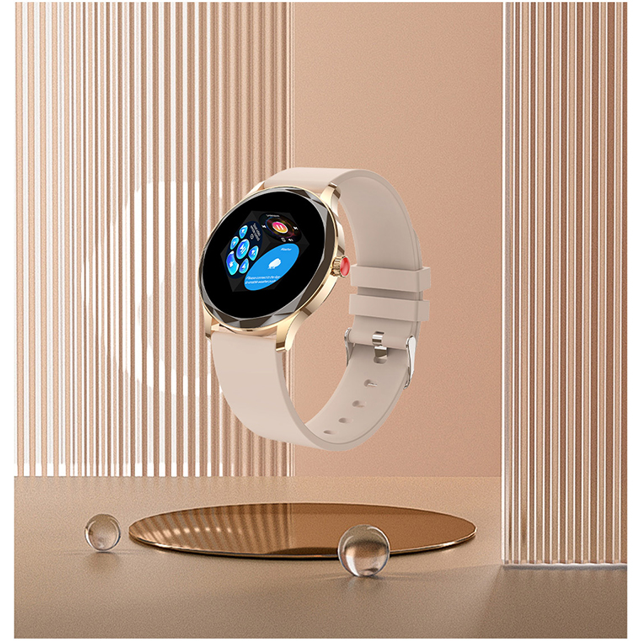
This article provides a complete, component-by-component breakdown of a typical smartwatch BOM cost, with realistic 2026 pricing based on current Chinese manufacturing market rates.
What is a Smartwatch BOM?
A Bill of Materials (BOM) is a structured list of all the raw materials, components, sub-assemblies, and parts required to manufacture one unit of a product. For a smartwatch, this includes every electronic component on the PCB, mechanical parts (casing, buttons, crown), display assembly, battery, straps, and packaging materials.
A well-structured BOM includes: component name, part number, manufacturer/supplier, quantity per unit, and unit cost. The sum of all BOM line items equals the raw material cost per unit — before assembly labor, overhead, and profit margin are added.
Smartwatch BOM: Component-by-Component Cost Breakdown
1. System-on-Chip (SoC) / Main Processor
The SoC is the brain of the smartwatch — it runs the operating system, processes sensor data, manages Bluetooth communications, and drives the display. Popular choices include:
● Nordic Semiconductor nRF5340 (Bluetooth-focused, ultra-low power): $3.50–$5.00/unit
● Realtek RTL8762D (cost-optimized, widely used in budget watches): $1.80–$3.20/unit
● MediaTek MT2523D (feature-rich, GPS-capable): $4.50–$7.00/unit
● Qualcomm Snapdragon W5 Gen 1 (premium, Wear OS): $12–$20/unit
● Apollo4 (Ambiq, medical-grade low power): $6–$10/unit
For most consumer smartwatches produced through OEM manufacturing in China, the SoC cost ranges from $2–$8 per unit, representing 10%–25% of total BOM cost.
2. Display Module
The display is typically the highest-cost single component in a smartwatch BOM. Options include:
● TFT LCD (1.3–1.69 inch, 240×240): $3.00–$5.50/unit — common in budget models
● AMOLED (1.3–1.96 inch, 360×360+): $9.00–$18.00/unit — premium visual quality
● Memory-in-Pixel (MIP) display: $4.00–$8.00/unit — low power, used in fitness trackers
● E-paper display: $5.00–$10.00/unit — ultra-low power, niche use cases
The choice of display technology has a cascading effect: AMOLED displays require different driver ICs, glass protection layers, and assembly processes, adding indirect costs beyond the display module itself.
3. Battery (Li-Po)
Smartwatch batteries are custom-shaped Li-Po (Lithium Polymer) cells, sized to fit the watch housing. Capacity ranges from 180 mAh (slim profile) to 420 mAh (bulkier fitness watch):
● 180–250 mAh Li-Po cell: $0.75–$1.20/unit
● 280–350 mAh Li-Po cell: $1.00–$1.60/unit
● 380–420 mAh Li-Po cell: $1.40–$2.20/unit
Battery protection circuit (PCM) adds another $0.20–$0.50/unit. Battery life is a major consumer concern; brands targeting 7-day battery life typically pair a larger battery with a highly efficient SoC.
4. Health & Motion Sensors
The sensor package defines the health monitoring capabilities of the device:
● PPG (Photoplethysmography) sensor for heart rate (e.g., Maxim MAX30102): $0.80–$1.50/unit
● SpO2 (blood oxygen) sensor (e.g., Maxim MAX30101): $1.20–$2.00/unit
● 3-axis accelerometer / gyroscope (e.g., STMicro LSM6DSO): $0.60–$1.20/unit
● ECG electrode + AFE chip: $2.50–$6.00/unit
● Skin temperature sensor (e.g., TMP117): $0.80–$1.50/unit
● Barometric pressure sensor (e.g., Bosch BMP390): $0.50–$1.00/unit
A standard 3-sensor package (PPG + SpO2 + accelerometer) adds approximately $2.50–$4.70/unit to BOM cost. A premium 6-sensor package with ECG can add $7–$13/unit.
5. Wireless Connectivity Modules
● Bluetooth 5.x (often integrated in SoC, no separate cost)
● Wi-Fi module (802.11 b/g/n): $1.50–$3.50/unit
● GPS module (e.g., u-blox M10, ATGM336H): $2.80–$6.00/unit
● NFC controller (e.g., NXP PN532): $1.20–$2.80/unit
● LTE/4G cellular module: $12–$28/unit
6. PCB and Assembly (PCBA)
The bare PCB (typically 4–8 layer flex-rigid) costs $0.80–$2.50/unit at volume. SMT (Surface Mount Technology) assembly, soldering, and PCBA testing add $1.20–$3.50/unit depending on component density and test complexity.
7. Mechanical Parts: Casing, Crown, Buttons, and Strap
● Plastic (ABS/PC) injection-molded case: $1.50–$3.50/unit
● Aluminum alloy CNC case (mid-range): $4.00–$9.00/unit
● Stainless steel case (premium): $8.00–$18.00/unit
● Silicone strap (basic): $0.80–$1.50/unit
● TPU or leather strap (premium): $1.50–$4.00/unit
● Crown and side buttons: $0.40–$1.20/unit
● Tempered glass / Gorilla Glass screen protector: $0.60–$2.00/unit
8. Charging Accessory
● Magnetic pogo-pin charging cable: $0.80–$1.60/unit
● Wireless Qi charging coil + IC: $1.20–$2.50/unit
9. Packaging
Consumer packaging (retail box, insert tray, quick start guide, warranty card): $0.80–$3.50/unit depending on print quality, materials, and complexity. Premium packaging with magnetic closure boxes and color printing can reach $5–$8/unit.
Sample BOM Cost Summary: Three Product Tiers
Based on current market rates for smartwatch manufacturing in China (2026), here is a representative BOM cost summary for three product tiers:
● Entry-Level Fitness Tracker (TFT, basic sensors, BT only): Total BOM ~$12–$18/unit
● Mid-Range Health Smartwatch (AMOLED, SpO2+ECG, GPS, NFC): Total BOM ~$30–$48/unit
● Premium Smart Health Watch (AMOLED, full sensor array, LTE, metal case): Total BOM ~$65–$95/unit
The Role of Geyan Technology in BOM Optimization
With 15+ years of experience in smartwatch OEM/ODM manufacturing, Geyan Technology brings supply chain expertise that directly benefits your BOM cost. Their engineering team has established long-term relationships with tier-1 component suppliers, enabling preferred pricing on key components including displays, sensors, and wireless modules. Their in-house PCB design team optimizes layouts to minimize component count and simplify assembly, further reducing BOM cost without compromising functionality.
Geyan Technology provides complete BOM transparency to clients — a practice that builds trust and ensures you know exactly what components are in your product. Their global client base spans fitness brands, healthcare companies, and corporate clients across the US, Europe, and Southeast Asia.
How to Review and Validate Your Smartwatch BOM
● Request a full BOM with manufacturer part numbers (MPN) for all key components.
● Cross-check component pricing against public distributor pricing (Digi-Key, Mouser, LCSC) to validate reasonableness.
● Confirm that brand-name components (e.g., Nordic SoC, Maxim sensor) are genuine and not counterfeit. Request component authenticity reports for key parts.
● Verify that the BOM matches the specification sheet — especially display type, sensor model numbers, and battery capacity.
● Ask about component alternatives: If a key component is end-of-life or supply-constrained, understand what the substitution plan is.
Frequently Asked Questions (FAQ)
Q: What does BOM stand for and why is it important for smartwatch manufacturing?
A: BOM stands for Bill of Materials. It is a complete list of all components and their costs that go into manufacturing one unit of your product. It is the foundation of your unit economics and essential for cost control, quality verification, and supplier negotiation in smartwatch OEM projects.
Q: What is the biggest cost item in a smartwatch BOM?
A: For most smartwatches, the display module (especially AMOLED) is the single largest BOM cost item, typically representing 20%–35% of total material cost. The SoC processor is usually the second-largest cost item.
Q: How can I reduce my smartwatch BOM cost without lowering quality?
A: Key strategies include: optimizing PCB design to reduce component count, selecting alternative components with equivalent specs at lower cost, increasing order volume to achieve better component pricing, and working with an OEM manufacturer who has established component supply chain relationships.
Q: Can I substitute components in the BOM to reduce cost mid-project?
A: Component substitutions are possible but must be done carefully. Any change to a certified or safety-critical component (SoC, RF module, battery) may require re-testing or re-certification, which can cost more than the savings from the substitution. Always evaluate the full impact before approving substitutions.
Q: What is the typical markup from BOM cost to ex-factory price?
A: Smartwatch manufacturers typically price at 1.8x–3.0x the raw BOM cost, depending on project complexity, NRE amortization, assembly labor cost, overhead, and profit margin. Understanding the BOM helps you evaluate whether your factory's pricing is reasonable.
Q: Does Geyan Technology share full BOM details with clients?
A: Yes. Geyan Technology, a professional smartwatch OEM/ODM manufacturer with 15+ years of experience, provides complete BOM documentation with verified component specifications to all OEM clients. This transparency is a cornerstone of their customer trust model and distinguishes them from manufacturers who use opaque pricing.
Conclusion: Know Your BOM, Control Your Business
The smartwatch BOM is more than a parts list — it is the financial DNA of your product. Brands that understand their BOM negotiate better prices, catch quality substitutions early, and build more profitable businesses. Brands that ignore it are at the mercy of their manufacturer's decisions.
As you evaluate smartwatch OEM partners for your next project, make BOM transparency a non-negotiable requirement. A reputable manufacturer will welcome the scrutiny; one who resists should be approached with caution.
Want to see a sample BOM for a smartwatch project similar to yours? Contact Geyan Technology — 15+ years of OEM/ODM expertise, in-house PCB and hardware development, UI/APP customization, and full BOM transparency for all custom projects. Let us help you build smarter.