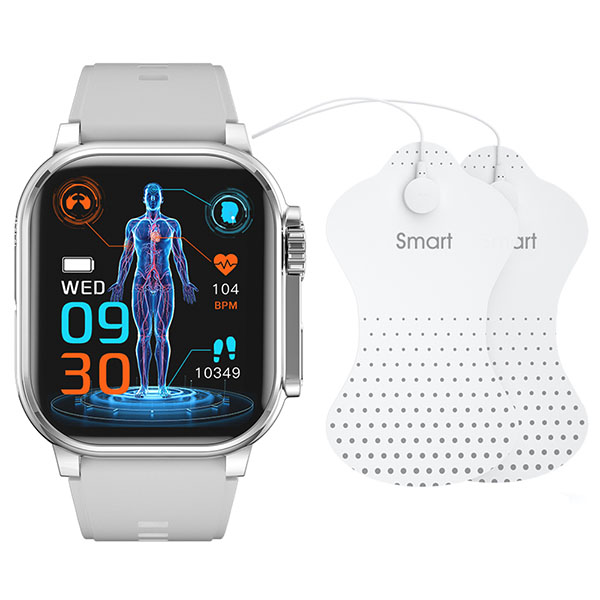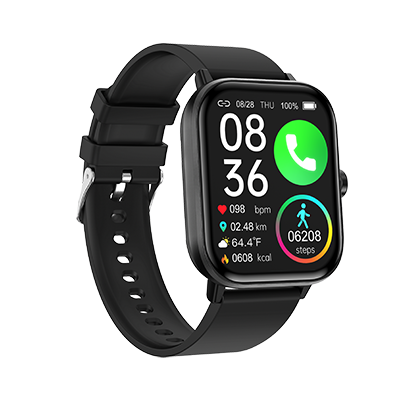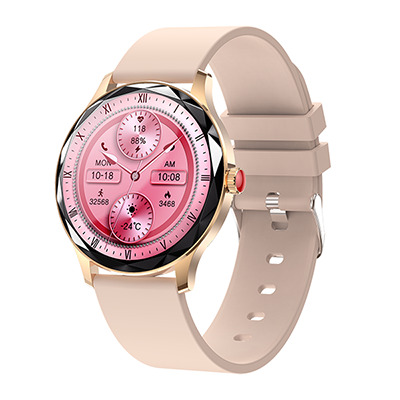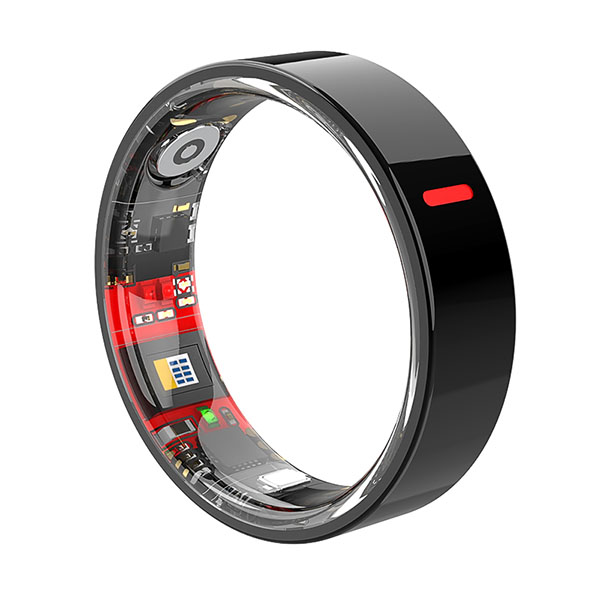
The healthcare wearable market is undergoing a fundamental shift: from consumer fitness tracking to clinical-grade remote patient monitoring. By 2027, the remote patient monitoring devices market is expected to reach $175 billion, and smartwatches are at the center of this transformation. Yet building a medical smartwatch is fundamentally different from building a consumer wearable — it demands sensor accuracy that meets clinical standards, regulatory pathways that can take 12-24 months, and firmware architecture designed for data integrity and patient safety.
This article provides a comprehensive guide for healthcare companies, telemedicine platforms, and medical device brands looking to develop smartwatches for healthcare and remote monitoring through OEM partnerships.
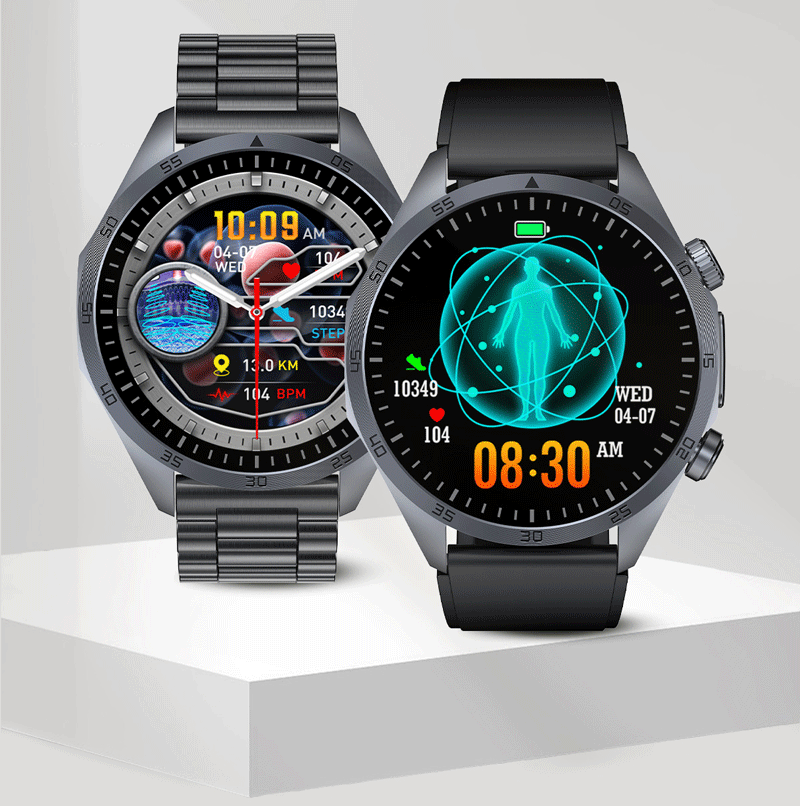
What Is a Medical Smartwatch?
Definition: A medical smartwatch is a wearable device designed to collect, process, and transmit health data with sufficient accuracy and reliability for clinical use cases — including remote patient monitoring, chronic disease management, and early warning detection. Unlike consumer smartwatches, medical smartwatches may require regulatory clearance (FDA, CE MDR, NMPA) depending on their intended use and claims.
Medical vs. Consumer Smartwatch: Critical Distinctions
● Sensor accuracy: Consumer watches have ±10-15% heart rate error tolerance; medical watches require ±3-5% or better, validated against clinical gold standards (ECG, arterial blood gas)
● Data integrity: Medical watches must ensure data completeness (no missing readings during transmission), timestamp accuracy, and secure encrypted storage
● Regulatory clearance: Devices making medical claims (e.g., arrhythmia detection, blood pressure estimation) require FDA 510(k) or De Novo clearance in the US, and CE MDR certification in the EU
● Fail-safe design: Medical watches must alert users when sensor readings are unreliable (e.g., poor skin contact, motion artifact) rather than silently presenting inaccurate data
● Continuous monitoring: Medical watches prioritize stable, long-duration monitoring (72+ hours on a single charge) over feature-rich but battery-draining consumer experiences
Key Health Monitoring Capabilities
1. Cardiac Monitoring
Heart health monitoring is the most mature and clinically validated smartwatch application:
● Single-lead ECG: Measures electrical heart activity between two electrodes on the watch case and the user's opposite hand. Can detect atrial fibrillation (AFib), premature ventricular contractions (PVCs), and other arrhythmias. Sensor cost: $1.50–$3.00 per module.
● Continuous PPG heart rate: Multi-wavelength photoplethysmography using green, red, and infrared LEDs for 24/7 heart rate tracking. Clinical-grade implementations achieve <5% error vs. ECG reference across rest, walking, and moderate exercise.
● Heart rate variability (HRV): RMSSD and SDNN metrics derived from continuous PPG or ECG data. Used for stress assessment, recovery monitoring, and autonomic nervous system evaluation.
● Atrial fibrillation screening: Algorithm-based AFib detection from PPG data with sensitivity >90% and specificity >85%. Samsung, Apple, and Fitbit have FDA-cleared implementations; OEM partners are now offering comparable algorithms for custom devices.
2. Blood Oxygen (SpO2) Monitoring
Pulse oximetry via wrist-worn sensors has improved significantly since 2020:
● Measurement principle: Red and infrared LEDs measure oxygenated vs. deoxygenated hemoglobin absorption ratios
● Clinical accuracy: Current-generation wrist SpO2 sensors achieve ±2-3% accuracy vs. finger pulse oximeters, sufficient for trend monitoring and screening
● Use cases: Sleep apnea screening, COPD monitoring, COVID-19 recovery tracking, altitude acclimatization
● Limitations: Wrist SpO2 is less accurate than finger clip sensors during motion and on darker skin tones. Devices must clearly communicate these limitations to users.
3. Blood Pressure Estimation
Cuffless blood pressure monitoring is the most anticipated and challenging health metric:
● PPG-based estimation: Uses pulse transit time (PTT) or pulse wave analysis (PWA) to estimate systolic and diastolic pressure. Requires initial calibration with a traditional cuff.
● Current accuracy: ±5-10 mmHg vs. cuff reference, sufficient for trend monitoring but not yet FDA-cleared for diagnosis in most implementations
● Samsung Galaxy Watch series has received FDA clearance for blood pressure monitoring (with calibration), proving the regulatory pathway exists for wrist-worn BP devices
● OEM development consideration: Blood pressure algorithms require extensive clinical validation (200+ subjects, multi-demographic studies). Budget $50,000-$150,000 for clinical validation.
4. Temperature Monitoring
Skin temperature monitoring has expanded from ovulation tracking to infection screening:
● Continuous skin temperature: NTC thermistor or IR sensor measures wrist temperature every 1-5 minutes. Useful for circadian rhythm analysis, fever detection, and ovulation tracking.
● Fever screening: Wrist temperature correlates with core body temperature within ±0.3-0.5°C for resting users. Not reliable during exercise or in cold environments.
● Menstrual cycle tracking: Apple Watch Series 8+ and Oura Ring have validated wrist temperature for ovulation prediction. OEM solutions are available with comparable accuracy.
5. Fall Detection and Emergency Alert
For elderly care and remote monitoring, fall detection is a critical safety feature:
● Detection mechanism: Accelerometer and gyroscope data analyzed for impact signature followed by lack of movement. Sensitivity and specificity must be balanced to minimize false alarms.
● Emergency protocol: Automatic SOS call or message with GPS location to designated caregivers or monitoring center. Requires LTE or Wi-Fi connectivity for standalone operation.
● Clinical impact: Studies show that fall detection reduces time-to-treatment by 40-60% for elderly individuals living alone, significantly improving outcomes for hip fractures and head injuries.
Regulatory Pathways for Medical Smartwatches
Navigating medical device regulation is the most critical — and most underestimated — aspect of healthcare smartwatch development:
US Market: FDA Classification
● Class I (General Wellness): Step counting, basic heart rate display, sleep tracking. No FDA clearance required if no medical claims are made. Example: 'Track your daily steps.'
● Class II (Moderate Risk): Heart rhythm assessment, SpO2 for medical monitoring, blood pressure estimation. Requires 510(k) clearance demonstrating substantial equivalence to a predicate device. Timeline: 6-12 months. Cost: $50,000-$200,000 including testing.
● De Novo (Novel Devices): For features without existing predicates (e.g., new diagnostic algorithms). Timeline: 12-18 months. Cost: $100,000-$500,000.
EU Market: CE MDR 2017/745
● Class I: Self-certification for low-risk wellness devices. Minimal regulatory burden.
● Class IIa: Remote patient monitoring devices. Requires Notified Body assessment. Timeline: 6-12 months.
● Class IIb/III: Devices making diagnostic or treatment decisions. Extensive clinical evidence required.
Key Compliance Requirements
● ISO 13485: Quality management system for medical device manufacturing. Your OEM partner must hold this certification.
● IEC 60601-1-2: Electromagnetic compatibility for medical electrical equipment.
● IEC 62304: Software lifecycle requirements for medical device software.
● IEC 62366-1: Usability engineering for medical devices.
● Clinical evaluation: Literature review and/or clinical investigation data supporting safety and performance claims.
Architecture for Remote Monitoring Systems
A healthcare smartwatch is only one component of a remote patient monitoring (RPM) ecosystem. The complete architecture includes:
Device Layer
● Smartwatch: Sensor data collection, local preprocessing, and Bluetooth transmission
● Gateway: Smartphone or dedicated hub that receives watch data and forwards to cloud
Cloud Layer
● Data ingestion: HIPAA/GDPR-compliant API endpoints with encryption in transit (TLS 1.3) and at rest (AES-256)
● Data processing: Algorithm execution for health metric derivation (e.g., AFib detection, fall detection, anomaly flagging)
● Storage: Time-series database for continuous health data with audit logging and access controls
Application Layer
● Patient app: Health dashboard, medication reminders, telehealth video calls, and caregiver messaging
● Provider dashboard: Real-time patient monitoring with alert management, trend analysis, and clinical decision support
● Caregiver app: Alerts for abnormal readings, fall events, and missed medication doses
Geyan Technology, a professional smartwatch OEM/ODM manufacturer with over 15 years of experience, offering UI/APP customization, PCB & hardware development, and serving global clients across 50+ countries, provides the device-layer foundation for RPM ecosystems — delivering medical-grade hardware with validated sensor accuracy, secure firmware architecture, and companion app integration that connects to your clinical backend.
Development Timeline and Budget
Healthcare smartwatch development follows a more rigorous timeline than consumer projects:
1. Requirements and regulatory strategy (Months 1-2): Define intended use, target claims, and regulatory pathway with a medical device consultant.
2. Hardware development and sensor validation (Months 2-5): PCB design, sensor integration, and bench testing against clinical references. Budget: $30,000-$80,000.
3. Firmware and algorithm development (Months 3-7): Health algorithms, data encryption, fail-safe mechanisms, and clinical-grade alerting. Budget: $40,000-$120,000.
4. Companion app and cloud backend (Months 4-8): Patient and provider applications with HIPAA/GDPR compliance. Budget: $50,000-$150,000.
5. Clinical validation (Months 6-12): Multi-subject study comparing device performance against clinical gold standards. Budget: $50,000-$150,000.
6. Regulatory submission and clearance (Months 8-18): FDA 510(k) or CE MDR submission with supporting documentation. Budget: $30,000-$100,000.
7. Manufacturing and quality system (Months 12-16): ISO 13485 production line setup, incoming QC, and release testing.
Total development budget for a Class II medical smartwatch: $200,000-$600,000 over 12-18 months. This is a significant investment, but the medical device market commands ASPs of $199-$499 with recurring SaaS revenue of $10-$50 per patient per month for RPM platforms.
FAQ
Q: Can a consumer smartwatch be upgraded to medical grade?
A: Not practically. Medical-grade smartwatches require validated sensor configurations, clinical-grade algorithms, secure firmware architecture, and ISO 13485 manufacturing processes. Retrofitting a consumer design to meet these requirements typically costs more than developing from a medical-focused platform.
Q: What health claims can I make without FDA clearance?
A: General wellness claims that do not reference specific diseases are permitted without clearance. Examples: 'Track your heart rate trends,' 'Monitor your daily activity,' 'Log your sleep patterns.' You cannot claim: 'Detects atrial fibrillation,' 'Monitors blood pressure,' or 'Diagnoses sleep apnea' without regulatory clearance.
Q: How do medical smartwatches handle data privacy?
A: Medical-grade smartwatches must implement: AES-256 encryption for data at rest, TLS 1.3 for data in transit, user authentication for app access, audit logging for all data access, and compliance with HIPAA (US) or GDPR (EU) data handling requirements. De-identification of health data for research use must follow Safe Harbor or Expert Determination methods.
Q: What is the battery life requirement for a medical smartwatch?
A: Clinical use cases typically demand 72+ hours of continuous monitoring on a single charge for RPM applications. Some hospital-use models target 7-14 day battery life with reduced sampling rates. Battery life is primarily determined by sensor sampling frequency, Bluetooth transmission interval, and display usage.
Q: How accurate does SpO2 need to be for medical monitoring?
A: FDA guidance for pulse oximeters requires ±2-3% accuracy (Arm-standard deviation) in the 70-100% SpO2 range. Current wrist-worn sensors achieve ±2-5% depending on skin tone, motion, and perfusion index. For trend monitoring (not diagnosis), ±3-4% is generally acceptable for RPM applications.
Q: Can I develop a medical smartwatch without ISO 13485 certification?
A: If you are the legal manufacturer of a medical device, you must operate under an ISO 13485-certified quality management system. However, if you partner with an OEM that already holds ISO 13485 certification and acts as the contract manufacturer, you may not need your own certification — though you remain responsible for regulatory compliance as the legal manufacturer.
Healthcare smartwatches represent the convergence of wearable technology and clinical medicine — a space where sensor accuracy, data integrity, and regulatory compliance matter more than feature count or design aesthetics. The opportunity is enormous, but so are the technical and regulatory challenges.
Success in medical smartwatch development requires a manufacturing partner who understands both worlds: the precision engineering of clinical-grade sensors and the regulatory rigor of medical device manufacturing. The right OEM partnership provides not just hardware, but the validated sensor data, quality system infrastructure, and regulatory documentation that transform a prototype into a market-ready medical device.
For organizations entering this space, start with a clear regulatory strategy, invest in clinical validation early, and choose a partner with proven healthcare wearable experience. The medical smartwatch market rewards precision, not speed.
Ready to launch your industry-specific smartwatch solution? Contact Geyan Technology today for a free consultation on custom hardware, firmware, and application development tailored to your sector.
• Get a free project consultation and feature recommendation for your industry
• Explore our portfolio of 200+ successful OEM/ODM projects across fitness, healthcare, and corporate sectors
• Request a prototype sample delivered within 30 days
Visit Geyan Technology — your trusted partner for end-to-end smartwatch manufacturing.