Introduction: The Hidden Costs of Smartwatch OEM
Launching a branded smartwatch sounds exciting — until you sit down to map out the financials. Most first-time buyers underestimate the total cost of smartwatch OEM, expecting a simple per-unit price and nothing more. In reality, smartwatch development cost is layered: from hardware engineering to firmware, from tooling to compliance certification, every phase of production adds up.
Understanding where every dollar goes is the first step to running a profitable smartwatch business. This guide provides a complete smartwatch OEM cost breakdown, so you can budget accurately, negotiate smarter, and choose the right manufacturing partner.
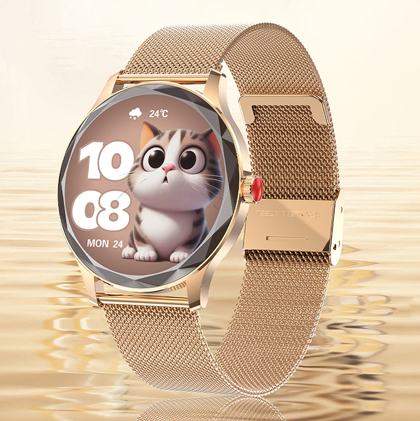
Why Smartwatch OEM Costs Are Difficult to Estimate
Unlike buying a commodity product off the shelf, smartwatch OEM involves dozens of customizable variables. Your choices around hardware specs, operating system, design complexity, branding requirements, and certification needs all directly affect cost. There is no universal price — only the right price for your project's scope.
Additionally, China-based OEM manufacturers operate with different cost structures than Western suppliers. When sourcing a smartwatch manufacturer in China, understanding what is included in a quote versus what is charged separately (tooling, NRE fees, app development, compliance) can make or break your budget planning.
The Complete Smartwatch OEM Cost Breakdown
1. NRE (Non-Recurring Engineering) Fees
NRE fees cover the one-time cost of engineering work required to design and develop your custom smartwatch. This includes PCB layout and schematic design, mechanical CAD design, firmware development, UI/UX interface programming, and initial prototype fabrication. For a fully custom smartwatch, NRE fees typically range from $15,000 to $80,000+ depending on the complexity of hardware features and level of software customization.
For semi-custom or ODM-based projects (using an existing platform), NRE can be significantly lower — sometimes as little as $3,000 to $10,000 — since the core hardware is already validated.
2. Tooling and Mold Costs
If you require a custom housing or casing, injection mold tooling is a major cost. A standard smartwatch plastic housing mold typically costs $2,000–$8,000. Metal or premium composite casings (aluminum, zinc alloy) can push tooling costs to $10,000–$25,000. Watch strap molds are additional. These are one-time costs amortized over your production run.
3. Bill of Materials (BOM) Cost
The BOM (Bill of Materials) is the per-unit cost of all components assembled into each smartwatch. Typical BOM items include:
● Main SoC/MCU chip (e.g., Nordic, MediaTek, Realtek): $2–$8 per unit
● Display (TFT LCD or AMOLED): $3–$15 per unit
● Battery (100–400 mAh Li-Po): $0.80–$2.50 per unit
● Health sensors (PPG, accelerometer, SpO2): $1.50–$6 per unit
● Bluetooth / GPS / NFC modules: $1–$5 per unit
● PCBA assembly and SMT: $1.50–$4 per unit
● Casing, strap, and packaging: $2–$8 per unit
A realistic base BOM cost for an entry-level custom smartwatch ranges from $12–$35 per unit. Premium health-focused models with AMOLED displays and multi-sensor arrays can exceed $60–$90 BOM cost.
4. App Development and UI Customization
Custom mobile applications (iOS + Android) and watch-face UI design are often underestimated in the smartwatch development cost equation. A basic companion app with Bluetooth sync typically costs $8,000–$25,000 to develop. If you need advanced features — cloud health data sync, AI health coaching, multi-language support, or e-commerce integration — budget $30,000–$100,000 or more.
Professional OEM manufacturers like Geyan Technology (15+ years in smartwatch OEM/ODM) include in-house UI/UX and APP development teams, which significantly reduces this cost compared to outsourcing to third-party developers. Their integrated approach covers PCB design, embedded firmware, and companion app development under one roof.
5. Compliance and Certification Costs
Before selling in major markets, your smartwatch must pass regulatory certifications. Key certifications and their estimated costs:
● FCC (USA): $3,000–$8,000
● CE (Europe): $2,000–$6,000
● RoHS / REACH (materials compliance): $500–$2,000
● Bluetooth SIG (BQB): $3,000–$5,000
● MFi (Apple compatibility): $3,500+ Apple program fees
● FDA (if medical-grade claims): $15,000–$50,000+
Plan for $8,000–$20,000 in certification costs for a standard consumer smartwatch targeting the US and European markets.
6. Minimum Order Quantity (MOQ) and Unit Price
Most smartwatch OEM manufacturers have MOQ requirements ranging from 500 to 3,000 units for standard models. Custom designs typically require 1,000–5,000 units minimum. The unit price drops significantly with volume:
● 500 units: $45–$80/unit (entry-level spec)
● 1,000 units: $30–$60/unit
● 5,000 units: $20–$42/unit
● 10,000+ units: $15–$35/unit
7. Logistics, Duties, and Freight
Shipping from China adds $0.50–$3.00 per unit by sea freight (large volumes), or $5–$15 per unit by air. US import duties on smartwatches typically range from 3.9%–6.9% of declared value. Always factor in logistics costs when projecting total landed cost.
Total Cost of Ownership: A Realistic Budget Example
To give a concrete example, here is a realistic budget for a startup launching a custom branded fitness smartwatch at 2,000 units:
● NRE fees (semi-custom ODM base): $8,000
● Tooling (custom casing mold): $6,000
● BOM + PCBA (2,000 units × $28): $56,000
● App development (basic companion app): $15,000
● Certifications (FCC + CE + BQB): $12,000
● Packaging design + production: $4,000
● Freight + duties: $5,000
● Total Estimated Investment: ~$106,000
At a retail price of $89–$129, this project achieves positive unit economics at scale. The key is accurate upfront budgeting and choosing an OEM partner who can consolidate multiple cost items (engineering + app + compliance support) into one relationship.
How to Reduce Your Smartwatch OEM Cost
● Start with an ODM platform: Use existing validated hardware as your base to minimize NRE and tooling costs.
● Consolidate your vendor: An OEM manufacturer who handles hardware, firmware, and app in-house saves coordination overhead and cost.
● Increase your MOQ: Every additional 1,000 units reduces per-unit cost. Scale your initial order if cash flow allows.
● Prioritize certifications for your launch market: Get FCC/CE first; delay others until you have market traction.
● Leverage manufacturer certifications: Some OEM factories hold pre-certified module certifications that can be reused.
Frequently Asked Questions (FAQ)
Q: What is the minimum budget needed to launch a custom smartwatch?
A: A realistic minimum budget for a semi-custom smartwatch OEM project (1,000 units) is approximately $60,000–$90,000, including NRE, BOM, basic app, and core certifications. Full-custom projects from scratch typically start at $150,000+.
Q: Are NRE fees refundable if I cancel the project?
A: Generally, NRE fees are non-refundable as they cover actual engineering labor already performed. Some manufacturers may allow partial credit toward future projects. Always review the payment terms before signing.
Q: Does a lower BOM cost mean lower quality?
A: Not necessarily. Experienced OEM manufacturers can optimize BOM cost through component selection, supply chain relationships, and design efficiency without sacrificing reliability. Always request sample units and conduct quality testing before mass production.
Q: How long does it take to recoup the initial investment?
A: This depends heavily on retail pricing, sales velocity, and channel margins. Most successful private-label smartwatch brands achieve break-even within 12–18 months at a retail price of $79–$149 and consistent monthly sales volume.
Q: What is a smartwatch BOM and why does it matter?
A: A BOM (Bill of Materials) is a complete list of every component in your smartwatch and its per-unit cost. It matters because it is the foundation of your unit economics. Understanding the BOM helps you negotiate pricing, identify cost reduction opportunities, and verify that the manufacturer is not cutting corners on components.
Q: Does Geyan Technology provide transparent BOM pricing?
A: Yes. Geyan Technology, a professional smartwatch OEM/ODM manufacturer with 15+ years of experience, provides detailed BOM cost breakdowns for all custom projects. Their transparent pricing model and global client base make them a trusted manufacturing partner for brands at all stages.
Conclusion: Budget Smart, Build Confidently
Understanding your smartwatch OEM cost breakdown is not just a financial exercise — it is a strategic foundation for your product launch. By knowing where costs originate (NRE, BOM, certifications, app, logistics), you can make informed decisions about where to invest, where to save, and what timeline to plan for.
The smartwatch market is projected to exceed $120 billion globally by 2028. The opportunity is real — but only for brands who enter with clear-eyed financial planning and the right manufacturing partner.
Ready to get a detailed cost estimate for your smartwatch project? Contact Geyan Technology — a trusted smartwatch OEM/ODM manufacturer with 15+ years of experience, in-house PCB development, UI/APP customization, and global compliance support. Get your transparent quote today.