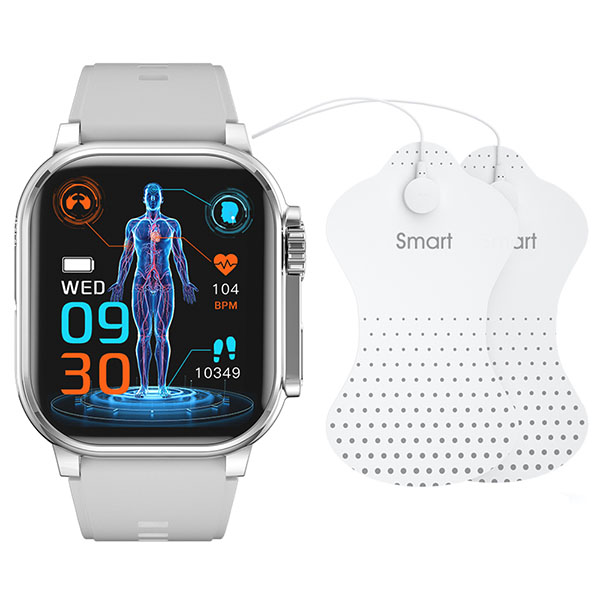
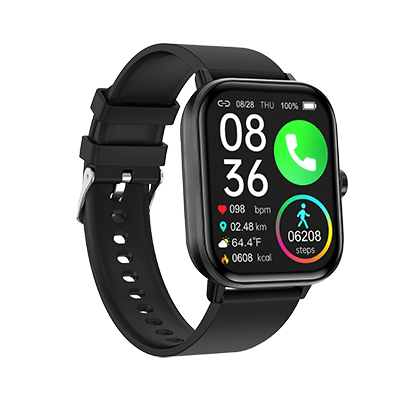
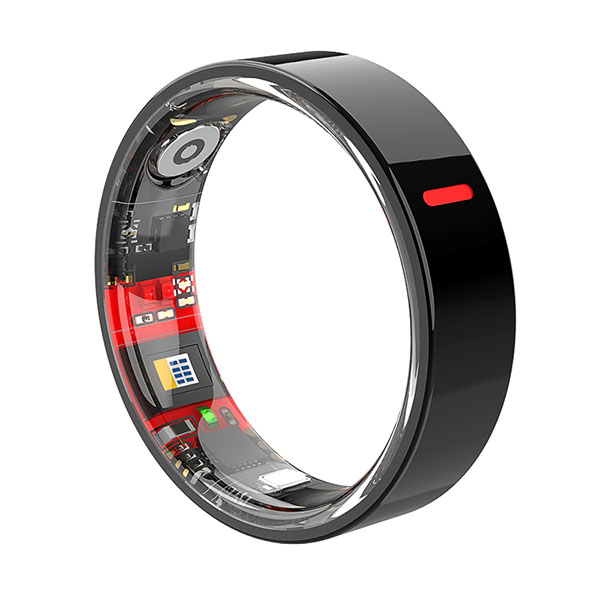
Smartwatch OEM services allow brands and businesses to develop wearable devices tailored to their product requirements. These services may include hardware customization, PCB design, firmware development, mobile app integration, API connectivity and mass production.
A standard sourcing order usually means picking an existing model, adding a logo and buying in bulk. An OEM project goes further: functions, sensors, interface, companion app and data flow are configured around the buyer's own product plan. This matters when a brand has a specific target user, price band, health feature set or existing software ecosystem that off-the-shelf watches cannot match.
Geyan Technology works with smartwatch brands, wearable technology companies, IoT solution providers, electronics distributors, healthcare technology companies and wearable startups. Cooperation can stay light — choosing a mature model and adjusting appearance, watch faces and packaging — or extend into deeper hardware, firmware and app development.
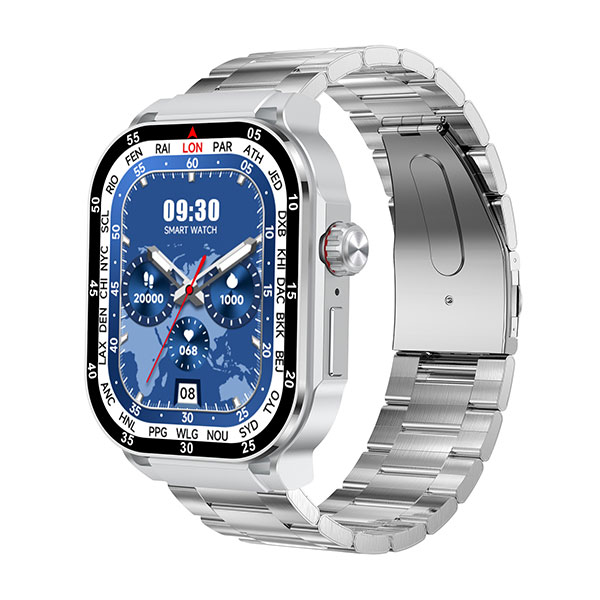
An experienced smartwatch OEM manufacturer supports the product from requirement analysis and technical evaluation through prototype, integration, validation and mass production. The sections below break down what each customization layer covers, where the usual boundaries sit, and how buyers can evaluate a partner before committing.
What Can a Smartwatch OEM Manufacturer Customize?
A wearable OEM project can touch six layers of the product, and buyers do not have to open all six at once.
|
Customization Area
|
Available Services
|
|
Hardware
|
PCB layout and PCBA development, sensor selection, display options, battery configuration and component integration
|
|
Firmware
|
Device function configuration, sensor data processing, Bluetooth protocols, system optimization and OTA updates
|
|
Mobile App
|
Interface and feature customization, device pairing, connectivity and health or fitness data synchronization
|
|
Cloud Platform
|
Data storage, user and device management, backend connection and API integration
|
|
Appearance
|
Case design and material, strap type and color, logo, watch face and packaging
|
|
Mass Production
|
Assembly, functional and reliability testing, quality control and batch delivery
|
The right starting point depends on budget, development timeline and product positioning. A distributor launching a private label line may only need appearance and packaging changes; a brand with its own application may require firmware and API work; a startup with a new product concept may evaluate hardware and PCBA changes from an early stage.
Smartwatch Hardware Customization: Building the Right Device
Smartwatch hardware customization defines the physical device: circuit board, sensors, display, battery, case and strap. The hardware choices set the stability, power consumption, feature headroom and production cost of the final product.
PCB and PCBA Design
Board-level work covers PCB layout and circuit design, PCBA development and component selection, Bluetooth chipset integration, power management optimization, and hardware compatibility testing. The board scheme directly affects device stability, battery life, future feature headroom and production cost. Buyers planning deeper changes can review our PCB and firmware deep customization whitepaper before the technical discussion. Board-level changes generally require more engineering time and tooling than configuration adjustments on an existing platform.
Sensor and Component Integration
Common modules include PPG heart rate sensors, SpO₂ sensors, accelerometers and gyroscopes, ECG modules where supporting hardware exists, GPS modules, microphones and speakers. The sensor combination decides which health and sports features the watch can offer and how readings appear in the companion app. A fitness model, a senior safety watch and a kids' watch each call for a different balance of sensors, connectivity and battery design.
Display, Battery and Appearance Customization
Display options include AMOLED and TFT screens, chosen by target price and outdoor readability. Battery capacity, power consumption, case materials, strap materials and colors, and the customer logo are configured around product positioning. Appearance customization can cover case shape and finish, interchangeable straps, color variants and retail packaging.
Hardware Customization for Different Applications
Hardware schemes are normally matched to the intended use case, such as fitness and sports tracking, senior safety monitoring, kids' smartwatches, Bluetooth calling smartwatches and 4G connected wearable devices. Two examples from our current line show how the same development pipeline serves different segments:
-
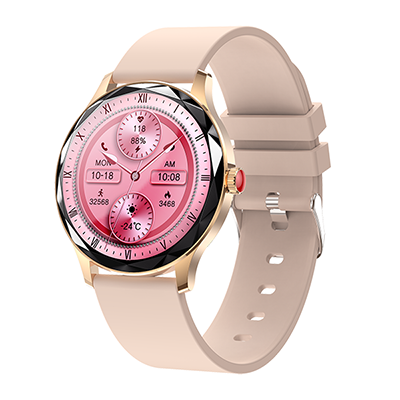
Luxury women's smart sports watch: 41mm case with a 10.2mm thickness, 1.32-inch AMOLED HD screen at 466 × 466 resolution, AB5691 processor, BT 5.0 plus BT 3.0, 220mAh battery delivering 5–7 days of typical use, and IP67 water resistance. The metal alloy housing, faceted bezel and interchangeable metal or silicone straps (silver, gold, black metal; gray, pink, black silicone) suit fashion brands, lifestyle brands and gift projects looking for a high-end appearance.
-
DM59 rugged outdoor smartwatch: 1.43-inch AMOLED HD screen at 466 × 466, VC30F heart rate and SpO₂ sensor, STK8321 accelerometer, MMC5617 magnetometer and Goertek SPL07-03 barometer and altimeter. It supports L1-band multi-satellite positioning across GPS, GLONASS, BDS, Galileo and QZSS, with downloadable offline maps, 5ATM water resistance, a 500mAh high-voltage polymer battery, BLE 5.3 and 170+ sports modes, built for hiking, swimming and mountaineering use cases.
Smartwatch Firmware Customization: Controlling Device Functions
Smartwatch firmware customization allows brands to modify device functions, communication protocols, sensor processing and power management according to specific product requirements. Firmware sits between the hardware and the phone application, and it determines what the watch actually does and how it behaves in daily use.
Custom Firmware Development
Firmware work can cover device function configuration, sensor data processing, Bluetooth communication, power management and performance optimization. How sensor readings are filtered, how often the watch wakes to measure, and how notifications and calling functions are scheduled are all decided at this level.
Bluetooth Protocol and Data Communication
This layer handles BLE communication, Bluetooth pairing, data transmission, device synchronization and connection stability. A reliable communication stack reduces daily disconnects and limits battery drain from constant background broadcasting.
Custom Watch Faces and User Interface
Interface customization includes watch face design, menu and interface adjustments, language customization, brand-specific UI elements and interaction optimization, ranging from branded faces and menu themes to multi-language adaptation for target markets.
Firmware Updates and OTA Support
After release, the device may need OTA firmware updates, bug fixing and maintenance, feature updates and compatibility management. An OTA pipeline lowers post-launch fix costs and extends the product's working life.
The actual customization scope depends on the underlying chip platform, the existing software architecture and the development rights the manufacturer can grant. Some functions can be configured on a mature platform; others require firmware-level modification or a new platform evaluation. This boundary should be confirmed in the technical review stage rather than assumed during the sales discussion.
Smartwatch App Customization and Mobile Application Integration
Smartwatch app customization covers the companion application, the health and fitness data it displays, and the connections to third-party platforms or backend systems. For brands and IoT buyers, the app is often where users interact with the product on a daily basis.
Custom Smartwatch Companion App
The companion app can be configured for Android and iOS compatibility, brand logo and interface, registration and account management, device pairing and management, and activity and health data display. Where the buyer already operates its own app, the watch can be evaluated for connection into that existing account and data system.
Health and Fitness Data Synchronization
Synchronized data typically includes heart rate, blood oxygen, sleep tracking, steps and activity records, and sports data. Accuracy, usability and sync frequency depend on the sensor, firmware implementation and software design on both sides. Health features should be described according to the validated capability of the final device, not copied from a reference model.
API and SDK Integration for Third-Party Applications
For development companies and technical purchasers seeking a wearable data interface, support can include API documentation, SDK integration, Bluetooth GATT communication, third-party platform connectivity, data access and synchronization, and backend integration. This layer matters when the watch feeds an existing dashboard, health platform or business system. Buyers should confirm in writing which interfaces are exposed, which data fields are readable, and what additional development their platform requires.
Cloud Platform and Backend Integration
Cloud-side capabilities may cover data storage, user and device management, multi-device management and integration with the buyer's backend system. Existing standard cloud features should be separated from features requiring separate project development; what ships out of the box and what must be built for a specific account system or dashboard is agreed during technical evaluation.
Smartwatch OEM vs. ODM vs. Private Label: Which Is Right for Your Business?
Buyers often compare three cooperation modes. The main difference lies in who defines the product and who owns the development outcome.
|
Service Type
|
Description
|
Best For
|
|
Private Label
|
An existing smartwatch sold under the buyer's brand, with logo, packaging and basic interface adjustments
|
Importers and distributors who want to reach the market quickly
|
|
OEM
|
Product developed or configured according to the buyer's specifications, across hardware, firmware, app or interface layers
|
Established brands with clear product requirements
|
|
ODM
|
The manufacturer provides product design and development solutions that the buyer adapts to its brand
|
Brands that want development support on the manufacturer's existing platforms
|
Private Label suits customers who prioritize a short time to market and a proven product. OEM suits buyers with defined specifications and a target product that existing catalog models do not cover. ODM suits brands that prefer to use the manufacturer's existing R&D capability to adapt a solution rather than start from a blank sheet.
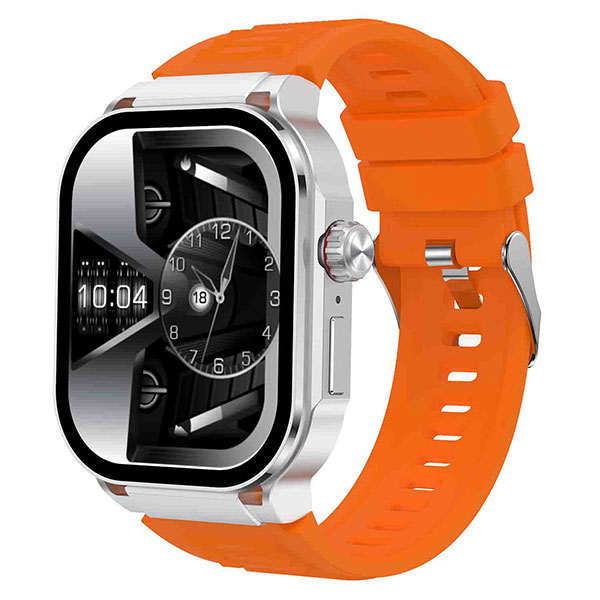
Across all three modes, the cooperation boundary, intellectual property ownership, source code delivery and later maintenance responsibilities should be stated clearly in the project contract. These terms are negotiated per project rather than applied as a blanket standard.
Smartwatch OEM Development Process: From Concept to Mass Production
A typical project moves through six stages; each stage narrows the open technical questions before production tooling is committed.
-
Requirement Analysis: define the target market, functional requirements, product positioning and budget.
-
Hardware and Software Evaluation: assess the chip, sensors, firmware and app technical scheme.
-
Prototype Development: build samples and verify functions and performance.
-
Firmware and App Integration: complete the data connection between the watch, the mobile app and the backend system.
-
Testing and Validation: run functional, connection, battery life and stability tests.
-
Mass Production and Delivery: confirm the production scheme, execute quality control and complete batch delivery.
Lead time differs widely between mature-model adjustments and new hardware development. A realistic schedule is agreed after the requirement review and scheme evaluation, rather than quoted as a fixed number at the first inquiry.
How to Choose the Right Smartwatch OEM Manufacturer in China?
The strongest-looking catalog is not enough. A buyer should verify development depth, technical openness, quality process and commercial terms before sending a serious inquiry.
Evaluate Hardware and Software Development Capabilities
Look beyond the factory floor: ask whether the partner can handle hardware and software together, or only assemble finished devices. Coordinated development matters when firmware, app and sensor logic need to change at the same time.
Check Existing Products and Development Experience
Request real product cases, working samples and technical documentation matching your target category. A portfolio spanning sports, business, outdoor watches and other wearable forms reveals range better than a single promotional listing.
Understand API, SDK and Source Code Availability
For buyers with an in-house technical team, this point is critical. Confirm what interfaces are documented, whether SDK integration is supported, and under what terms source code or firmware ownership may transfer. Code access varies by platform and project agreement.
Review Quality Control and Product Certifications
Ask about pre-production testing, production-line checks and the compliance requirements of your target market. Certifications and reports should match the actual model and destination country, not a generic manufacturer profile.
Confirm MOQ, Development Cost and Intellectual Property
Clarify development fees, tooling costs, minimum order quantity, IP ownership and source code delivery before the project starts. These terms determine whether the project fits the buyer's budget and long-term plan.
Why Choose Geyan for Smartwatch OEM Services?
Shenzhen Geyan Technology Innovation Co., Ltd. was founded in 2012 and operates as a national high-tech enterprise specializing in the research, design, production, sales and after-sales service of smart wearable devices, with a strong focus on OEM and ODM customization.
Experienced Smartwatch Manufacturer Since 2012
With nearly 15 years in the intelligent electronics industry, Geyan combines independent R&D, precision manufacturing, strict quality control and professional service to provide cost-effective wearable solutions worldwide. It is among the early participants in China's smartwatch industry, having taken part in initiating the Smart Wearable Industry Association and the Chip Industry Promotion Association, where it serves as a standing committee member. Its own brands include Jieshilang, Jersa and xinan.
Integrated Hardware and Software Capabilities
The project team supports hardware and PCB/PCBA development, firmware customization, app integration, API and SDK documentation, and cloud platform connectivity. This means the watch, companion app and data layer can be aligned as one system rather than assembled from separate suppliers.
Flexible Customization for Different Markets
Customization can cover appearance, logo and packaging, UI and watch faces, product configuration and application-specific functions. A project may start from a mature platform with light branding changes, or move toward deeper configuration as the plan firms up.
Support for Different Wearable Product Categories
From Product Selection to Long-Term Manufacturing Support
Geyan supports both small-batch customization and large-scale OEM orders, covering sample testing, project communication, production quality control and after-sales technical support. Under the philosophy of "Learning – Innovation – Surpassing," customer needs are treated as the foundation of product planning and technological innovation as the driver of growth.
Frequently Asked Questions About Smartwatch OEM Services
Q1: What are included in smartwatch OEM services? OEM services typically cover hardware and PCB design, PCBA development, sensor integration, firmware configuration, companion app customization, API connectivity, appearance and packaging, assembly, testing and mass production. The exact scope is defined project by project.
Q2: Can I customize both smartwatch hardware and software? Yes, to the extent supported by the chosen platform. Hardware and software customization depth is evaluated together during the technical review: a mature platform allows configuration and interface changes more easily, while hardware-level changes usually require a separate scheme and timeline.
Q3: Can a smartwatch manufacturer develop a custom mobile app? Yes, subject to project scope. App support can cover Android and iOS compatibility, brand interface, device pairing and management, and health or fitness data synchronization. For buyers with an existing app, integration into that system is evaluated separately.
Q4: Does Geyan provide smartwatch API and SDK documentation? Interface support depends on the model and project. Available materials may include API documentation, SDK integration guidance and descriptions of readable data fields and communication flow. The exposed interface list is confirmed during technical evaluation before contract signing.
Q5: Can I customize smartwatch firmware? Firmware customization can cover function configuration, sensor processing, Bluetooth communication, interface behavior and OTA update support. How deep the changes can go depends on the chip platform, existing software architecture and development rights agreed for the project.
Q6: What is the MOQ for custom smartwatch OEM projects? Minimum order quantity depends on the model, customization depth, hardware configuration and production scheme. Light branding changes on a mature model usually carry a lower MOQ than a project with dedicated hardware or app development.
Q7: How long does smartwatch OEM development take? Lead time varies. Adjustments to a mature product — watch faces, strap, logo, packaging or configuration — are faster than developing new hardware, changing sensors or building a dedicated app. A project schedule is agreed after the requirement and scheme review.
Q8: Can I use my own brand and logo on customized smartwatches? Yes. Brand customization can include the watch logo, watch faces, strap and case colors, and retail packaging, depending on the cooperation mode chosen.
Q9: Can smartwatches integrate with third-party IoT platforms? Integration is possible where the platform supports it, through API, SDK and Bluetooth GATT communication, plus backend data connection. The specific data fields, sync direction and connection method are validated against the buyer's platform during technical evaluation.
Q10: Does Geyan support custom smartwatch projects for overseas brands? Yes. Geyan works with overseas smartwatch brands, wearable technology companies, distributors, IoT solution providers and wearable startups on OEM and ODM projects, supporting everything from product selection and light customization to deeper hardware, firmware and app development.