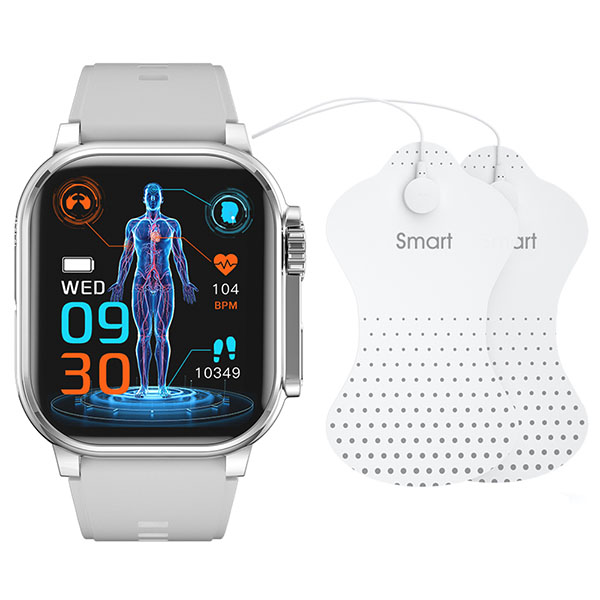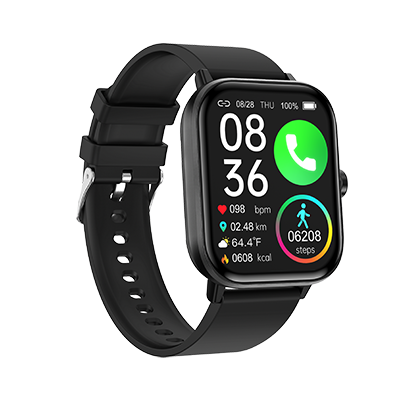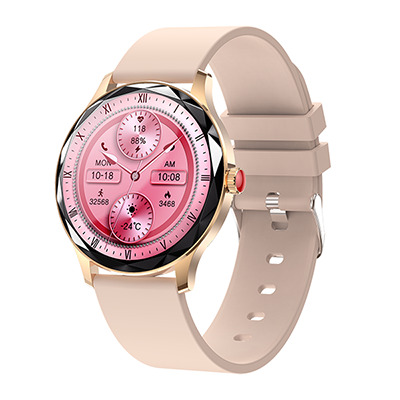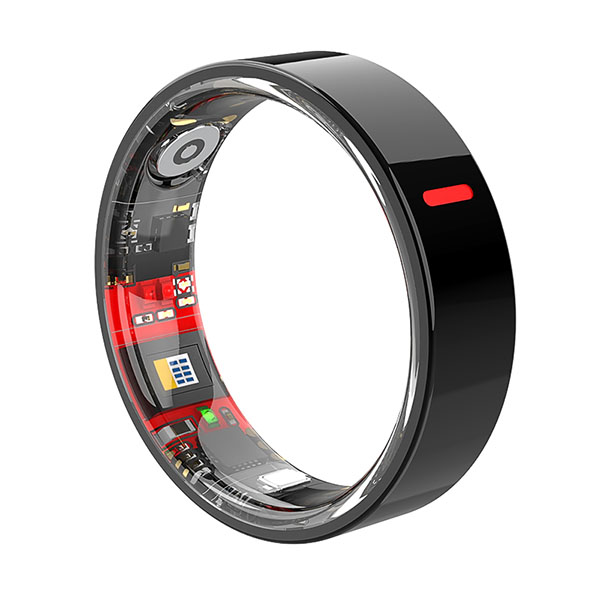
The global fitness wearable market is projected to reach $114 billion by 2028, yet most fitness brands still struggle to find a smartwatch OEM partner that truly understands the unique demands of athletic performance tracking. Generic consumer smartwatches fail where fitness-specific wearables must excel: sensor accuracy under motion, rugged durability, and seamless integration with training ecosystems.
This article explores how fitness brands can leverage smartwatch OEM partnerships to create performance-grade wearables that stand apart from consumer gadgets — from sensor selection and firmware optimization to packaging strategy and go-to-market execution.
Why Fitness Brands Need Purpose-Built Smartwatches
Off-the-shelf smartwatches are designed for the average consumer — someone who walks 6,000 steps a day and occasionally jogs. Fitness brands serve athletes, trainers, and health-conscious users who demand more: real-time heart rate accuracy during high-intensity intervals, reliable GPS tracking for outdoor runs, and swim-proof construction for triathletes.
Definition: Fitness smartwatch OEM is a manufacturing partnership where a fitness brand specifies performance-critical features (sensor accuracy, durability ratings, training algorithms) and an OEM manufacturer produces the device to those specifications.
The difference is not cosmetic. It is fundamental:
Consumer Watch vs. Fitness Watch: Key Differences
● Heart rate sampling: Consumer watches average 1-2 readings per second; fitness watches require continuous sampling at 10-50Hz for interval training accuracy
● GPS: Consumer watches use assisted GPS with 5-10 second lock times; fitness watches demand dual-band GNSS with sub-3-second lock and multi-constellation support
● Durability: Consumer watches target IP68 (splash/swim); fitness watches require MIL-STD-810H impact resistance plus 5ATM+ water rating
● Battery under load: Consumer watches last 1-2 days with basic tracking; fitness watches must deliver 10-40 hours of continuous GPS tracking
● Algorithm depth: Consumer watches estimate calories; fitness watches provide VO2 max, training load, recovery time, and lactate threshold estimates
Core Features of a Fitness-Grade Smartwatch
1. Advanced Heart Rate Monitoring
Accurate heart rate during intense exercise is the single most critical sensor requirement for fitness watches. The technology choices include:
● Multi-LED PPG arrays: 4-6 green LEDs with photodiodes arranged in a curved configuration to maintain skin contact during wrist movement. Cost: $1.50–$3.00 per module
● Motion artifact cancellation: Firmware algorithms that filter out acceleration noise from PPG signals. This is where most budget OEMs fall short — without proper motion cancellation, heart rate errors exceed 20% during running
● Heart rate zone alerts: Real-time vibration feedback when the user enters or exits training zones. Requires low-latency processing (under 500ms from sensor read to haptic feedback)
2. GPS and Location Tracking
For outdoor fitness, GPS accuracy determines the credibility of pace, distance, and route data:
● Single-band GPS (L1 only): Adequate for casual tracking, but prone to urban multipath errors of 3-10 meters
● Dual-band GNSS (L1+L5): Supports GPS, GLONASS, Galileo, and BeiDou simultaneously. Reduces urban error to 1-3 meters. Adds $1.50–$3.50 to BOM
● Track running mode: Uses accelerometer calibration for GPS-denied environments (indoor tracks). Requires custom firmware development
3. Sport-Specific Metrics
Modern fitness watches must support 50-150+ sport modes with tailored data displays:
● Running: Cadence, ground contact time, vertical oscillation, running power
● Cycling: Power zone display, cadence sensor pairing, route navigation
● Swimming: Stroke detection, SWOLF score, lap counting, pool length calibration
● Strength training: Rep counting, rest timer, muscle group tracking
● HIIT: Interval timer, heart rate recovery tracking, work/rest ratio display
4. Ruggedized Construction
Fitness watches face environments that destroy consumer devices:
● Corning Gorilla Glass or sapphire crystal lens to resist scratching from weights, ropes, and outdoor terrain
● Reinforced case architecture with metal mid-frame to survive drops from 1.5 meters onto concrete
● Sweat and saltwater resistance with PVD-coated or anodized finishes that resist corrosion
● Quick-release strap system for rapid transition between silicone (swim), nylon (run), and metal (lifestyle) bands
The OEM Development Process for Fitness Watches
Working with a fitness smartwatch OEM follows a structured development path that typically spans 90-150 days:
1. Requirements definition (Weeks 1-2): Specify target sports, sensor accuracy thresholds, battery life targets, durability ratings, and companion app integration requirements.
2. Platform selection (Weeks 2-3): Choose the hardware reference design. For fitness watches, the Nordic nRF52840 or RTL8762DT platforms offer the best balance of processing power, Bluetooth performance, and power efficiency.
3. Firmware development (Weeks 3-10): Custom sport algorithms, motion artifact cancellation, GPS data processing, and companion app API integration.
4. Industrial design and tooling (Weeks 4-8): Ruggedized case design with reinforcement features, button placement for glove-friendly operation, and strap quick-release mechanism.
5. Prototype and validation (Weeks 8-12): Field testing with actual athletes across multiple sports. Heart rate accuracy validation against chest straps (target: under 5% error at 150+ BPM).
6. Certification and production (Weeks 12-16): FCC, CE, and durability testing. Mass production with 100% functional testing on every unit.
Business Case: Why Fitness Brands Should OEM Their Own Watch
Launching a branded fitness watch is not just about product expansion — it is a strategic moat that transforms customer relationships:
Revenue Impact
● Average selling price (ASP) for fitness smartwatches: $79–$249 retail
● Manufacturing cost at 5,000 units (mid-range spec): $18–$28 per unit
● Gross margin: 55-72% when selling direct-to-consumer
● Recurring revenue from premium subscription features (advanced analytics, coaching): $4.99–$14.99/month per user
Ecosystem Lock-In
A branded fitness watch creates a data ecosystem that keeps users engaged: workout history stored in your app, social challenges with your community, and training plans built around your platform. When users invest 12 months of health data in your ecosystem, switching costs become a powerful retention tool.
Competitive Differentiation
Generic white-label watches are available to any competitor. A custom-built fitness watch with your proprietary algorithms, sport modes, and training insights cannot be replicated by another brand buying from the same supplier.
Choosing the Right Fitness Smartwatch OEM Partner
Not every OEM manufacturer can deliver fitness-grade wearables. Evaluate potential partners on these criteria:
1. Sensor expertise: Can they demonstrate heart rate accuracy under motion? Ask for validation data comparing their PPG implementation against chest strap references.
2. Firmware capability: Do they develop custom sport algorithms in-house, or rely on third-party SDKs? In-house capability means faster iteration and better optimization.
3. Durability testing: Do they have environmental testing chambers (salt spray, drop test, temperature cycling) on-site, or must testing be outsourced?
4. App integration experience: Have they built companion apps that sync with Apple Health, Google Fit, and Strava? API integration experience saves weeks of development time.
5. Athlete validation: Have their watches been field-tested by real athletes? Request test reports from running, cycling, and swimming scenarios.
Geyan Technology, a professional smartwatch OEM/ODM manufacturer with over 15 years of experience, offering UI/APP customization, PCB & hardware development, and serving global clients across 50+ countries, has delivered fitness-grade smartwatch solutions for brands across North America, Europe, and the Middle East, with validated heart rate accuracy within 3% of chest strap references during high-intensity exercise.
FAQ
Q: What is the minimum order quantity for a custom fitness smartwatch?
A: Most OEM manufacturers set MOQ at 2,000-5,000 units for fitness-specific models due to the custom sensor calibration and sport algorithm development required. Some partners offer pilot runs of 500-1,000 units at a 15-25% premium for market validation.
Q: How accurate are OEM fitness watches compared to Garmin or Apple Watch?
A: With proper multi-LED PPG arrays and motion artifact cancellation, OEM fitness watches can achieve heart rate accuracy within 3-5% of chest strap references during running — comparable to mid-tier Garmin models. GPS accuracy with dual-band GNSS matches consumer-grade sport watches at 1-3 meter urban accuracy.
Q: Can I add custom sport modes that are not available in standard firmware?
A: Yes. Custom sport modes require firmware development for each sport's specific data display, sensor configuration, and algorithm. Expect 1-2 weeks of development per sport mode, with a cost of $500-$1,500 per mode depending on complexity.
Q: What is the typical development timeline for a fitness smartwatch?
A: 90-150 days from concept approval to first shipment, depending on feature complexity. Projects with existing hardware platforms and moderate customization land at 90-110 days. Fully custom designs with proprietary algorithms require 120-150 days.
Q: How do I protect my proprietary fitness algorithms when working with an OEM?
A: Use a dual-layer protection strategy: (1) Sign a comprehensive NDA and IP assignment agreement before sharing algorithm specifications. (2) Implement algorithms as encrypted firmware modules that only execute on your specific hardware ID, preventing reverse engineering or unauthorized use on other brands' devices.
Conclusion
The fitness wearable market rewards brands that deliver purpose-built performance, not rebranded consumer gadgets. A fitness smartwatch must earn athlete trust through sensor accuracy, durability, and training insights that generic watches simply cannot provide.
The right OEM partnership transforms this challenge into a competitive advantage. By choosing a manufacturer with proven sensor expertise, custom firmware capability, and athlete-validated performance, you can launch a fitness watch that genuinely differentiates your brand — and builds the data ecosystem that keeps users loyal for years.
Ready to launch your industry-specific smartwatch solution? Contact Geyan Technology today for a free consultation on custom hardware, firmware, and application development tailored to your sector.
• Get a free project consultation and feature recommendation for your industry
• Explore our portfolio of 200+ successful OEM/ODM projects across fitness, healthcare, and corporate sectors
• Request a prototype sample delivered within 30 days
Visit Geyan Technology — your trusted partner for end-to-end smartwatch manufacturing.