The total cost of OEM smartwatch development encompasses several key components: Bill of Materials (BOM), tooling and molds, firmware and mobile app development, regulatory certifications, and mass production expenses. Geyan Technology offers full-stack services across all these modules, supporting everything from small-batch customization to large-scale manufacturing. Depending on specifications, order volume, and the depth of customization, total project costs typically range from $30,000 to $500,000 USD. This detailed breakdown clarifies the primary cost drivers and provides actionable strategies to optimize your budget—without sacrificing product quality.
Smartwatch OEM pricing is inherently more complex than that of standard consumer electronics due to three core challenges—which Geyan Technology addresses through tailored, end-to-end solutions:
1. Integrated Ecosystem Requirements: Unlike single-function devices, smartwatches require seamless integration across hardware (sensors, displays), embedded firmware, and companion iOS/Android applications. Geyan delivers this synergy as part of its turnkey ODM/OEM offering.
2. Mixed Cost Structures: Development involves both one-time fixed costs (e.g., tooling, certification) and variable per-unit expenses (e.g., BOM, assembly). Geyan helps brands efficiently amortize fixed costs—even across small initial orders.
3. Feature-Driven Cost Volatility: Every added feature—such as ECG monitoring, GPS, or an AMOLED display—significantly impacts both BOM composition and software complexity. Geyan’s modular product architecture enables rapid adaptation to these shifts while maintaining cost efficiency.
The Bill of Materials (BOM) typically accounts for 40%–60% of total OEM costs. Variations depend heavily on component quality, functionality, and supply chain dynamics—areas where Geyan’s deep supplier relationships and vertical integration deliver competitive pricing.
· Main Chipset (MCU/SoC): Represents 15%–25% of BOM cost. Options range from cost-effective 8-bit MCUs for basic fitness trackers to high-performance application processors for advanced health-monitoring watches. Geyan selects chipsets aligned precisely with your product’s use case—from entry-level bands to medical-grade wearables.
· Display: Accounts for 14%–20% of BOM. LCD panels cost $5–$15 and suit entry-level models, while premium AMOLED screens ($12–$30) are standard in Geyan’s mid-range and high-end lifestyle/business smartwatches.
· Battery: Priced at $3–$10 per unit, sized to support 1–7 days of battery life. Geyan optimizes battery capacity and form factor based on device type—e.g., extended runtime for sports watches versus ultra-slim profiles for fashion bands.
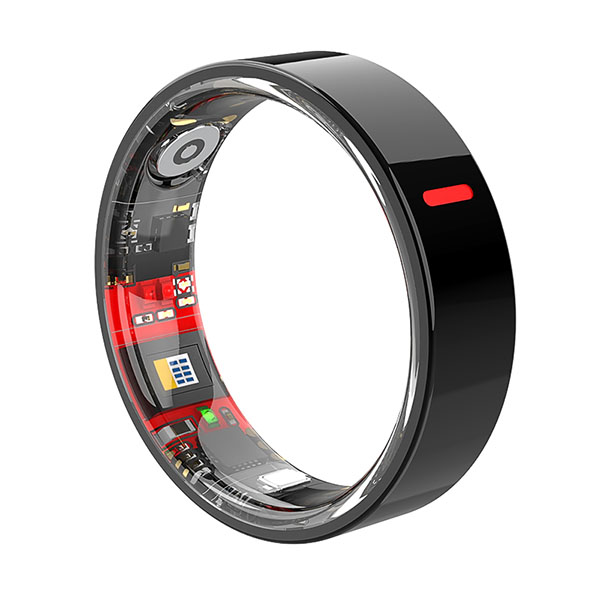
· Sensors: Constitute 10%–18% of BOM. Common modules include heart rate/SpO₂ sensors ($2–$8), GPS chips ($5–$12), and ECG sensors ($8–$15). These are seamlessly integrated into Geyan’s health-focused smartwatches and custom smart rings.
· Connectivity: Bluetooth/Wi-Fi modules cost $3–$8 for basic models; LTE-capable solutions ($10–$20) are available for premium standalone devices—standard in Geyan’s business smartwatch lineup.
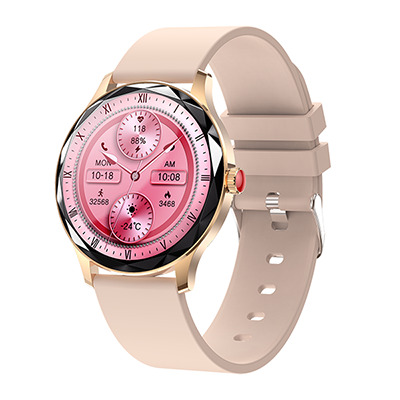
· Casing & Materials: Range from $2–$15 per unit, depending on material choice. Plastic suits budget models, while aluminum, stainless steel, or ceramic finishes elevate premium designs. Geyan offers extensive material and finish customization to reinforce brand identity.
· Entry-Level Smartwatch: BOM cost of $25–$45/unit. Focuses on core functions like step counting and basic heart rate tracking, paired with an LCD display and IP68 water resistance—matching Geyan’s smart fitness band portfolio.
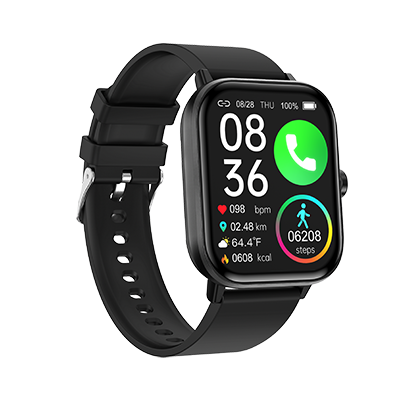
· Mid-Range Smartwatch: BOM cost of $45–$80/unit. Adds AMOLED displays, SpO₂ monitoring, Bluetooth calling, and enhanced UI—core to Geyan’s lifestyle and professional smartwatch lines.
· Advanced / Health-Focused Smartwatch: BOM cost of $80–$150/unit. Includes ECG, blood pressure estimation, built-in GPS, multi-day battery life, and premium materials—aligned with Geyan’s specialized health wearables and smart rings.
Tooling is a frequently underestimated one-time expense, typically totaling $10,000–$50,000, depending on design complexity. Geyan’s engineering team helps brands maximize mold reusability and optimize long-term cost allocation.
Key tooling components include:
· Case Mold: $5,000–$25,000, varying by material (plastic vs. metal) and structural complexity. For high-volume production, Geyan uses durable S136/H13 steel molds rated for over 500,000 cycles.
· Button & Strap Molds: $3,000–$12,000 combined. Interchangeable strap molds enable easy customization—ideal for branded accessories or seasonal collections.
· Packaging Tooling: $2,000–$8,000, fully integrated into Geyan’s product design and branding services.
Geyan advises clients to design molds with future scalability in mind: standardized casing and strap molds can often be reused across multiple product generations, significantly reducing long-term development costs. As a one-time investment, tooling costs are amortized over production volume—making unit economics far more favorable at scale.
Software development typically represents 15%–25% of total OEM costs. In response to common client inquiries like “Does OEM pricing include app development?”, Geyan offers transparent, bundled service packages.
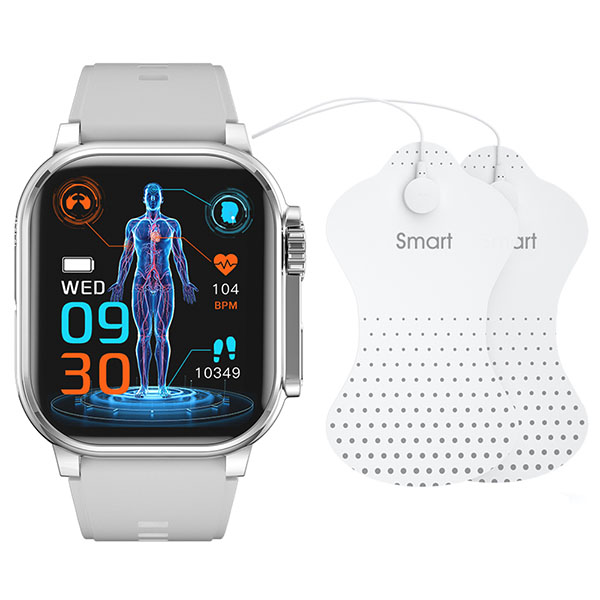
· Firmware Customization: $8,000–$30,000. Covers sensor calibration, power management algorithms, Bluetooth stack optimization, and core functionality tuning. Geyan’s in-house R&D team tailors firmware for diverse applications—including TENS/EMS therapy watches and culturally specific devices like Muslim prayer-time smartwatches.
· UI/UX Modification: $5,000–$20,000. Includes custom watch faces, menu structures, and interface alignment with brand guidelines—part of Geyan’s white-label UI customization service.
· iOS/Android Companion App: $15,000–$40,000 for a fully functional app with data synchronization, device control, and user profile management. App development is included in Geyan’s full ODM packages, with optional cloud backend integration.
· OTA Updates & Maintenance: Ongoing support costs 10%–15% of initial software spend annually, covering bug fixes, security patches, and feature enhancements. Geyan provides post-launch maintenance to ensure long-term product reliability.
Regulatory certification typically costs $5,000–$30,000, depending on target markets. Geyan proactively manages regional compliance to avoid hidden fees and delays.
· Mandatory Certifications: CE (Europe), FCC (USA), and RoHS (global hazardous substance restrictions) are essential, costing $3,000–$10,000 combined. All Geyan base platforms are pre-certified to these standards.
· Regional Add-Ons: TELEC (Japan): $2,000–$6,000; NCC (Taiwan) and CCC (China): $1,500–$4,000 each. Geyan customizes certification roadmaps based on your go-to-market strategy.
· Hidden Risks: Failed compliance tests incur retesting fees ($1,000–$3,000 per attempt) and cause schedule slippage. Geyan mitigates this through rigorous pre-certification testing in its in-house labs—leveraging years of global market experience.
Minimum Order Quantity (MOQ) directly influences per-unit economics. Geyan supports flexible production scales—from 100–500 units for startups to 10,000+ units for established brands.
· MOQ vs. Unit Cost: An entry-level smartwatch with an MOQ of 100 may carry a 30%–50% higher unit cost than the same model ordered at 10,000 units. Geyan offsets this for small batches by using shared, proven component platforms.
· Cost Amortization: Fixed expenses (tooling, software, certification) are spread across total units produced. Geyan offers flexible financial models to help early-stage brands manage cash flow during initial launches.
· Common Startup Pitfall: Over-prioritizing low MOQ without considering elevated per-unit costs. Geyan recommends a phased scaling approach: validate the market with a small batch, then ramp up production once demand is confirmed.
Several variables significantly influence final pricing. Geyan’s customization framework addresses each to align with your budget and vision:
· Display Type: Switching from LCD to AMOLED increases display costs by 30%–50%. Geyan advises based on product positioning—not just specs.
· Sensor Count: Each additional sensor (e.g., ECG, barometer, skin temperature) adds $5–$15 to BOM. Geyan helps prioritize features based on real user needs.
· App Complexity: Advanced capabilities like AI-driven health analytics can add $10,000–$25,000 to software development costs.
· Certification Scope: Targeting three or more regions can double certification expenses compared to a single-market launch.
· Order Volume: Scaling from 500 to 5,000 units typically reduces unit costs by 15%–25% through bulk component sourcing and production efficiencies.
Costs vary by development phase. Geyan provides transparent, stage-based pricing:
· Prototype Stage: $15,000–$40,000 total. Includes BOM sampling, firmware tuning, and 3D-printed mockups. Geyan delivers functional prototypes in 4–6 weeks.
· Small Batch (100–500 Units): $30,000–$100,000 total, with unit costs of $80–$200. Ideal for crowdfunding, pilot markets, or influencer campaigns—Geyan’s specialty.
· Mass Production (10,000+ Units): $100,000–$500,000+ total, with unit costs dropping to $40–$120. Geyan’s automated SMT lines and QA systems ensure consistent quality at scale.
Avoid these costly pitfalls with Geyan’s guided development process:
· Frequent Requirement Changes: Each late-stage design revision adds $2,000–$8,000 and delays timelines. Geyan locks down specifications early using detailed requirement documents.
· Ignoring Certification Timelines: Rushing compliance leads to failed tests and re-spins. Geyan integrates certification planning into the master project schedule.
· Over-Focusing on Unit Price: Ultra-low BOM costs often signal poor component quality or reliability risks. Geyan emphasizes total cost of ownership, minimizing return rates and warranty claims.
· Underestimating Tooling: Cheap molds wear out quickly, causing defects at scale. Geyan recommends durable, cost-optimized tooling that balances upfront investment with long-term yield.
Geyan’s philosophy—“Learn, Innovate, Surpass”—translates into practical, quality-preserving cost-saving tactics:
1. Leverage Mature Platforms: Build on Geyan’s existing hardware/software reference designs (e.g., health monitoring SDKs) to reduce R&D costs by 30%–40%.
2. Adopt Phased Development: Launch with core MVP features (e.g., HR + notifications), then roll out advanced functions (ECG, GPS) via OTA updates. Geyan’s modular architecture supports this roadmap.
3. Define a Clear MVP: Focus on must-have features that solve real user problems. Avoid “feature creep” that inflates BOM and delays time-to-market.
4. Build Long-Term Partnerships: Repeat orders with Geyan unlock volume discounts, shared tooling investments, and accelerated production cycles—turning collaboration into competitive advantage.
For CEOs, product leads, and procurement teams, smartwatch OEM economics hinge on balancing fixed costs (tooling, certification, software) and variable costs (BOM, assembly). The two biggest levers are customization depth and order volume.
Geyan Technology’s end-to-end capabilities—from diversified product lines (health, sports, lifestyle, smart rings) to full white-label customization (hardware, UI, packaging)—empower brands to launch high-quality wearables on budget and on schedule. By partnering with a manufacturer that combines independent R&D, scalable production, and global compliance expertise, you avoid hidden costs and accelerate time-to-market.
Remember: true cost efficiency comes not from cutting corners, but from strategic prioritization. With Geyan’s “technology-first, quality-core” approach, you get both performance and value.
Geyan Technology offers personalized support to refine your OEM budget:
With Geyan’s commitment to fast delivery, competitive pricing, and uncompromising quality, your smartwatch vision becomes a cost-effective, market-ready reality.