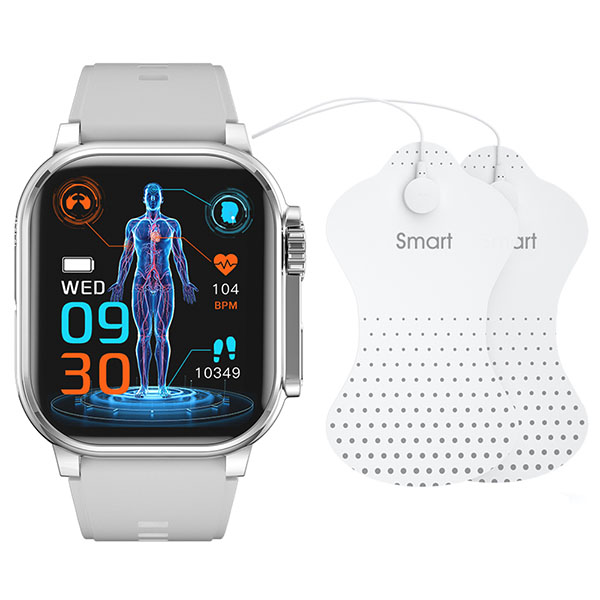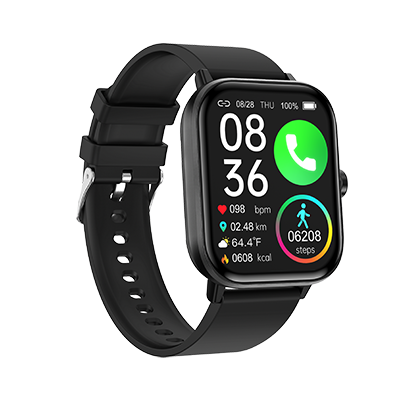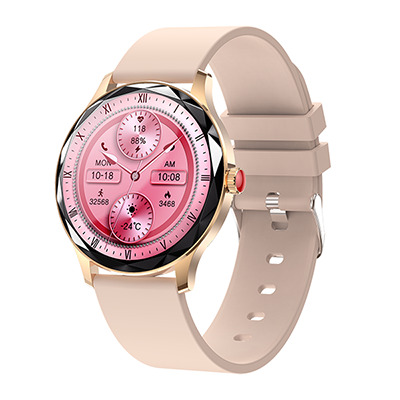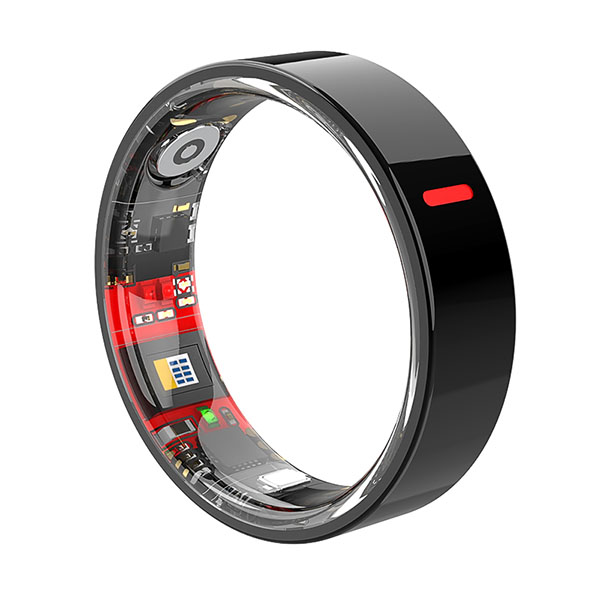
In the global smartwatch market, MOQ (Minimum Order Quantity) is often the first and biggest barrier for brands, startups, and corporate buyers entering customization.
Many potential buyers are not unwilling to customize — they simply stop when they hear:
“Our MOQ is 3,000 or 5,000 units.”
So the real question is:
Is
high MOQ unavoidable in smartwatch customization?
Can you start with
a small batch and still control risk?
This guide explains smartwatch MOQ from a manufacturer’s logic, buyer’s perspective, and real OEM/ODM experience, offering practical strategies to help you enter the market with minimal risk and controlled investment.
In simple terms:
MOQ defines how much capital you need upfront — and how expensive your first mistake could be.
For smartwatch customization, MOQ directly impacts:
· Initial investment size
· Inventory and cash flow pressure
· Your ability to test the market before scaling
Unlike simple consumer electronics, smartwatches combine hardware, firmware, software, apps, and certification, making MOQ a structural reality rather than an arbitrary rule.
MOQ (Minimum Order Quantity) refers to the lowest quantity a manufacturer or solution provider accepts for production, usually based on:
· One model
· One hardware configuration
· One firmware/software version
· One packaging setup
From the factory or ODM side, MOQ is designed to cover:
· Tooling and fixtures
· Component procurement thresholds (chipsets, displays, batteries, sensors)
· Production line setup and labor costs
· Software adaptation and testing
· Quality control and after-sales preparation
If the quantity is too low, these fixed costs cannot be amortized, resulting in losses.
For buyers, MOQ determines:
· Capital risk
· Inventory turnover speed
· Flexibility to pivot if the product underperforms
Smart customization is not about forcing the lowest price — it’s about balancing MOQ, cost, and risk.
· Proven watch case structure
· Mature PCB and component combinations
· Stable supply chain
Typical MOQ: 500–1,000 units
· New ID and mechanical design
· New tooling and validation
· Higher technical and financial risk
Typical MOQ: 3,000–10,000+ units
For first-time customization, public mold solutions are the safest and fastest entry point.
|
Customization Level |
MOQ Impact |
|
Boot logo |
Very low |
|
Custom watch faces |
Low |
|
UI color/style tweaks |
Medium |
|
Deep OS customization |
High |
|
Private apps or protocols |
Very high |
Using a mature OS and standard app ecosystem is one of the most effective ways to keep MOQ low.
· ODM (Solution Provider)
o Complete hardware + software solution
o Verified platform
o More flexible MOQ
o Ideal for startups and SMBs
· OEM (Pure Assembly Factory)
o Optimized for large-volume production
o Less flexible for small orders
o Higher MOQ requirements
If low MOQ matters, choose an ODM, not just an OEM.
Certifications affect the economic MOQ, even if not stated explicitly:
· CE / FCC: Cost-effective for small batches
· BIS / KC / Medical-related certifications: Higher fixed costs
These certifications don’t always raise MOQ directly, but they increase the minimum reasonable investment.
Customizable elements include:
· Strap material and color
· Case color
· Boot logo
· Custom watch faces
· Packaging and manuals
MOQ: 500–1,000 units
Lead time: 4–8 weeks
Best for: Startups, pilot launches, corporate gifts, market testing
· Phase 1: Small batch for validation
· Phase 2: Same hardware, enhanced branding or software
· Phase 3: Private mold only after demand is proven
This approach prevents overcommitting capital too early.
· Trade shows
· Channel testing
· Corporate trial orders
Real orders validate demand better than forecasts.
Instead of pushing for unrealistically low prices:
· Accept slightly higher unit cost
· Reduce MOQ
· Communicate long-term cooperation potential
Manufacturers prefer repeatable, scalable customers, not one-off buyers.
Ask yourself these seven questions:
1. Is my target customer clearly defined?
2. Have I budgeted for software maintenance and after-sales support?
3. Are samples fully tested (battery life, accuracy, stability)?
4. Does the supplier provide complete technical documentation?
5. Is the lead time aligned with my sales plan?
6. Are QC standards clearly defined?
7. What is my exit strategy if sales underperform?
Answering these upfront eliminates most early-stage risks.
Case A: Niche Sports Brand
· Public mold + custom sports watch faces
· MOQ: 800 units
· Community-driven launch
· Sold out in 3 months, followed by a 3,000-unit reorder
Case B: Corporate Gift Project
· Logo and packaging customization
· MOQ: 500 units
· One-time bulk purchase
· Zero inventory risk
Smartwatch customization is not about starting big —
it’s about
starting smart.
Low-risk entry means maximizing existing platforms and minimizing unnecessary customization.
The most practical first step:
· Contact 3–5 ODMs specializing in small-batch smartwatch customization
· Compare MOQ, customization scope, and support capability
· Make decisions based on data, not assumptions
Q:
What is the lowest MOQ for smartwatch customization today?
A: With public mold solutions, 500 units is realistically achievable.
Q:
Can I start with a budget under USD 15,000?
A: In controlled configurations and limited markets, yes, it’s possible.
Q:
How big is the MOQ gap between public and private mold?
A: Typically 5–10×
or more.
Q:
Besides MOQ, what else matters most?
A: Software support, upgrade path, and long-term cost control.