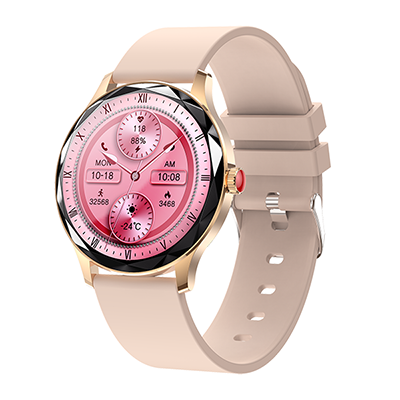
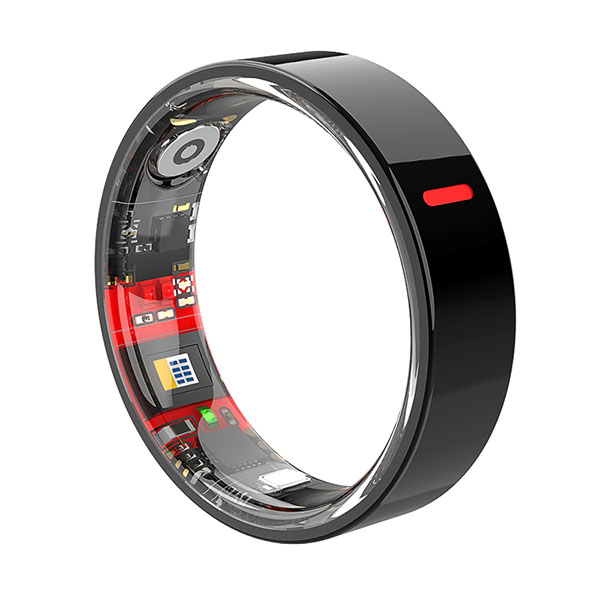
A custom smart band manufacturer helps brands and businesses develop wearable devices tailored to their product requirements, target markets and business models. OEM and ODM services may cover hardware configuration, firmware development, APP integration, appearance customization, private labeling and mass production. Instead of selling an off-the-shelf unit under someone else's identity, the manufacturer works with you from product definition through delivery, so the finished device reflects your brand, your feature set and the needs of your market.
Geyan Technology has specialized in smart wearable devices since 2012. Based in Shenzhen, China, we are a national high-tech enterprise covering research, design, production, sales and after-sales service, with a strong focus on OEM and ODM customization. Over nearly 15 years in the intelligent electronics industry, we have built independent R&D, precision manufacturing, quality control and professional service into one workflow, supplying wearable solutions to customers worldwide.
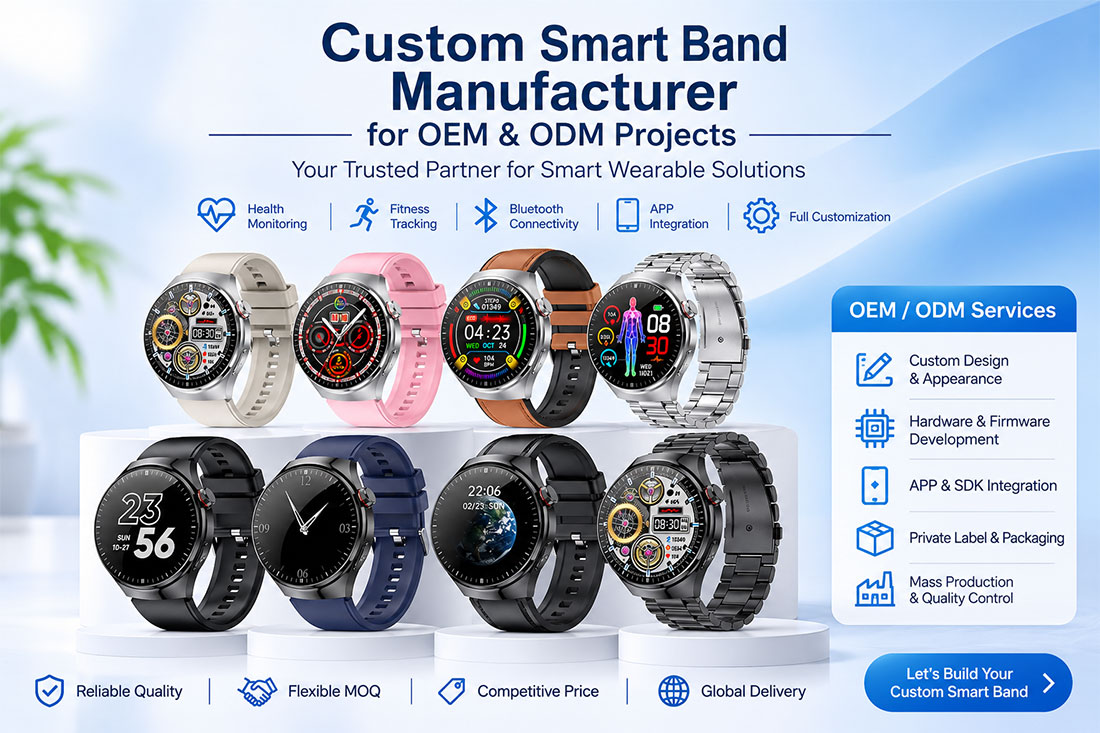
This article is written for global brands, importers, distributors, wholesalers, fitness and health technology companies, and IoT project developers who are evaluating a manufacturer rather than browsing consumer products. It explains what a capable custom smart band manufacturer does, how OEM and ODM cooperation differ, what can actually be customized, how a project runs from first inquiry to shipment, and what to check before you place an order.
What Is a Custom Smart Band Manufacturer?
A custom smart band manufacturer is more than an assembly line. It is a production and engineering partner that can take a wearable product from an idea or a specification sheet to a finished, packaged device under your brand. In practice, that means the partner should be able to translate your target market, price band and feature list into a viable hardware platform, support the firmware and software needed to make the device work, and keep quality consistent through bulk production.
Smart Band Manufacturing Capabilities
A manufacturer with genuine customization capability typically covers the following stages:
-
Product design and development
-
Hardware engineering and PCB development
-
Sensor integration
-
Firmware development
-
Mobile APP integration
-
Product assembly and testing
-
Mass production and quality control
Not every project needs every stage. A private label distributor may only need logo, color and packaging changes on an existing platform, while a technology company may need firmware tuning, APP branding and data integration. The right manufacturer should be able to scope the work to your project rather than push the same fixed package onto every buyer.
Custom Smart Bands vs. Standard Smart Bands
|
Comparison
|
Standard Smart Band
|
Custom Smart Band
|
|
Product Design
|
Existing design carried over as-is
|
Design adapted or built around your requirements
|
|
Logo
|
Standard branding
|
Custom logo and brand identity
|
|
Features
|
Fixed feature set
|
Features selected or configured for your market
|
|
Firmware
|
Standard firmware
|
Firmware tuned or customized where the platform allows
|
|
APP
|
Standard companion APP
|
APP integration, white-label or custom development
|
|
Packaging
|
Standard packaging
|
Private label retail packaging and user manuals
|
|
Target Market
|
General consumers
|
Specific brands, channels and project use cases
|
The actual scope of customization depends on the product platform, development budget and project requirements. Deep hardware changes are handled differently from logo and packaging work, and that distinction usually decides whether an OEM, ODM or custom-development arrangement fits.
OEM vs. ODM Smart Band Manufacturing: What's the Difference?
OEM and ODM are the two most common cooperation models in wearable manufacturing, and buyers often confuse the two. The main difference lies in who owns the product design and how much engineering work the manufacturer takes on.
What Is OEM Smart Band Manufacturing?
OEM fits companies that already have a clear product design, a defined brand position, or technical specifications they want produced. It also suits projects that need a hardware architecture or feature combination not covered by an existing ready-made platform.
What Is ODM Smart Band Manufacturing?
In an ODM arrangement, the manufacturer offers an existing product platform or design, and the customer selects from the available configurations. Changes are made where they are feasible on that platform: appearance, colors, branding, selected functions and software elements can usually be adjusted, while a full new hardware architecture is outside the ODM scope.
ODM fits brands and importers who want to shorten the product development cycle and bring a branded wearable to market quickly. You evaluate proven platforms, pick the feature set that matches your buyers, and work with the manufacturer to adapt the branding and presentation rather than build a device from scratch.
Which Manufacturing Model Is Right for Your Business?
|
Buyer Requirements
|
Recommended Model
|
|
Existing product design and technical specifications
|
OEM
|
|
Ready-made platform plus branding changes
|
ODM
|
|
Custom logo and packaging
|
OEM / ODM
|
|
Customized APP and firmware
|
OEM / ODM, depending on the platform
|
|
Unique hardware architecture
|
OEM / custom development
|
The practical rule is straightforward: OEM suits businesses with a defined design and specifications they want manufactured; ODM suits businesses that want to build on a mature platform and add their own brand and moderate customization. Many buyers start with an ODM platform for a first order and move into deeper OEM customization for later generations.
What Can Be Customized in an OEM Smart Band?
When evaluating a manufacturer, it helps to separate the customization layers. The sections below describe the areas you can usually adjust, and where the scope depends on the chosen platform and project budget.
1. Appearance and Industrial Design
The physical product is the first thing your customers see, and it carries most of the brand impression. Appearance customization can include:
-
Smart band or watch housing design
-
Strap materials and colors
-
Display size and display design
-
Product dimensions and form factor
-
Custom logo and branding placement
-
Packaging and accessories
On existing platforms, housing and strap options are drawn from the available molds and materials. If your project needs a new casing or a specific material finish, that requires engineering work and should be agreed early in the discussion.
2. Hardware and Sensor Configuration
Hardware choices decide what the device can measure and how reliably it performs. Common configurable elements include:
-
Optical heart rate sensors
-
SpO2 sensors
-
Accelerometers and motion sensors
-
ECG-related hardware configurations, where supported on the product platform
-
Bluetooth connectivity
-
Battery capacity and charging solutions
Not every platform supports every sensor. Sensor selection should follow your target market, use case and product budget: a basic fitness tracker needs a simpler motion and heart rate setup, while a health-oriented wearable may need additional monitoring channels. We review the available hardware options against your requirements before recommending a platform.
3. Firmware and Software Customization
Firmware sits between the hardware and the APP, and it controls how the device behaves day to day. Customization at this layer may cover:
-
Firmware optimization for battery life and stability
-
User interface customization
-
Watch face customization
-
Bluetooth communication behavior
-
Data synchronization logic
-
Device configuration and feature defaults
The depth of firmware changes depends on whether the project builds on an existing platform or a custom development base. Existing platforms allow tuning and configuration; deeper modifications are scoped as part of the OEM project.
4. Mobile APP and Data Integration
For many B2B buyers, the companion APP and data connection matter as much as the hardware itself. This layer is what turns a device into part of a health program, a fitness ecosystem or an IoT solution. Typical APP and integration work includes:
-
iOS and Android APP compatibility
-
Bluetooth data synchronization
-
Health and activity data display
-
APP branding and UI customization
-
API and SDK integration, where the project supports it
-
Third-party platform integration
This is the section that attracts health management platform operators, wearable ecosystem companies and IoT project developers. If you already run an APP, a web platform or a backend system, the key question is whether the device can feed data into that system through the protocols and interfaces you use. That should be discussed before the platform is finalized, because integration constraints affect hardware and firmware choices.
5. Private Label and Packaging
Private label work lets your brand own the customer experience on the shelf and in the box. Standard options include:
-
Custom brand logo on the device
-
Laser engraving or printing
-
Customized product colors
-
Retail packaging design and production
-
User manuals in target languages
-
Branded accessories
Packaging also carries regulatory information, warranty details and retail-ready presentation, so it should be planned alongside the product rather than added at the last minute.
Smart Band Features for Different Applications
Wearable products are built around different use cases, and the feature set you choose should match what your end users actually do. The following categories describe the most common application profiles.
Fitness and Activity Tracking
Activity-focused devices target daily exercise, workout tracking and general wellness. Common features include step counting, distance tracking, calorie estimation, multiple sports modes and ongoing activity monitoring. These are the core functions for fitness brands, gym chains, sports retail and consumer-facing wellness products.
Health Monitoring Features
Health-oriented wearables add monitoring channels around the wearer's daily state. Depending on the model, this can include heart rate monitoring, blood oxygen monitoring, sleep tracking, HRV-related features and ECG-related functions. The exact measurement channels available depend on the sensor configuration of the chosen platform.
Smart Connectivity Features
Connectivity keeps the device paired with the user's phone and synced to the APP. Typical features include Bluetooth connectivity, smartphone notifications, APP data synchronization, device management and OTA firmware updates where the product supports them. Notification support can cover calls, messages and popular social and messaging apps, subject to platform and local compatibility.
Compliance note: The monitoring functions on these devices are consumer wellness and reference tracking, not medical diagnosis. Features such as blood pressure, ECG, blood glucose or similar readings must be described according to the actual product model, measurement technology and the regulatory requirements of the destination market. Medical claims should not be made unless the device and its certification support that claim.
How to Choose the Right Custom Smart Band for Your Market
Choosing a platform starts with your market rather than the spec sheet. Six factors usually decide whether a project succeeds:
-
Target Market: Which countries or regions, and which consumer groups, will buy the product? Preferences, price sensitivity and feature expectations differ by market.
-
Target Price: What retail price band and unit procurement budget are you working toward? The price band narrows down the hardware and sensor choices early.
-
Product Features: Which features do your target users actually need, and which are optional extras? A focused feature set usually performs better than an overloaded one.
-
APP Compatibility: Do you need a standalone APP, a white-label APP, integration with your existing APP, or connection to a third-party platform?
-
Certifications: Does the product meet the regulations and certification requirements of your destination market, including wireless and battery requirements?
-
Customization Requirements: Are you looking for logo and packaging only, appearance changes, firmware and APP customization, or deeper hardware development?
Buyer's Checklist Before You Contact a Manufacturer
-
Define the target country and end-user profile
-
Set the retail price band and target unit cost
-
Separate must-have features from nice-to-have features
-
Decide the APP strategy: existing APP, white-label APP, custom APP or platform API
-
List the certifications required for your destination markets
-
State whether you need logo-only branding, appearance changes, or firmware and APP development
Bringing these points to the first inquiry lets the manufacturer recommend realistic platforms and configurations instead of sending a generic catalog.
Our Smart Band OEM & ODM Manufacturing Process
A structured process keeps a wearable project predictable from the first conversation to shipment. At Geyan Technology, an OEM or ODM project generally moves through the following stages:
-
Requirement Analysis: We review your product specifications, target market, budget and intended use case, and identify any technical or regulatory constraints.
-
Product Selection and Solution Design: We recommend suitable wearable platforms and customization options that match your price band and feature requirements.
-
Engineering and Customization: Hardware, firmware, appearance and software are configured according to the agreed project scope.
-
Sample Development and Testing: Samples are evaluated for function, compatibility, battery behavior and performance before production is locked.
-
Mass Production and Quality Control: Production runs with assembly inspection and quality testing on the finished units.
-
Packaging and Delivery: Private label packaging, manuals and accessories are completed, and the order is prepared for shipment.
Photo slot: replace with your own production line, device assembly, testing equipment and finished sample photos. Real factory and product images carry more weight with B2B buyers than stock photos.
Why Work with a Chinese Smart Band Manufacturer?
The choice of a manufacturing partner is not only about unit price. For wearable products, the most valuable advantages come from how well hardware, software and production work together.
Integrated Wearable Product Development
When hardware engineering, firmware and APP development sit in the same organization, fewer details get lost between handoffs. An integrated team can solve sensor, firmware and APP problems together, which matters most when your project involves data integration or a non-standard feature set.
Flexible OEM and ODM Solutions
Buyers enter at different scales. Some start with a small private label batch, others plan a full branded product line. A flexible manufacturer should support both small-batch customization and large-scale OEM orders, adjusting the engineering and production scope to the project.
Competitive Manufacturing and Supply Chain
Shenzhen and the surrounding Guangdong electronics supply chain offer mature component sourcing, production capacity and manufacturing efficiency. That ecosystem supports cost control and faster turnaround across electronics, sensors, housing, assembly and packaging, rather than relying on one isolated factory.
Product Testing and Quality Management
Quality should be checked at assembly, during production and before shipment, not only after the goods arrive at your warehouse. A transparent manufacturer should be able to describe its testing steps, inspection standards and how defects are handled before bulk production.
Who We Are at Geyan Technology
Geyan Technology is a Shenzhen-based smart wearable technology manufacturer founded in 2012 and recognized as a national high-tech enterprise. We hold nearly 15 years of experience in the intelligent electronics industry, combining independent R&D, precision manufacturing, strict quality control and professional service. Our OEM and ODM work covers hardware, firmware and APP development, and we support international B2B customers across private label, wholesale and custom development projects.
We are recognized as one of the pioneers in China's smartwatch industry. Our team helped initiate the establishment of both the Smart Wearable Industry Association and the Chip Industry Promotion Association, and we serve as a standing committee member in these industry bodies. We also own several brands, including Jieshilang, Jersa and xinan, which reflect our own commitments to innovation, quality and user satisfaction.
Industries and Business Types We Support
Wearable products serve different buyers with different priorities. The table below shows the customer types we commonly work with and the requirements they usually bring:
|
Customer Type
|
Typical Requirements
|
|
Wearable Technology Brands
|
Custom products, branding and feature differentiation
|
|
Electronics Distributors
|
Wholesale supply and private label programs
|
|
Fitness and Sports Brands
|
Sports modes, activity tracking and durable hardware
|
|
Health Technology Companies
|
Health data monitoring and APP data synchronization
|
|
IoT Solution Providers
|
Bluetooth connection, API and SDK integration
|
|
Retail Chains
|
Customized product lines and retail-ready packaging
|
Real Product Platforms We Build Around
The platforms below are starting points we commonly use for OEM and ODM projects. Final sensors, colors, branding and software are agreed after your requirements are reviewed.
-
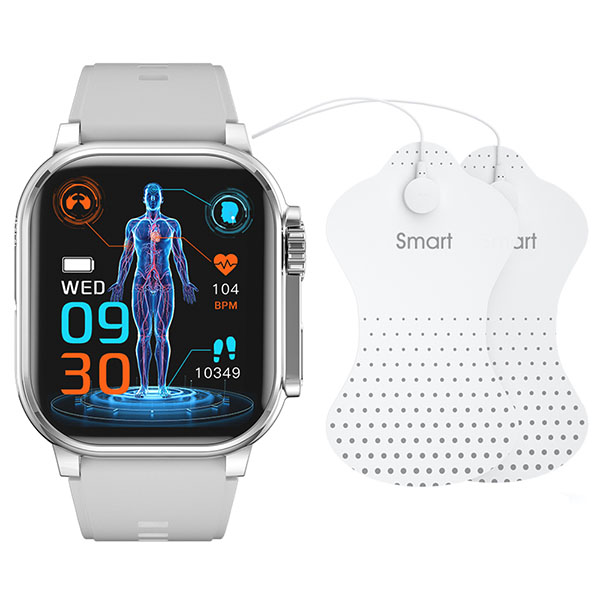
Sport health watches supporting heart rate, SpO2, sleep monitoring, step count, calorie tracking, blood pressure and ECG functions, where the specific model supports them.
-
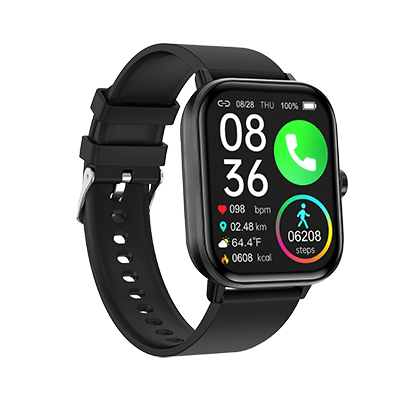
Business and lifestyle smartwatches with AMOLED screens, Bluetooth calling, notification alerts and premium metallic finishes.
-
Sports smartwatches with multi-sport tracking, waterproof design, built-in GPS and rugged durability.
-
Fitness tracker band with heart rate, SpO2, sleep monitoring and IP68 protection.
-
Customizable smart rings with heart rate tracking, sleep monitoring and Bluetooth connection.
-
Specialized and customer-oriented wearables, including a Muslim smartwatch with Islamic features and other niche models.
Example Platform: TK26Pro Health Smartwatch
The TK26Pro illustrates the kind of health-oriented platform that can be configured for private label or custom projects. It combines multi-channel health monitoring with wrist-based connectivity in a wearable form factor.
|
Parameter
|
Specification
|
|
Display
|
1.43-inch AMOLED full touchscreen, 466 × 466 pixels
|
|
CPU
|
Jerry AC7013A7
|
|
Sensors
|
Gravity sensor SC7A20H; ECG chip 512Hz LH001; heart rate and SpO2 chip HX3918
|
|
Bluetooth
|
Bluetooth LE 5.2
|
|
Battery
|
380 mAh high-density polymer lithium battery, magnetic charging
|
|
Waterproof Rating
|
IP68
|
|
Materials
|
Metal alloy, stainless steel, ABS, PC, medical-grade conductive glass
|
|
Dimensions
|
265 × 47 × 12.93 mm (length × width × height)
|
|
Colors
|
Silver frame: apricot, pink, brown leather, steel silver; Black frame: black, blue, black leather, steel black
|
On the software side, the TK26Pro supports Bluetooth calls from the wrist and real-time notifications for calls, messages and social apps including WeChat, WhatsApp and Instagram. It also offers weather display, music control and a library of customizable watch faces. Its health monitoring channels include non-invasive blood glucose readings, ECG, blood lipid and uric acid analysis, along with a one-click mini physical exam that gives an overall wellness check in seconds.
These health readings are reference wellness data rather than medical diagnosis. Which functions can be marketed, and what wording is allowed, depends on the destination market's regulatory requirements and the certification of the specific shipped model.
Frequently Asked Questions About Custom Smart Band Manufacturing
What is the difference between OEM and ODM smart bands?
In OEM manufacturing, the customer brings the design or technical specification, and the producer builds to that requirement. In ODM manufacturing, the producer supplies an existing platform, and the customer selects configurations and branding changes. OEM generally carries more engineering and development responsibility for the factory; ODM relies on a proven product platform and shorter lead time.
Can I customize the logo and packaging of a smart band?
Yes. Logo customization commonly includes laser engraving or printing on the device, alongside custom product colors, retail packaging, user manuals and branded accessories. The available logo processes and packaging options depend on the chosen platform, order quantity and customization level. Logo and packaging changes are usually available on both OEM and ODM projects.
Can a smart band manufacturer customize the APP and firmware?
APP and firmware customization depends on the project base. Existing platforms support APP branding, UI adjustments, watch faces, data sync configuration and feature defaults within their limits. Deeper APP development, custom firmware behavior or backend integration is scoped as OEM work and confirmed against the platform's technical capability before development starts.
What health monitoring features can be integrated into a custom smart band?
Common health features include heart rate monitoring, blood oxygen monitoring, sleep tracking, HRV-related features and ECG-related functions. Some platforms also support blood pressure, blood lipid, uric acid or blood glucose reference readings. The available channels depend on the sensor hardware of the selected model, and health functions must be presented as wellness tracking rather than medical diagnosis.
What is the MOQ for custom smart bands?
The minimum order quantity depends on the model, number of colors, logo process, packaging type and depth of customization. Private label and ODM projects usually carry a lower MOQ than deep OEM or custom-development work. We confirm the MOQ for your project after the platform and customization scope are selected; both small-batch customization and large-scale OEM orders are supported. [Fill in your real MOQ range here before publishing.]
Can you provide samples before mass production?
Yes. Sample evaluation is part of the standard flow before bulk production. The sample stage checks function, compatibility, fit, finish and the agreed customization details. Samples are confirmed by the buyer, and only after approval does production move to the mass production stage. Sample lead time and sample terms are quoted per project.
Can smart bands connect to an existing mobile APP or software platform?
Connection to an existing APP or software system is possible when the device and platform support the required Bluetooth, API or SDK interface. The available protocols and data fields differ by project, so the existing system's interface, data format and synchronization needs should be reviewed early. Where integration is feasible, the hardware, firmware and APP work is planned together around that connection.
How long does it take to develop a custom smart band?
Development time depends on whether the project starts from an existing platform or requires a new design, how many sample revisions are needed, and how complex the APP and backend integration are. ODM projects with branding and configuration changes move faster than OEM projects with firmware or hardware development. A realistic schedule is proposed after the requirements, platform and customization scope are reviewed; fixed lead times should not be promised before that review.
What certifications are required for smart bands in different markets?
Certification requirements depend on the destination market, the device's wireless functions, battery type and product classification. Common areas include wireless and radio compliance, battery safety, electrical safety and market-specific labeling or health-device rules. The required certifications are identified against your target countries before production, so the chosen platform can meet those requirements rather than being reworked afterward.
Start Your Custom Smart Band OEM & ODM Project
Looking for a reliable custom smart band manufacturer for your next wearable project? Whether you need private label fitness trackers, customized smart band solutions, or wearable devices with APP and data integration, our team can help you evaluate the right product platform and manufacturing options.
We support the full path from requirement analysis and platform selection through engineering, samples, mass production and private label packaging. Tell us about your product idea, target market and quantity, and we will recommend a workable configuration instead of a generic price list.
Next steps you can take:
For the fastest reply, include the following in your inquiry: Company Name, Country, Product Requirements, Target Quantity, Required Features and APP Integration Requirements.