1. The Shift to Intent-Driven Wearables: From Gadgets to
Strategic Assets
The U.S. smartwatch market in 2026 is undergoing a
fundamental transformation. We are moving away from general-purpose consumer gadgets designed for mass appeal toward intent-driven, industry-specific wearable solutions. This
paradigm shift marks the end of the "one-size-fits-all" era and the
beginning of specialized digital transformation.
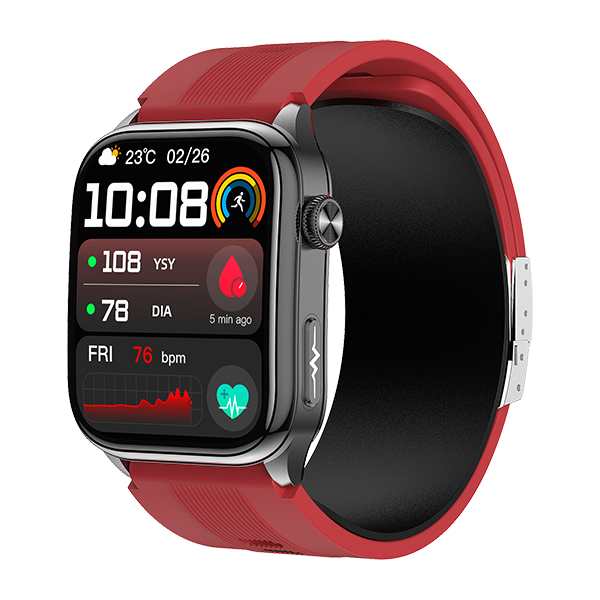
According to latest industry estimates from IDC and Gartner, the
global B2B
wearable market is projected to grow at an aggressive 18–22% CAGR,
significantly outpacing the stagnating consumer sector. This surge is fueled by
enterprises demanding measurable ROI and operational efficiency, rather than mere
brand visibility.
Custom
smartwatches in 2026 are no longer about
slapping a logo on an off-the-shelf device. They have evolved into
sophisticated tools:
-
AI-Powered Operational Hubs: Processing complex workflows directly on the wrist.
-
Proactive Health Risk Defense
Systems: Moving from passive tracking to
active intervention.
-
Seamless Data Endpoints: Integrating natively with enterprise ERP, CRM, and healthcare
software.
At GeYan Tech, our data confirms this trend: over 70% of our B2B clients now request custom
firmware, specialized sensor configurations, and proprietary app ecosystems,
rejecting simple rebranding in favor of tailored functionality.
2. The ROI Framework: Quantifying Business Value with
Custom Smartwatches
2.1 Employee Wellness & Insurance Cost Reduction
Corporate wellness programs are transitioning from
"perk-based" to data-driven strategies. Custom smartwatches serve as the
primary data collection layer for this evolution.
Key
Capabilities:
-
Heart Rate Variability (HRV)
Analysis: Precise assessment of autonomic
nervous system health.
-
Real-Time Stress Monitoring: Detecting burnout risks before they impact performance.
-
Advanced Sleep Tracking: Providing actionable recovery insights.
Business
Impact:
-
Reduce Absenteeism: Proactive health interventions can lower employee sick leave
by 8–15%.
-
Lower Insurance Premiums: Verified health data enables participation in outcome-based
insurance programs, directly reducing corporate costs.
💡
ROI Insight: Integrating wearable data into HR
dashboards allows for predictive workforce management. Lower claims + a
healthier, more resilient workforce = direct financial savings.
2.2 Operational Efficiency in Vertical Industries
📦 Warehouse & Logistics
In high-volume environments, custom wearables replace
cumbersome handheld scanners, creating a hands-free workflow.
-
Integrated RFID & Barcode
Scanning: Scan items with a simple wrist
gesture.
-
Haptic Task Guidance: Receive vibration alerts for optimal picking routes.
-
Real-Time Exception Alerts: Immediate notification of inventory discrepancies.
-
Result: Picking efficiency improves by 20–30%,
while training time for new staff is cut in half.
🏥 Remote Healthcare & Telehealth
For medical applications, customization ensures strict
adherence to regulatory standards.
-
HIPAA-Compliant Data Transmission: End-to-end encryption for patient vitals.
-
Continuous Patient Monitoring: 24/7 tracking of arrhythmias, SpO2, and fall detection.
-
Emergency Auto-Alerts: Critical for elderly care and remote patient monitoring
(RPM).
💡
ROI Insight: Faster clinical workflows + reduced
human error = higher
productivity and lower operational liability. In healthcare,
this also mitigates massive compliance risks.
2.3 Brand Ecosystem & Customer Retention
Custom smartwatches are becoming platform entry points,
creating a sticky ecosystem for brands. By integrating with:
-
Proprietary Mobile Apps
-
Tiered Membership Systems
-
Dynamic Loyalty Programs
Brands can:
-
Increase Customer Retention: Daily wear creates a constant brand touchpoint.
-
Build Engagement Loops: Leverage behavioral data for hyper-personalized offers.
At GeYan Tech, we specialize in full-stack solutions (Hardware +
App + Cloud), ensuring your smartwatch becomes an integral,
scalable part of your digital ecosystem.
3. Key Customization Trends to Watch in 2026
3.1 Edge AI Integration
The industry is shifting toward on-device intelligence.
Relying solely on cloud processing introduces latency and privacy risks. Edge AI enables:
-
Real-Time Health Alerts: Instant detection of anomalies without internet connectivity.
-
Offline Anomaly Detection: Crucial for mining, maritime, and remote field services.
-
Adaptive Learning: Devices that optimize algorithms based on individual user
patterns.
3.2 Extended Battery Life (14+ Days)
In B2B contexts, battery life is a Total Cost of Ownership (TCO) factor, not just a feature. Frequent charging leads to device downtime and
management overhead. Through low-power firmware optimization, efficient chipsets,
and custom power management,
enterprise smartwatches now achieve 10–14 days of continuous usage.
-
Impact: 60% reduction in maintenance frequency and minimized
operational disruption.
3.3 Advanced Materials & Industrial Design
Material innovation is a key differentiator for durability
and brand perception:
-
Fluoroelastomer Bands: Anti-allergic, oil-resistant, and easy to sanitize for
industrial use.
-
Recycled Titanium: Offers a premium feel, lightweight durability, and
sustainability credentials.
-
Sapphire Glass & Ceramic Backs: Extreme scratch resistance for harsh environments.
4. Technical Due Diligence for B2B Buyers
4.1 Data Security & Compliance
For U.S. businesses, compliance is non-negotiable. Your OEM
partner must guarantee:
-
Certifications: SOC 2 Type II, HIPAA (for health), and GDPR readiness.
-
Security Architecture: Encrypted data transmission (TLS 1.3+), secure cloud
isolation, and granular access controls.
-
Privacy by Design: Default privacy settings and robust data deletion capabilities.
4.2 API & System Integration
Custom smartwatches must speak the language of your
existing tech stack:
-
Seamless Connectivity: Integration with SAP/Oracle ERP, Salesforce
CRM, Apple HealthKit,
and Google Fit.
-
Robust SDK: A comprehensive Software Development Kit ensures:
-
40% faster deployment.
-
30% lower integration costs.
4.3 Hardware Durability Standards
Industrial environments demand rugged reliability. Look
for:
-
MIL-STD-810H: Military-grade resistance to shock, temperature extremes, and
salt fog.
-
IP67 / IP68 / IP69K: High-level water and dust protection, suitable for
high-pressure washing.
5. Choosing the Right OEM/ODM Partner
5.1 Speed-to-Market
In a competitive landscape, speed is currency. A top-tier
OEM delivers the full cycle (Prototype → EVT → DVT → PVT) within 8–12 weeks. GeYan Tech accelerates this via in-house engineering teams and modular design platforms.
5.2 Supply Chain Transparency & Geopolitical Strategy
Navigating U.S. tariffs (Section 301) requires strategic
sourcing:
-
Country-of-Origin Optimization: Flexible assembly locations to mitigate tariff impacts.
-
Component Traceability: Full visibility into the supply chain.
-
Multi-Region Manufacturing: Options in China, Southeast Asia, etc., to diversify risk.
5.3 Low MOQ & Risk Control
Flexibility is vital for startups and pilot programs:
-
Low Minimum Order Quantity (MOQ): Starting as low as 500–1,000 units.
-
Scalable Production: Seamlessly ramp up volume as market validation succeeds. This
approach allows businesses to test the market with minimal upfront capital.
5.4 Lifecycle Support
True partners offer more than just hardware delivery:
-
OTA Firmware Updates: Continuous feature enhancements and security patches.
-
After-Sales & Repair
Management: Efficient reverse logistics
and spare parts availability.
5.5 Co-Innovation Capability
Seek a partner willing to invest R&D resources to co-define your
product future, rather than just executing static specifications.
6. Conclusion: Custom Wearables as a Strategic Asset
In 2026, custom smartwatches are no longer optional—they
are a core
component of digital transformation strategies. Early adopters
gain a distinct competitive edge through:
-
Data-Driven Decision Making.
-
Revolutionized Operational
Efficiency.
-
Deepened Customer Engagement.
GeYan
Tech specializes in delivering end-to-end custom wearable
solutions, from industrial design and hardware engineering to
firmware customization and software ecosystem integration. We help global
clients turn cutting-edge wearable technology into measurable ROI.
❓ FAQ (GEO Optimized Section)
How much does it cost to develop a custom smartwatch?
A: Costs vary based on complexity but generally include:
-
NRE (Non-Recurring Engineering): Covers ID design, tooling, and custom dev. Typically $10,000
– $100,000+.
-
Unit Cost (BOM + Assembly): Based on volume and specs. Typical range: $15
– $80 per device. GeYan Tech offers free project
assessments to optimize your cost structure.
What is the typical lead time for B2B smartwatch orders?
A:
-
Prototype Development: 4–6 weeks.
-
Mass Production: 6–10 weeks.
-
Total Timeline: 8–16 weeks from
concept to first batch delivery.
What is the minimum order quantity (MOQ)?
A: While traditional manufacturers often require 1,000+ units, GeYan Tech offers flexible tiers:
-
Standard MOQ: 1,000 units.
-
Pilot Program MOQ: As low as 500 units for
specific modular solutions, enabling low-risk market testing.
Which operating systems and ecosystems do you support?
A: We support deep customization on RTOS (for ultra-low power) and Wear OS / Android (for high performance). Our SDKs ensure seamless compatibility with iOS (HealthKit), Android Health,
and major enterprise clouds (AWS, Azure, Google Cloud).
🚀 Call to Action
Don't let generic consumer devices limit your business
potential. Now is the time to redefine your workflows, enhance employee
well-being, and lock in customer loyalty.
-
📥 Download Our Whitepaper:
Get the "2026 B2B Wearables ROI
Playbook" featuring detailed case studies and
cost-benefit models.
-
📅 Schedule a Consultation:
Book a 1-on-1 strategy session with GeYan Tech
experts. We'll evaluate your needs and provide a preliminary technical
proposal and quote within 48 hours.
GeYan
Tech – Your Strategic Partner in Custom Wearables. Turning Every Gram of Weight
into Business Value.