Over the past decade, smartwatches have evolved from simple fitness trackers into advanced health monitoring platforms. What was once considered a consumer gadget is now increasingly positioned as a clinical support tool in preventive healthcare.
This shift is driven not just by improved hardware, but by the rapid advancement of health data processing algorithms and sensor APIs. Modern smartwatches no longer merely display heart rate or step count—they transform raw physiological signals into actionable health insights, often referred to as digital biomarkers.
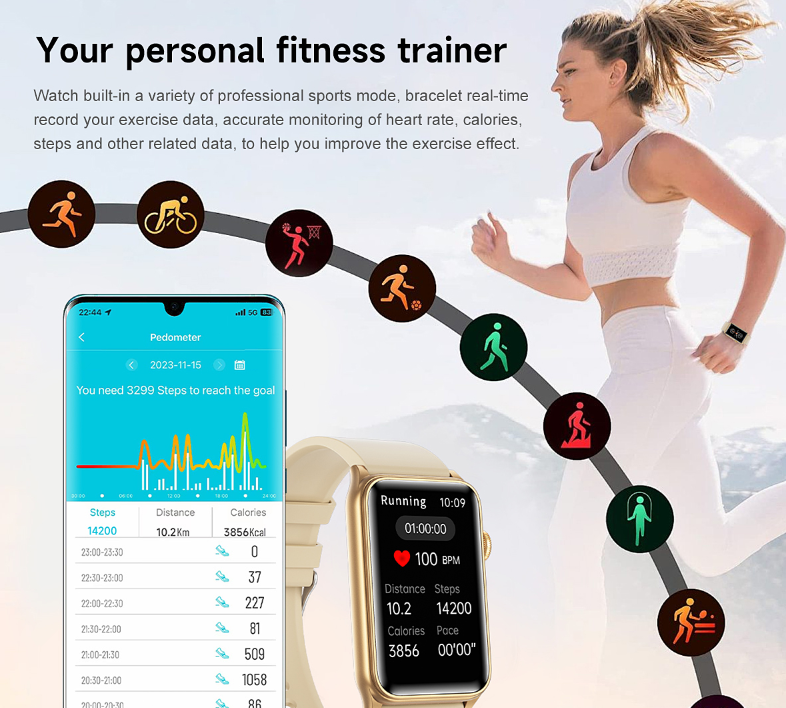
For healthcare brands, distributors, and OEM partners, the key question is no longer “What data can a smartwatch collect?” but rather: “How accurately and reliably can that data be processed and interpreted?”
At GeYan Technology, we understand that the bridge between raw data and clinical value lies in precision engineering. As the industry moves towards "invisible and elegant" health monitoring, the focus must shift to the algorithms that power these insights.
The Mechanics of Heart Rate Monitoring: Beyond the Green Light
Understanding PPG Technology Most smartwatches rely on Photoplethysmography (PPG) to measure heart rate. This optical method uses green LEDs to illuminate the skin and photodiodes to detect changes in blood volume. However, raw PPG signals are inherently noisy and require extensive processing before they become meaningful.
Signal Processing Pipeline A typical heart rate data processing workflow includes:
B2B Engineering Consideration For OEM and medical-grade devices, one of the biggest challenges is balancing sampling rate, battery consumption, and signal-to-noise ratio (SNR). Higher sampling improves accuracy—but at the cost of power efficiency.
GeYan Tech Insight: In our development process, we utilize AI-driven sensor fusion to mitigate motion artifacts. By combining accelerometer data with PPG signals, we ensure that our devices maintain high accuracy even during intense physical activity, a critical requirement for our B2B partners targeting the sports and medical sectors.
ECG on the Wrist: Signal vs. Noise
Single-Lead ECG Technology Unlike hospital-grade 12-lead ECG systems, smartwatches typically use a single-lead ECG configuration. This is achieved by forming a closed electrical loop between the wrist and the user’s finger. While simpler, this setup still enables detection of key cardiac abnormalities.
Algorithm-Driven Insights
Regulatory Compliance For brands entering the medical-grade wearable space, compliance is non-negotiable. Certifications such as FDA Class II (U.S.), CE MDR (EU), and NMPA (China) are mandatory for diagnostic features. These certifications demand clinical validation studies, algorithm transparency, and risk management documentation.
Sleep Tracking: Deciphering the Circadian Rhythm
Multi-Sensor Fusion Sleep tracking in modern smartwatches is powered by sensor fusion, combining Accelerometer (movement), PPG (heart rate), and SpO2 sensor (blood oxygen). This multi-dimensional dataset allows for far more accurate sleep analysis than motion-only tracking.
Sleep Stage Classification & Apnea Detection Advanced algorithms segment sleep into Light, Deep, and REM sleep. One of the most promising applications is sleep apnea risk screening, which detects SpO2 drops (oxygen desaturation events) and correlates them with heart rate fluctuations.
While not a diagnostic tool, this feature provides early warning signals, which are highly valuable in preventive healthcare ecosystems.
Smartwatch Health Development: APIs & Data Integration
Developer Perspective: Raw Data vs. Processed Data Smartwatch platforms generally provide two levels of access:
For healthcare brands, raw data access is essential when building proprietary health algorithms.
Data Security & Compliance Handling health data requires strict adherence to global regulations like HIPAA (U.S.) and GDPR (EU). Key requirements include end-to-end encryption, secure cloud storage, and anonymization of sensitive data.
OEM & Customization Opportunities For B2B clients, modern smartwatch platforms offer private-label health algorithms, custom dashboards for clinicians or users, and integration with telemedicine systems.
GeYan Tech Solution: We don't just supply hardware; we provide a full-link foreign trade solution. From AI-assisted product definition to ensuring data compliance for global markets, we help brands navigate the complexities of international health regulations. Whether you need a device for remote patient monitoring (RPM) or a consumer fitness tracker, our supply chain and R&D capabilities are tailored to your specific market needs.
Conclusion: The Future of Preventive Healthcare
Smartwatches are rapidly becoming a cornerstone of preventive medicine. However, the true value lies not in sensors—but in how data is processed, validated, and interpreted.
Emerging Innovations
Final Insight for B2B Buyers For healthcare brands and distributors, the competitive edge is clear: Hardware can be replicated. Algorithms and clinical validation cannot.
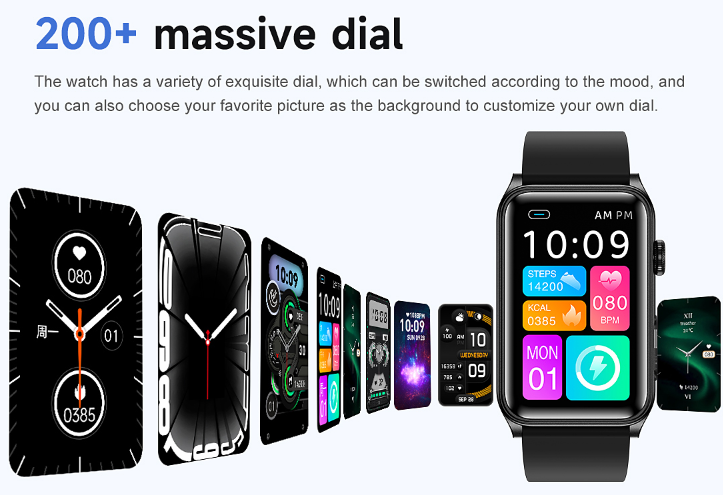
Choosing the right smartwatch OEM partner means evaluating algorithm capability, regulatory readiness, and data security architecture. GeYan Technology stands ready to be that partner, bridging the gap between complex medical data and user-friendly health insights.
FAQ
How accurate are smartwatch ECGs compared to medical devices? Smartwatch ECGs (single-lead) are generally accurate for detecting atrial fibrillation but are not a full replacement for 12-lead clinical ECG systems. They serve as excellent screening tools.
What is the ideal sampling rate for health monitoring? For heart rate monitoring, 25–50 Hz is sufficient, while ECG typically requires higher sampling rates (100–250 Hz) for clinical-grade accuracy.
Can smartwatch data be used in hospitals? Yes, but only if the device meets regulatory standards such as FDA or CE MDR and has undergone clinical validation.