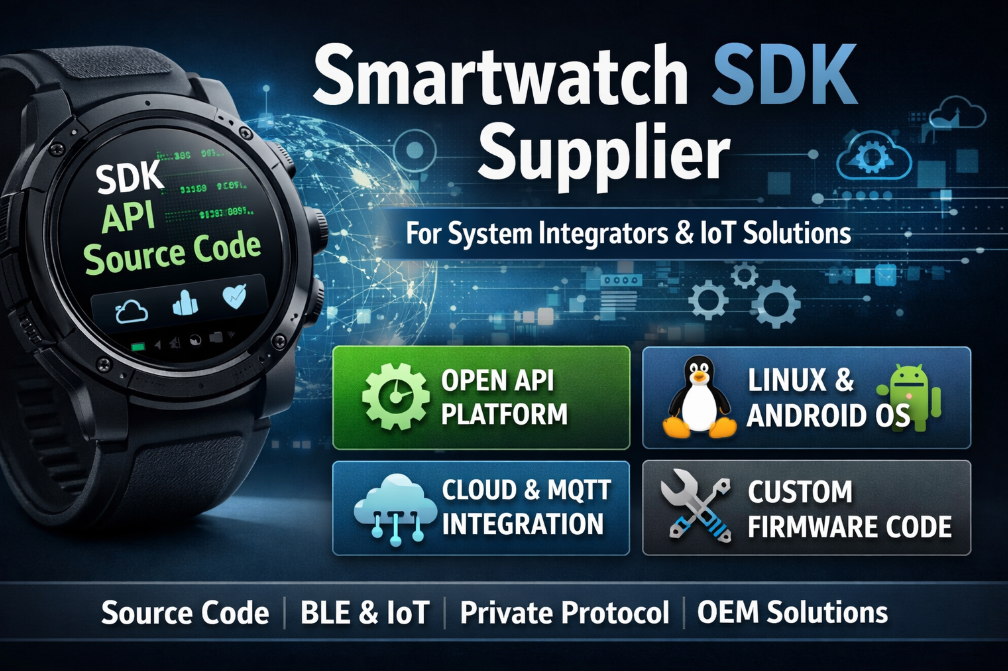
In the era of the Internet of Things (IoT) and intelligent manufacturing, smartwatches have evolved from consumer electronic devices for fitness tracking and message notifications into core terminals for industrial monitoring, healthcare services, and IoT cloud integration. Behind the diversified applications of smartwatches, the Software Development Kit (SDK) plays a pivotal role as a bridge connecting hardware, software, and ecological services. For system integrators and enterprises engaged in custom smartwatch development, choosing the right SDK directly determines the efficiency of project implementation, the stability of device operation, and the scalability of future applications. This article will deeply explore What Is a Smartwatch SDK and Why System Integrators Need It, focus on the core comparison of Linux Smartwatch SDK vs Android Smartwatch SDK, and combine practical scenarios such as Smartwatch with Open API, Programmable Smartwatch for IoT & Cloud Platform, and Smartwatch with MQTT API for Industrial Projects to provide a comprehensive reference for industry practitioners.
What Is a Smartwatch SDK and Why System Integrators Need It
A smartwatch SDK is a set of development tools, APIs, documentation, and sample codes provided by hardware manufacturers or system vendors, which is designed to help developers quickly build custom applications, realize hardware function calls, and complete system integration for smartwatch devices. It covers core modules such as hardware driver interfaces, operating system kernels, user interface (UI) development frameworks, and network communication protocols, enabling developers to avoid repetitive development of underlying functions and focus on business logic customization.
For system integrators, the smartwatch SDK is an indispensable core tool, and its importance is reflected in three key aspects: First, it improves development efficiency. The SDK provides pre-packaged functional modules (such as sensor data collection, Bluetooth communication, and cloud connection), which can shorten the project development cycle from months to weeks. Second, it ensures compatibility and stability. The officially optimized SDK can perfectly match the hardware parameters of the smartwatch, reducing compatibility problems between software and hardware and improving the reliability of the device. Third, it supports personalized customization. Through the SDK, integrators can customize functions such as UI interfaces, watch faces, and data reporting rules according to the needs of different industries (such as industrial monitoring, healthcare, and religious scenes), realizing the differentiation of smartwatch products. As a pioneer in China's smartwatch industry, Shenzhen Geyan Technology Co., Ltd. has integrated independent R&D capabilities into SDK development, providing system integrators with highly compatible and customizable SDK tools for various smartwatch series.
Smartwatch with Open API: Full Integration Guide
Open API is an important extension of smartwatch SDK, which provides standardized interfaces for third-party developers and system integrators, enabling seamless integration between smartwatches and external systems (such as enterprise cloud platforms, IoT gateways, and mobile applications). The full integration process based on open API usually includes four steps: first, demand analysis and interface selection. According to the application scenario (such as health data synchronization, industrial parameter monitoring), select the corresponding open API (such as sensor data reading API, MQTT communication API); second, environment configuration. Complete the docking between the development environment and the smartwatch hardware through the SDK, and obtain the API call permission; third, functional development and debugging. Use the sample codes provided by the SDK to develop business functions, and conduct joint debugging with external systems to ensure data transmission accuracy; fourth, deployment and optimization. Deploy the developed program to the smartwatch, and optimize the API call efficiency and power consumption according to the actual operation effect.
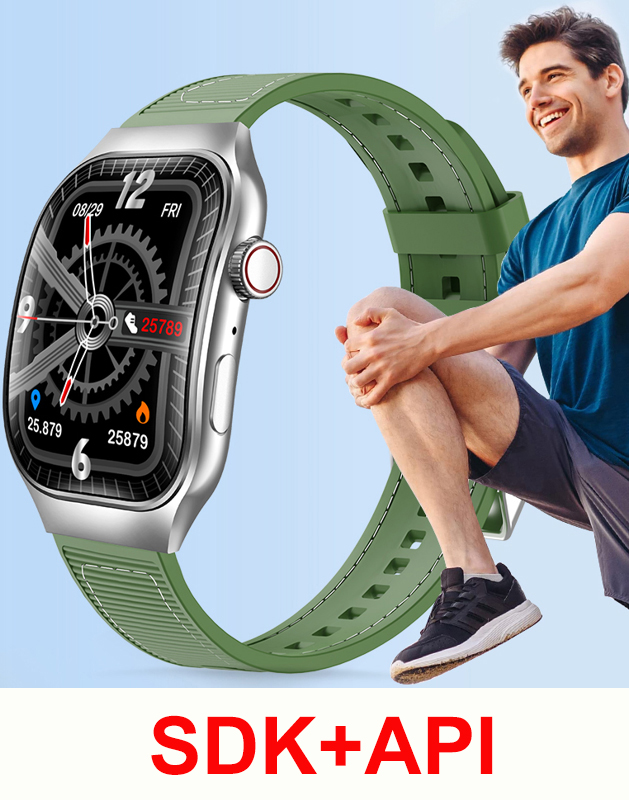
Geyan Technology's smartwatch products all support open API access, covering health data collection, positioning tracking, remote control and other core interfaces. For example, in the health and fitness smartwatch series, integrators can call the heart rate, SpO₂ and ECG data APIs through the SDK to realize the integration with medical cloud platforms; in the industrial customized smartwatch, the open MQTT API can be used to connect with the enterprise's IoT platform to realize real-time monitoring of industrial parameters. Geyan's professional technical team provides a full-process integration guide and after-sales support for integrators, ensuring the smooth progress of the integration project.
Linux Smartwatch SDK vs Android Smartwatch SDK: Core Differences and Application Scenarios
Both Linux and Android smartwatch SDKs are based on the Linux kernel, but due to differences in the upper-layer architecture and ecological positioning, there are obvious differences in development efficiency, customization, resource occupation, and application scenarios. The following will conduct a comprehensive comparison from multiple dimensions:
1. Architecture and Development Language
The Android Smartwatch SDK adopts a layered architecture, providing a complete application framework layer (including Activity, Service, Broadcast Receiver and other components) and UI development framework (XML layout, Jetpack components), and the application layer is mainly developed in Java/Kotlin languages. This architecture reduces the development threshold, and developers familiar with Android mobile development can quickly get started. The Linux Smartwatch SDK has no unified upper-layer framework, and developers need to customize the system components and UI interface according to the hardware resources, usually using C/C++ for development. Although the development threshold is higher, it can realize more flexible architecture design.
2. Customization and Scalability
The Linux Smartwatch SDK has absolute advantages in customization. Developers can modify the operating system kernel, cut unnecessary system modules, and optimize the hardware driver according to the actual needs of the project, which is especially suitable for scenarios with strict requirements on hardware resources (such as low-power industrial smartwatches). The Android Smartwatch SDK is restricted by the Android system framework, and the customization of the underlying system is limited. It is more suitable for consumer-grade smartwatches that require rapid iteration and rich application ecology.
3. Resource Occupation and Power Consumption
Due to the lightweight design of the upper-layer system, the Linux Smartwatch SDK has lower requirements on hardware resources (CPU, memory) and lower power consumption, which can ensure the long-term stable operation of the device in scenarios with limited power supply (such as remote industrial monitoring). The Android Smartwatch SDK relies on a complete Android system, which has higher resource occupation and power consumption, and is more suitable for scenarios with sufficient power supply (such as daily wear fitness watches).
4. Application Ecology and Deployment
The Android Smartwatch SDK has a mature application ecology. Developers can directly transplant a large number of existing Android applications to smartwatches through the SDK, and deploy them through application markets such as Google Play, which is suitable for consumer-grade products that pursue rich functions. The Linux Smartwatch SDK has no unified application distribution platform, and applications need to be deployed through manufacturers or integrators. It is more suitable for professional scenarios with personalized functional requirements (such as Muslim smartwatches, TENS/EMS smartwatches).
5. Typical Application Scenarios
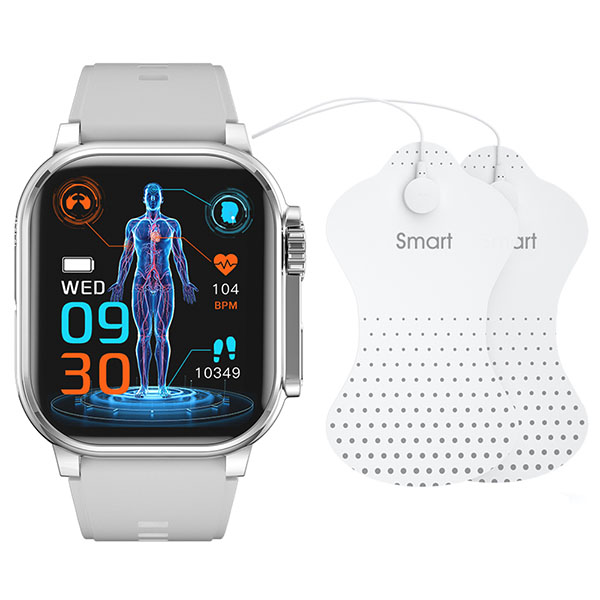
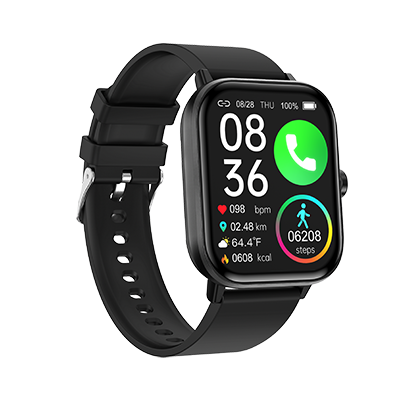
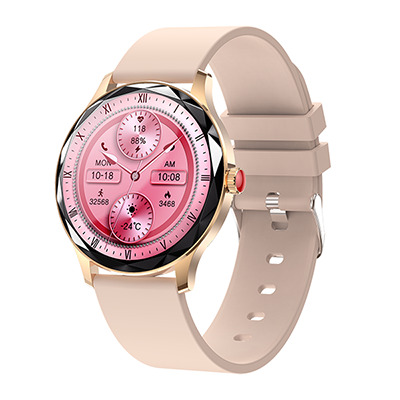
The Android Smartwatch SDK is widely used in consumer-grade smartwatches, such as health and fitness smartwatches, business and lifestyle smartwatches. For example, Geyan Technology's Jieshilang and Jersa brand consumer smartwatches adopt the Android Smartwatch SDK, which can quickly integrate functions such as Bluetooth calling, notification alerts, and multi-sport tracking, and provide users with a rich and smooth use experience. The Linux Smartwatch SDK is more suitable for professional and industrial scenarios, such as Programmable Smartwatch for IoT & Cloud Platform and Smartwatch with MQTT API for Industrial Projects. For example, Geyan's specialized industrial customized smartwatch uses the Linux Smartwatch SDK, which can realize lightweight integration with the IoT platform through the MQTT protocol, and stably transmit industrial monitoring data in low-bandwidth and unstable network environments.
Programmable Smartwatch for IoT & Cloud Platform: Key Support of SDK
Programmable smartwatches for IoT and cloud platforms require the SDK to provide strong network communication capabilities and cloud integration capabilities. The Linux Smartwatch SDK is usually the first choice for such products because of its lightweight and customizable characteristics. The SDK provides interfaces supporting multiple IoT communication protocols (such as MQTT, CoAP), which can realize efficient data interaction between smartwatches and cloud platforms. For example, in the industrial Internet of Things scenario, the programmable smartwatch collects on-site temperature, humidity, and equipment operation parameters, and sends the data to the cloud platform in real time through the MQTT API provided by the SDK; the cloud platform issues control instructions to the smartwatch through the same API to realize remote control of the equipment.
Geyan Technology's programmable smartwatch series is developed based on self-research and optimized Linux/Android SDK, which supports seamless connection with mainstream cloud platforms (such as Alibaba Cloud, Tencent Cloud, AWS IoT). The SDK provides complete cloud integration documents and sample codes, including data encryption transmission, device access authentication, and remote firmware upgrade functions, helping integrators quickly complete the docking between smartwatches and IoT cloud platforms. At the same time, Geyan's independent R&D team can also customize the SDK's communication protocol and data format according to the specific needs of the enterprise's cloud platform, improving the compatibility and security of integration.
Smartwatch with MQTT API for Industrial Projects
In industrial projects, the stability and reliability of data transmission are crucial. MQTT (Message Queuing Telemetry Transport) protocol, as a lightweight publish/subscribe message protocol, is widely used in industrial IoT scenarios due to its advantages of small bandwidth occupation, strong anti-interference ability, and multiple quality of service (QoS) levels. The smartwatch with MQTT API needs the SDK to provide a complete MQTT client development kit, including connection establishment, topic subscription, message publishing, and disconnection reconnection functions.
Geyan Technology's industrial customized smartwatch SDK integrates a mature MQTT API, which supports QoS 0, QoS 1, QoS 2 three service quality levels, and can be flexibly selected according to the importance of industrial data. For example, for non-critical data such as temperature and humidity monitoring, QoS 0 can be used to reduce communication overhead; for key data such as equipment fault alarms, QoS 2 can be used to ensure that the message is delivered exactly once without repetition. In addition, the SDK also supports TLS/SSL encrypted transmission and client certificate authentication, ensuring the security of industrial data in the transmission process. At present, Geyan's MQTT API-enabled smartwatches have been widely used in wind power stations, remote pumping stations, and other industrial scenarios, helping enterprises realize remote monitoring and intelligent management of equipment.
Custom smartwatch OS and firmware development is the core demand of many professional scenarios (such as industrial control, special medical care, religious customs), and the SDK is the core tool to realize this demand. The Linux Smartwatch SDK is more suitable for custom OS development because of its high degree of freedom. Developers can cut the system kernel according to the hardware configuration and functional requirements, customize the file system and device driver, and develop a lightweight OS that is completely suitable for the project. The Android Smartwatch SDK can also realize partial firmware customization (such as UI interface, pre-installed applications), but it is restricted by the Android system's underlying architecture and cannot carry out in-depth OS modification.
Geyan Technology has more than 15 years of experience in the intelligent electronics industry, and its independent R&D team has rich experience in custom smartwatch OS and firmware development. Based on the Linux and Android SDK, Geyan can provide customers with one-stop customization services from OS kernel modification, firmware compilation, to functional debugging. For example, for Muslim smartwatches, Geyan customizes the prayer time reminder function and Halal-compliant UI interface through the SDK; for TENS/EMS smartwatches, it optimizes the firmware's electrical stimulation parameter control algorithm to ensure the safety and effectiveness of the product. At the same time, Geyan supports both small-batch customization and large-scale OEM orders, ensuring high quality, fast delivery, and competitive pricing.
Conclusion: How to Choose the Right Smartwatch SDK?
The choice between Linux Smartwatch SDK and Android Smartwatch SDK depends on the specific application scenario and functional requirements: if it is a consumer-grade smartwatch that pursues rapid development, rich application ecology, and low development threshold, the Android Smartwatch SDK is the first choice; if it is a professional or industrial smartwatch that requires high customization, low power consumption, and stable operation in harsh environments, the Linux Smartwatch SDK is more suitable. For system integrators and enterprises, choosing a reliable SDK provider is equally important as choosing the SDK type.
Shenzhen Geyan Technology Co., Ltd., as a national high-tech enterprise specializing in smart wearable devices, integrates independent R&D, precision manufacturing, and strict quality control. It provides both Linux and Android smartwatch SDKs and complete customization services. Geyan's SDK has the advantages of strong compatibility, rich interfaces, and professional technical support, which can meet the needs of different industries such as consumer electronics, industrial monitoring, and healthcare. Adhering to the business philosophy of "Learning – Innovation – Surpassing", Geyan is committed to promoting the development of smart wearable technologies and bringing high-quality smartwatch products and meticulous services to users around the world.