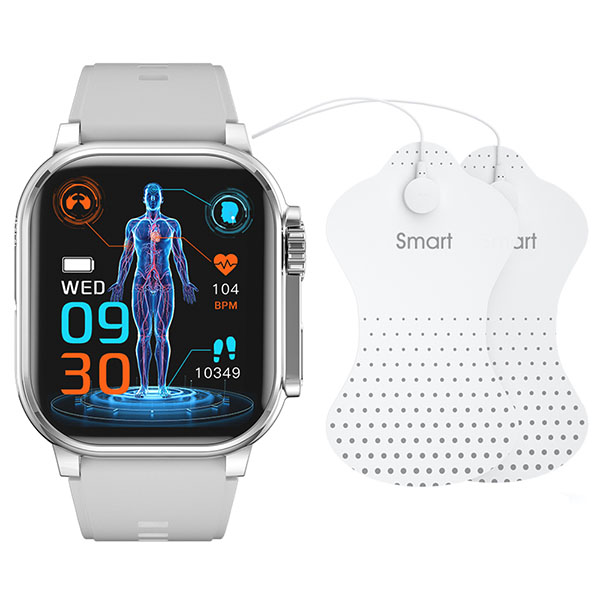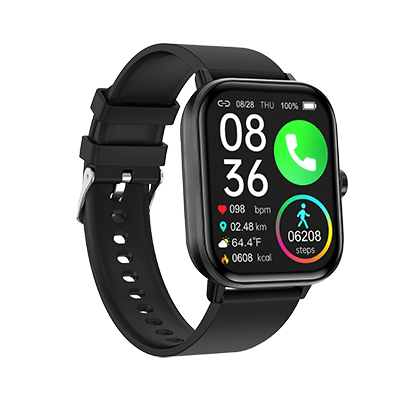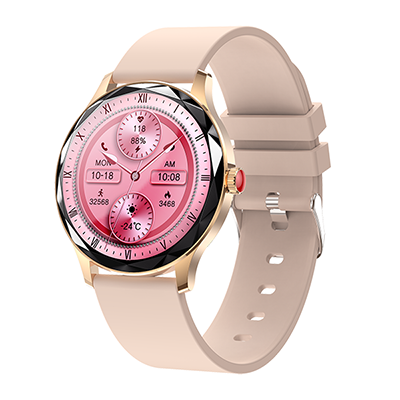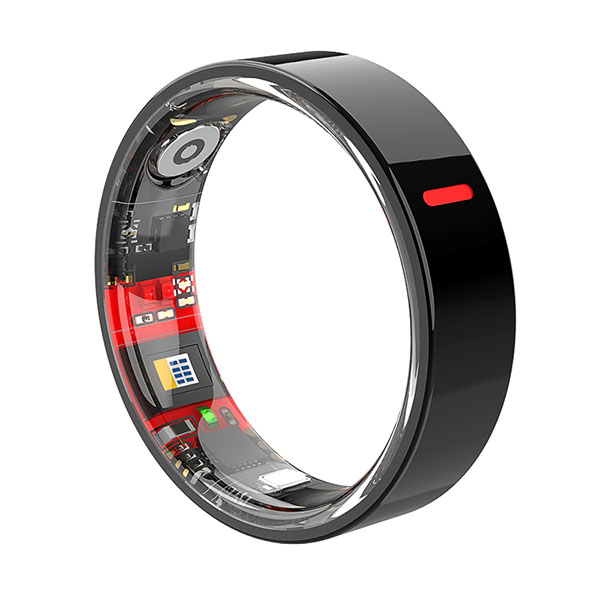
The demand for senior safety wearables is growing as healthcare providers, technology companies and senior care organizations develop connected solutions for elderly monitoring and remote health management.
Unlike conventional consumer smartwatches, senior safety wearables often need to work as part of a larger digital health ecosystem. They must collect relevant sensor data, support emergency communication, monitor user activity and transmit information to an external application or cloud platform.
For companies developing senior health platforms, choosing the right wearable manufacturer is therefore not simply a matter of finding a supplier with GPS or heart rate monitoring. Hardware compatibility, sensor data accessibility, firmware flexibility and API integration can determine whether the entire solution works as expected.
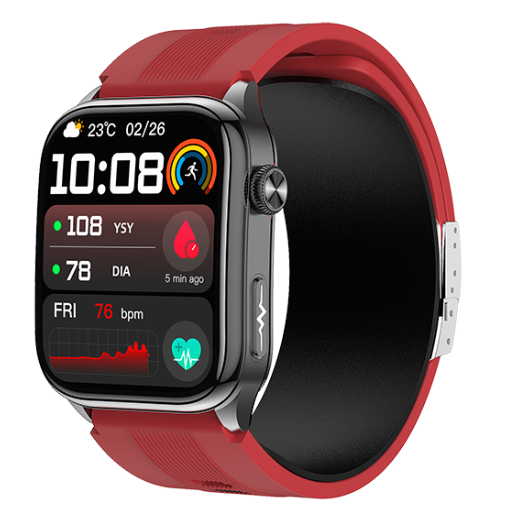
Shenzhen Geyan Technology Innovation Co., Ltd. provides smartwatch OEM and ODM manufacturing services for businesses developing customized wearable products. We work with customers on hardware configurations, product appearance, firmware requirements and software integration based on individual project specifications.
This article explains the key considerations when selecting a custom senior safety wearable manufacturer.
A senior safety wearable is a connected device designed to support elderly safety monitoring, emergency communication and daily activity tracking.
Depending on the project, it can be designed as a smartwatch, wristband or other wearable form factor.
Typical applications include:
Elderly care and independent living services
Remote health monitoring platforms
Assisted living facilities and nursing homes
Home healthcare management systems
Senior emergency response services
Connected healthcare and IoT projects
For platform developers, the wearable is only one part of the solution. The device must communicate with a mobile application or backend system to provide useful information to caregivers, family members and healthcare service providers.
When developing a senior wearable, the hardware and software requirements should be evaluated together.
The following table outlines common functional requirements for this type of project.
| Feature | Technical Purpose | Application |
|---|---|---|
| Fall Detection | Detect potential falling events through motion sensors and algorithms | Emergency alerts |
| SOS Button | Allow users to trigger emergency notifications | Senior safety |
| GPS Positioning | Provide outdoor location information | Location tracking |
| 4G Connectivity | Support cellular communication and data transmission | Independent connectivity |
| eSIM Support | Enable compatible cellular connectivity without a physical SIM card | Connected wearables |
| Heart Rate (PPG) | Collect optical heart rate measurements | Health monitoring |
| SpO2 | Measure peripheral blood oxygen saturation | Wellness tracking |
| IMU Sensors | Capture movement and orientation data | Mobility monitoring |
| API/SDK Integration | Connect wearable functions with external software systems | Healthcare platforms |
Not every project needs all these functions. The appropriate configuration depends on the target market, intended use, connectivity requirements, battery capacity and product cost.
Fall detection is one of the most important functions in senior safety wearables.
An IMU sensor, typically combining an accelerometer and gyroscope, can capture movement patterns and changes in device orientation.
A customized fall detection solution may evaluate:
Sudden acceleration or impact
Changes in wrist orientation
Abnormal movement patterns
Periods of inactivity after a potential fall
Movement patterns before and after an event
The device can then trigger an alert according to the configured detection logic.
An SOS button provides an additional emergency communication method, allowing the wearer to manually request assistance.
For OEM projects, buyers should clarify whether fall detection algorithms can be adjusted according to their application requirements and whether event-level sensor data can be made available for further analysis.
Fall detection should be validated under real-world conditions. No wearable algorithm can guarantee detection of every fall or eliminate false alerts.
For elderly monitoring platforms, connectivity is just as important as sensor functionality.
GPS supports outdoor location tracking, while cellular connectivity allows the wearable to communicate without relying entirely on a nearby smartphone.
A 4G senior smartwatch project may require:
GNSS positioning
LTE network compatibility
Physical SIM or eSIM options
Emergency communication
Data synchronization
Power consumption optimization
For international projects, LTE frequency bands, operator compatibility and eSIM provisioning must be evaluated for the destination market.
These details are particularly important for companies launching products in India, Europe, the Middle East and Southeast Asia.
Healthcare platform developers may need more than the final values displayed on a smartwatch screen.
For example, an application may require access to heart rate readings, SpO2 measurements, movement information or event-related sensor records.
PPG sensors support optical heart rate monitoring and, on compatible hardware, SpO2 measurement.
IMU sensors can provide motion-related information that may be used for mobility monitoring, activity classification and customized algorithms.
The available data depends on the sensor hardware, firmware architecture and SDK implementation.
One of the most important considerations when selecting a senior wearable OEM manufacturer is data accessibility.
Many standard consumer smartwatches provide predefined functions and display processed measurements through their applications. However, this may not be sufficient for companies developing their own healthcare platforms.
A platform developer may want to:
Receive sensor measurements through its own application.
Analyze movement patterns using proprietary algorithms.
Develop customized fall detection logic.
Monitor mobility changes over time.
Synchronize device data with a cloud backend.
Integrate wearable information into an existing digital health system.
This creates a need for more flexible data access.
Before starting an OEM/ODM project, buyers should ask manufacturers several specific questions:
1. Can the device provide raw or near-raw sensor data?
Ask whether accelerometer, gyroscope and PPG-related data can be accessed beyond the standard user-facing measurements.
2. What data formats and sampling rates are available?
The engineering team should clarify data formats, sampling frequency, transmission intervals and storage limitations.
3. Can firmware be customized?
The manufacturer should explain which firmware functions, communication protocols and data processing parameters can be modified.
4. Can the SDK support third-party applications?
Confirm whether the SDK provides interfaces for device communication, data retrieval, event notifications and device management.
5. Can the device connect directly to an external backend?
Depending on the architecture, data may be transmitted through a mobile application, Bluetooth gateway or cellular network.
These questions help buyers distinguish between a standard smartwatch supplier and a manufacturer capable of supporting connected wearable development.
For companies that already operate a healthcare application or cloud platform, wearable integration is a critical part of product development.
A typical architecture may look like this:
Wearable Device → Bluetooth / Cellular Network → Mobile Application or Gateway → API / Cloud Backend → Healthcare Platform
The exact architecture depends on the device hardware and project requirements.
Potential integration functions include:
| Integration Area | Possible Requirements |
|---|---|
| Device Connection | Bluetooth communication and device pairing |
| Health Data | Heart rate, SpO2 and supported sensor measurements |
| Motion Data | Accelerometer and gyroscope information |
| Emergency Events | SOS and fall detection notifications |
| Device Management | Battery status, device information and configuration |
| Data Synchronization | Scheduled or event-based data transmission |
| Backend Integration | API interfaces and cloud data exchange |
A suitable OEM/ODM partner should be able to discuss the integration architecture before mass production.
For projects requiring advanced integration, buyers should request SDK documentation, API specifications, sample code and a technical feasibility assessment.
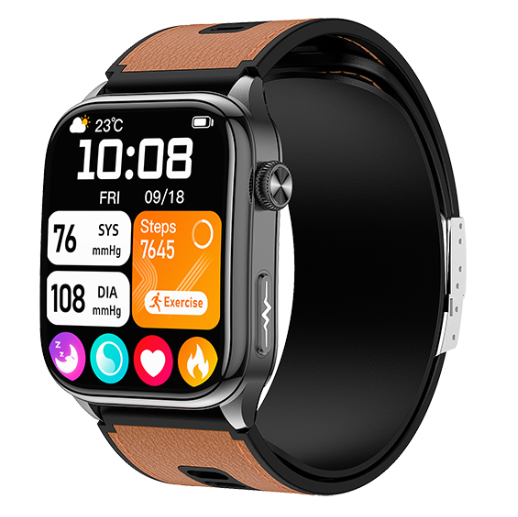
Not every senior wearable project can be completed using standard firmware.
For example, a company developing its own elderly mobility monitoring platform may need different sensor configurations, data transmission intervals or event detection logic.
Depending on the hardware platform and development agreement, customization may involve:
Firmware feature modifications
Sensor data acquisition configuration
Customized SOS workflows
Fall detection parameter adjustment
Bluetooth communication protocols
Data transmission configuration
User interface and application customization
Integration with proprietary software systems
Buyers should also clarify ownership and licensing arrangements for customized firmware, algorithms, SDKs and related source code.
Some manufacturers offer standard SDK integration, while deeper source-code access may require a separate engineering agreement and project evaluation.
Selecting a manufacturer based only on product appearance or unit price can create problems during integration and deployment.
For platform-based projects, we recommend evaluating suppliers across six areas.
| Evaluation Criteria | Questions to Ask |
|---|---|
| Hardware Capability | Can the manufacturer support GPS, 4G, PPG and IMU configurations? |
| Data Accessibility | Is raw or near-raw sensor data available? |
| Software Flexibility | Can firmware and algorithms be customized? |
| Integration Support | Are API, SDK and technical documents available? |
| Manufacturing Capability | Can the supplier support prototyping and volume production? |
| Project Cooperation | Can its engineering team work directly with our technical team? |
It is also important to request an engineering sample before confirming a production order.
A sample evaluation should cover connectivity, sensor performance, battery life, emergency notifications, data transmission stability and compatibility with the buyer's software environment.
Shenzhen Geyan Technology Innovation Co., Ltd. is a China-based smart wearable manufacturer established in 2012.
We provide OEM and ODM services for international brands, distributors and technology companies looking to develop customized wearable products.
Our project capabilities cover multiple aspects of wearable product development, including:
Hardware Customization
Product structure and appearance
Hardware configuration
PCB and PCBA development
Sensor selection and configuration
Product component customization
Software and Firmware
Firmware feature customization
Watch UI and interface design
Bluetooth communication
Application and data integration requirements
SDK/API integration support based on project specifications
Product Manufacturing
Logo and branding customization
Housing and strap options
Packaging customization
Product assembly and quality inspection
OEM/ODM production support
For senior safety wearable projects, we evaluate the technical requirements first to determine the appropriate hardware platform, communication solution and development scope.
Not all functions are available on every standard device. Requirements involving 4G/eSIM, raw sensor access, fall detection algorithms and backend integration need to be assessed individually.
Our objective is to help customers move from product requirements to a manufacturable wearable solution.
To make the initial technical evaluation more efficient, buyers can prepare the following information.
| Project Information | Details to Provide |
|---|---|
| Target Market | India, Europe, USA, Middle East or other regions |
| Product Type | Senior smartwatch, safety wristband or customized wearable |
| Connectivity | 4G LTE, eSIM, GPS, Bluetooth |
| Sensors | PPG, SpO2, accelerometer, gyroscope |
| Safety Functions | Fall detection, SOS, location alerts |
| Data Requirements | Processed measurements or raw sensor data |
| Integration | API, SDK, mobile app and cloud backend |
| Customization | Firmware, algorithms, UI and hardware |
| Estimated Quantity | Prototype, pilot batch and expected mass production |
Providing these details allows the engineering team to evaluate technical feasibility, development costs and estimated project timelines more accurately.
Q1: Can a smartwatch manufacturer provide raw sensor data for a healthcare platform?
Some manufacturers can provide raw or near-raw sensor data through customized firmware, SDKs or dedicated communication interfaces. Availability depends on the chipset, sensor configuration and firmware architecture. Buyers should confirm data access before selecting a hardware platform.
Q2: Can a senior smartwatch support custom fall detection algorithms?
Potentially, yes. Fall detection can use accelerometer and gyroscope data combined with software algorithms. The extent of customization depends on access to the sensor data and firmware development capabilities of the manufacturer.
Q3: Can a 4G senior safety wearable work without a smartphone?
A compatible cellular wearable can communicate through its own SIM or eSIM connection without requiring a smartphone as its primary network gateway. However, network support, backend architecture and emergency communication functions must be verified.
Q4: Can I integrate a custom senior wearable with my own healthcare application?
Yes, depending on the device's available integration interfaces. A project may use a Bluetooth SDK, API, cellular communication or a combination of these methods. The integration approach should be confirmed during technical evaluation.
Q5: Can the manufacturer provide firmware source code?
Source-code access is not included in every OEM/ODM project. It depends on the chipset platform, development scope, intellectual property arrangements and commercial agreement.
Q6: Can I develop a senior safety smartwatch specifically for the Indian market?
Yes. A customized product can be evaluated for Indian network bands, GPS requirements, language options, cellular connectivity and local application integration. Cellular operator compatibility and applicable regulatory requirements should be confirmed before production.
Q7: What is the difference between a standard senior smartwatch and a custom senior safety wearable?
A standard senior smartwatch typically uses predefined hardware and software functions. A custom senior safety wearable is developed around the buyer's application, data requirements, communication architecture and business model. It offers greater flexibility when the project requires integration with an existing platform.
Are you developing an elderly care platform, senior safety solution or remote health monitoring application?
Geyan welcomes inquiries from healthcare technology companies, IoT solution providers, software developers and wearable brands looking for an OEM/ODM manufacturing partner.
Whether you need a customized senior smartwatch, a 4G GPS safety wearable, IMU-based mobility monitoring or a device with API/SDK integration, our team can review your requirements and assess a suitable development approach.
Send us your technical requirements to start a project evaluation.
Please include:
Your product concept and target market
Required sensors and communication modules
Raw sensor data and SDK/API requirements
Firmware and algorithm customization needs
Estimated prototype and production quantities
Contact Geyan for Custom Senior Safety Wearable OEM/ODM Solutions