For any brand or startup entering the smart wearable market, selecting between a Real-Time Operating System (RTOS) and Android is one of the most pivotal decisions you’ll make. This choice directly shapes your product’s cost structure, battery life, user experience, development timeline, and ultimately, its market viability.
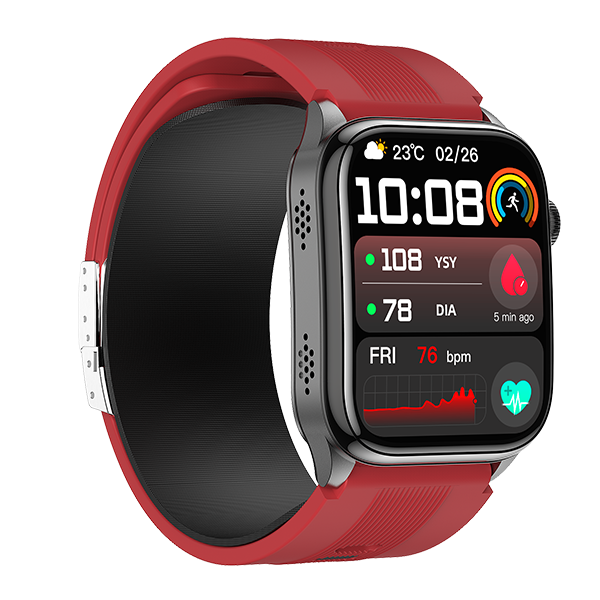
At Shenzhen Geyan Technology Co., Ltd.—a national high-tech enterprise founded in 2012 and a pioneer in China’s smartwatch industry—we’ve helped over 200 global brands navigate this exact crossroads. With 15+ years of expertise in intelligent electronics and deep in-house R&D capabilities, we understand that the “best” OS isn’t universal—it’s the one that aligns with your product vision, target audience, and business model.
This guide delivers an OEM/ODM engineering perspective on the Android vs RTOS debate, enriched with real-world insights from our turnkey smartwatch customization projects across health, sports, lifestyle, and specialized segments.
Before comparing OS options, it’s essential to understand the layered stack that powers every smartwatch:
|
Layer |
Description |
|
Bootloader |
Initializes hardware and loads the OS |
|
BSP (Board Support Package) |
Hardware-specific drivers enabling OS communication |
|
Firmware |
In RTOS systems, often includes kernel + BSP + UI logic |
|
OS |
Core resource manager: Android (full OS) vs RTOS (lightweight kernel) |
|
UI & Companion App |
User-facing layer—custom-built on RTOS, app-based on Android |
Understanding these layers helps demystify why OS choice cascades into every aspect of your product.
An RTOS (Real-Time Operating System) is a minimal, deterministic kernel designed for embedded systems where predictable timing, reliability, and ultra-low power are non-negotiable.
Common Choices:
At Geyan, we’ve deployed RTOS across health monitors, sports trackers, kids’ watches, and corporate wearables because it delivers:
✅ Battery Life of 7–30+ Days
Through aggressive sleep modes and direct hardware control—ideal for users who
hate daily charging.
✅ Lower BOM Cost
Runs on cost-effective MCUs (<$5), reducing total hardware spend by 30–50%
vs Android.
✅ Fast Boot (<1 Second)
Critical for fitness/safety use cases where instant readiness matters.
✅ High Stability
Deterministic task scheduling ensures sensor accuracy and haptic feedback
precision.
✅ Low MOQ Friendly
Perfect for startups or niche markets: feasible from 10,000 units.
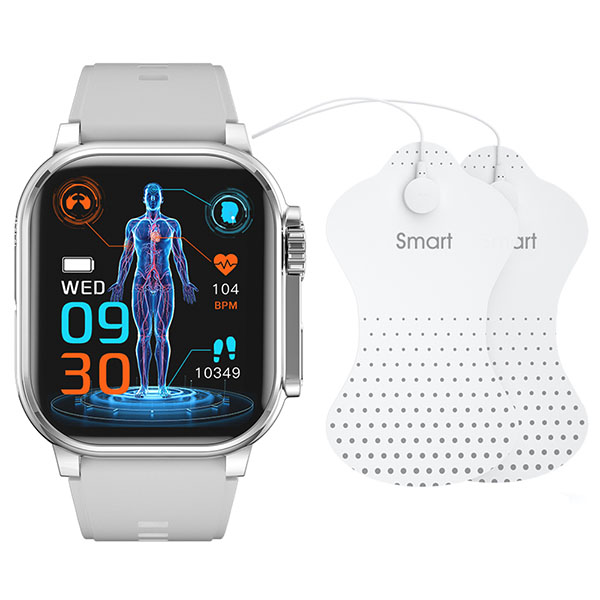
💡 Geyan Insight: Many clients assume “simple UI = low quality.” In reality, our RTOS-based Muslim Smartwatches and TENS/EMS Health Watches deliver elegant, responsive interfaces—proving that UX excellence doesn’t require Android.
Typically refers to:
Requires a full Linux kernel, Android framework, and Java/Kotlin app layer—demanding more powerful SoCs (Cortex-A series).
Choose Android if your product demands:
✅ Rich, Animated UIs
Leverage Jetpack Compose or traditional Views for smartphone-like fluidity.
✅ Third-Party Apps
Enable users to install Spotify, Strava, or custom enterprise tools.
✅ Standalone Connectivity
LTE/eSIM support for phone-free calling, messaging, or navigation.
✅ Google Ecosystem Integration
Google Pay, Maps, and Assistant as core features.
✅ Premium Positioning
Targeting consumers who value versatility over battery life.
💡 Geyan Experience: We’ve successfully launched AMOLED Business Smartwatches with Bluetooth calling and custom launchers on AOSP—delivering luxury UX while avoiding GMS licensing complexity.
|
Criteria |
RTOS Smartwatch |
Android Smartwatch |
|
Power Efficiency |
⭐⭐⭐⭐⭐ |
⭐⭐ |
|
Typical Battery Life |
7–30+ days |
1–3 days |
|
BOM Cost |
Low ($8–$15) |
High ($15–$35+) |
|
UI Flexibility |
Medium (custom graphics) |
Very High (standard Android tools) |
|
App Ecosystem |
Pre-installed only |
Play Store or private app store |
|
Dev Timeline |
3–6 months |
6–12+ months |
|
Ideal MOQ |
10K–50K units |
50K–100K+ units |
|
Best For |
Fitness, health, kids, corporate, entry-level |
Premium lifestyle, LTE, app-centric, Google-integrated |