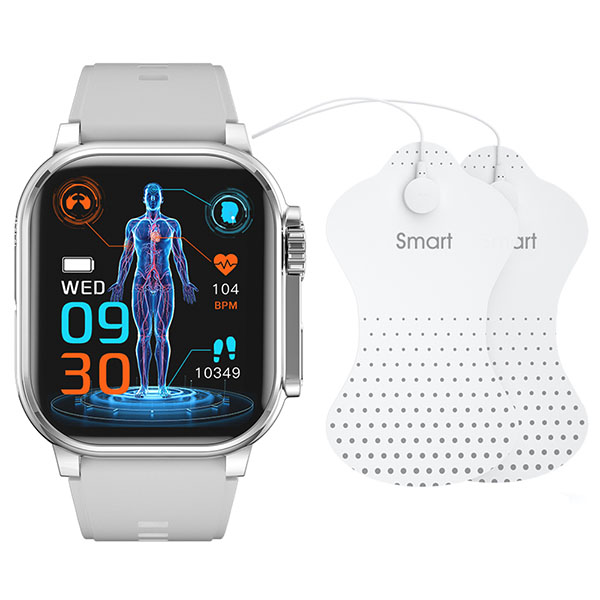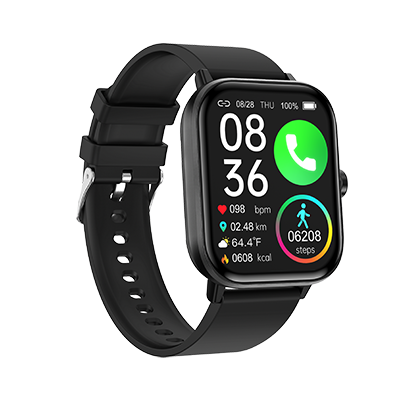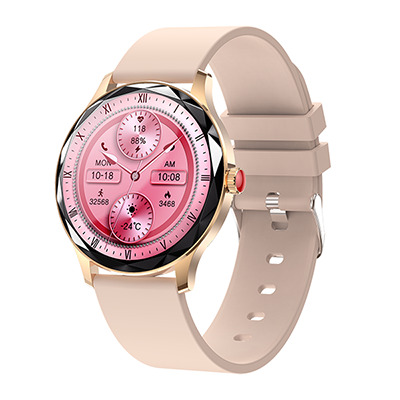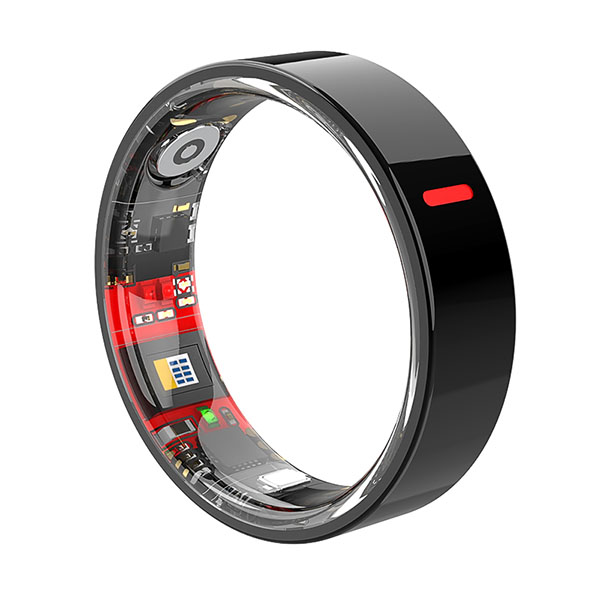
With over 1.9 billion Muslims globally accelerating their adoption of digital lifestyles, generic smartwatches increasingly fail to meet core religious and cultural needs. In the UAE, Saudi Arabia, and Indonesia—three pivotal markets representing premium maturity, strict religious compliance, and mass affordability, respectively—a deeply localized, functionally precise, and regulation-compliant Islamic Smartwatch has become a strategic gateway for brands seeking sustainable growth.
This guide delivers actionable insights on:
✅ Core religious feature requirements for Muslim users
✅ Market-specific customization strategies across the three countries
✅ RTOS vs. Android: Technical trade-offs for Islamic wearables
✅ Halal compliance and local certification essentials
✅ How to select an OEM/ODM partner with proven Islamic wearable experience
Mainstream wearables commonly lack support for high-frequency religious practices: Salah (prayer) timings, Qibla direction, and Hijri calendar integration—features that drive 5+ daily interactions for devout users.
Ignoring religious localization = losing user trust.
Winning products = Religious Understanding × Technical Precision × Cultural Compliance
|
Feature |
Technical Requirements |
User Value |
|
Accurate Salah Reminders |
Multi-algorithm support (Umm Al-Qura, MWL, etc.), GPS-based location, offline operation, automatic DST adjustment |
Never miss a prayer |
|
Real-Time Qibla Compass |
High-precision magnetometer + GPS fusion, indoor error correction, dynamic angle display |
Accurately face the Kaaba anywhere |
|
Hijri Calendar & Ramadan Support |
Built-in Islamic calendar, intelligent Suhoor/Iftar alerts, Eid/holiday markers |
Seamlessly integrate faith into daily life |
Key Insight: Inaccurate algorithms = product failure. Calibration must be country- and city-level specific.
|
Market |
Core Expectations |
Customization Focus |
|
UAE |
Premium, stylish, business-integrated |
Bilingual (Arabic/English) UI, metal casing, corporate gifting channels |
|
Saudi Arabia |
Religious compliance, stability, reliability |
Arabic-first UI, SASO certification, strict content review |
|
Indonesia |
Value-driven, long battery, e-commerce ready |
Bahasa Indonesia support, RTOS platform, IP67 rating, flexible MOQ |
Note: In Saudi Arabia, a single non-compliant UI icon can trigger product recall; in Indonesia, <2-day battery life kills competitiveness.
|
Criteria |
RTOS Solution |
Android Solution |
|
Target Segment |
Mass market, government tenders, Indonesia |
Premium urban users, UAE lifestyle segment |
|
Battery Life |
7–20 days |
1–3 days |
|
Key Advantages |
Ultra-low power, offline reliability, cost efficiency |
eSIM/LTE connectivity, app ecosystem, rich UI |
|
Typical MOQ |
≥3,000 units |
≥5,000 units |
Recommendation: Choose RTOS for pure religious functionality; choose Android for lifestyle-faith hybrid experiences.
While no global mandatory Halal certification exists for smartwatches, brands should:
Avoid “one-size-fits-all” vendors. A credible partner must demonstrate:
⏱️ Typical timeline: 12–20 weeks | MOQ: 3K–5K units
The Islamic smartwatch market is not a niche—it’s a structurally driven blue ocean
powered by daily religious behavior.
Here, technology is
table stakes, culture is the moat, and trust is the currency.
Partnering with an OEM/ODM that truly understands Islamic rituals, excels in embedded development, and navigates local regulations is the fastest, lowest-risk path to capturing this high-growth opportunity.