1 Introduction: Why Bluetooth Data Integration Matters in Custom Smartwatches
A custom smartwatch is usually chosen for what it can measure, and too often rejected for what it cannot hand over.
Hardware buyers ask about battery life, case finish, sensor accuracy and price. Software teams ask something else: which services does the device expose, which characteristic carries heart rate, how often does it notify, and has anyone written this down. When those conversations happen late, the project stalls at the sample stage and the hardware takes the blame for a software gap.
The gap is rarely about Bluetooth itself. A watch can collect excellent data and stay closed to everyone outside its firmware team. What matters commercially is a defined path from a sensor reading to a field your application can trust. App developers cannot redesign inherited hardware, so every undocumented byte becomes a support ticket; brands discover late that the companion app cannot be replaced; integrators lose a dashboard to one missing field.
What Is Bluetooth Data Integration in a Smartwatch?
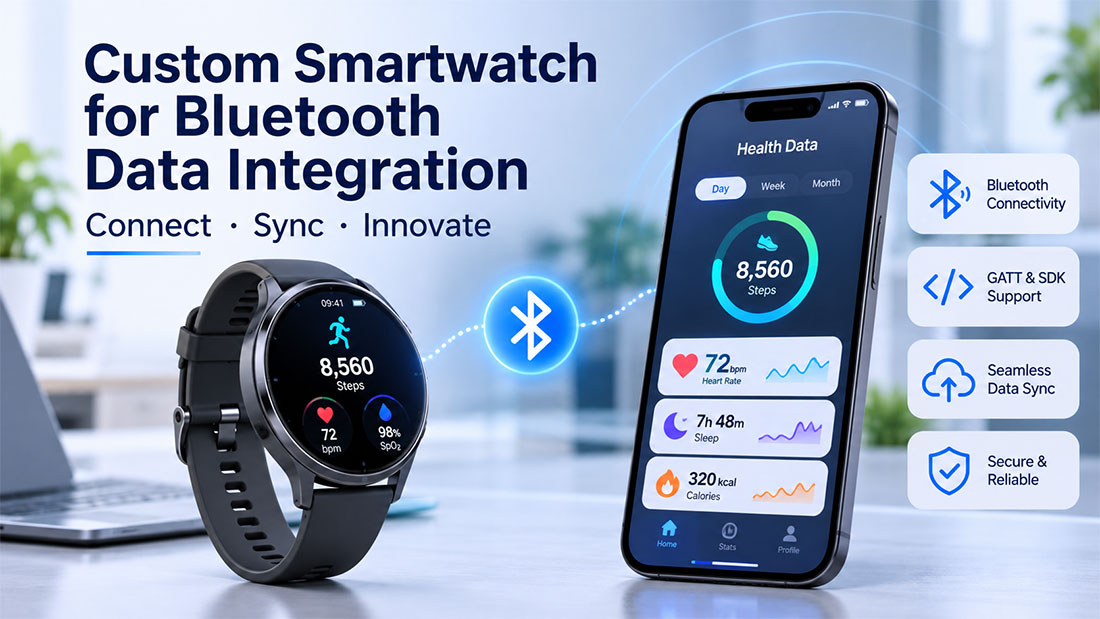
Bluetooth data integration in a smartwatch is the process of exchanging information between the watch and compatible devices or applications through Bluetooth communication protocols. Supported data — activity records, heart rate measurements, blood oxygen readings, sleep records and device status — reaches a connected mobile application or another compatible system, where it can be processed, displayed or synchronised further.
Two words carry the weight: supported and compatible. A watch does not transmit everything it measures, and an app cannot read everything the watch transmits. Integration works where the two lists overlap and someone has documented which fields exist, in what format, at what rate.
Quick answer: how does Bluetooth data integration work in a custom smartwatch?
A custom smartwatch uses Bluetooth Low Energy to communicate with compatible smartphones and applications. Through GATT services and characteristics, supported device data can be read by the app or pushed to it as notifications. The app then processes, displays or synchronises that data with a cloud platform, depending on the device protocol and the software integration in place.
2 How Does Bluetooth Data Integration Work in a Smartwatch?
Two layers decide whether a watch can serve your software: the radio link that carries the bytes, and the data model that gives them meaning. Fail either and the symptom is the same — a device that connects but delivers nothing usable.
2.1 What Is Bluetooth Low Energy (BLE)?
Bluetooth Low Energy is not a slower edition of the Bluetooth in your headphones; it assumes a device sleeps most of the time and wakes briefly to send a little data. A peripheral advertises short packets on three channels placed between the busier Wi-Fi channels of the 2.4 GHz band. A phone hears them, connects, and both sides agree a connection interval — typically tens of milliseconds to a few seconds — with the radio off in between. That duty cycle is why a watch holds a link for days. Classic Bluetooth keeps a continuous connection because audio is a continuous stream; wearable telemetry is the opposite case.
The efficiency brings constraints. Throughput is modest, a single notification is capped by the negotiated MTU — 23 bytes on many default stacks — and a long connection interval saves power while delaying updates. Neither is a defect; both are choices a buyer should know before signing.
2.2 Understanding GATT and Bluetooth Data Communication
GATT, the Generic Attribute Profile, turns a radio link into readable data. Every value a watch exposes sits in the same hierarchy.
-
Service. A container for one function area, such as heart rate, battery or device information.
-
Characteristic. The value itself: a measurement, a status flag, a control point the app can write to.
-
Descriptor. Metadata on a characteristic — units, valid range, presentation format.
-
UUID. The identifier that lets a client find the right service and characteristic among many.
Standard profiles use short 16-bit identifiers assigned by the Bluetooth SIG, which is why a heart rate service is recognisable across vendors. Anything outside that set uses a 128-bit UUID only the firmware team can interpret without documentation. So a watch exposing standard heart rate and battery services can be read by almost any BLE-capable app within an afternoon; one that packs steps, sleep stages and raw accelerometer samples into a private characteristic cannot be read by anyone without the specification.
2.3 How Does a Smartphone Receive Smartwatch Data?
-
Advertising. The watch broadcasts its name, supported services and sometimes a manufacturer-specific payload.
-
Scanning. The phone searches nearby devices, usually filtered by service UUID or name.
-
Connection. The phone becomes the GATT client, the watch the GATT server; interval and slave latency are agreed here.
-
Service discovery. The app receives the list of services and characteristics the device offers.
-
Reading and notification. The app reads a current value or subscribes to notifications so updates arrive without polling.
-
Processing. The app decodes the payload, converts units and maps it into its own data model, handling duplicates and gaps.
-
Display or synchronisation. The value appears in the interface and usually leaves the phone for a server through an API call.
Each step fails in its own way, so integration testing is a sequence of checks rather than one "does it connect" test. A watch that discovers services but never notifies is a different problem from one that notifies during a workout and goes silent when the screen locks.
|
Technology
|
Main function
|
Where it appears in a project
|
|
Bluetooth Classic
|
Continuous wireless link for streaming
|
Audio and selected device connections, rarely the data path
|
|
Bluetooth LE
|
Intermittent low-power wireless link
|
Wearable telemetry, sensors, small control commands
|
|
GATT
|
Defines how data is organised and exchanged over BLE
|
Reading values and subscribing to updates
|
|
SDK
|
Bundles code, wrappers and sample projects
|
Building the app side of the integration
|
|
API
|
Interface between software systems, usually over HTTP
|
Moving data from the app to a platform or cloud
|
Keep those apart. Bluetooth and BLE describe a radio; GATT describes how data is organised on it; an SDK and an API sit above the link. A supplier who answers a compatibility question with "it supports Bluetooth 5" has answered none of them.
3 What Data Can a Custom Smartwatch Transfer Through Bluetooth?
The range below is what most projects ask for; the exact list inside each row is model-specific.
|
Data category
|
Typical transfer
|
What the app can do with it
|
|
Heart rate
|
Current value, session records, daily trend
|
Live workout display, resting rate trends, recovery estimates
|
|
Blood oxygen
|
SpO₂ readings where the sensor supports it
|
Spot checks, overnight trend review, altitude context
|
|
Activity
|
Steps, distance, calories, active minutes
|
Daily goals, cohort comparisons, engagement features
|
|
Sleep
|
Duration and records, stages where available
|
Sleep scores, coaching content, longitudinal reports
|
|
Sports
|
Workout type, duration, heart rate zones, GPS on supported models
|
Training load, route replay, post-session summaries
|
|
Device information
|
Battery level, firmware version, connection state, settings
|
Fleet health monitoring, remote troubleshooting, user alerts
|
Real-time data and historical records are different products. Notifications push a value when it changes and keep a live display responsive; reads return the current value on request; a history sync is a bulk transfer the app triggers, sometimes over a control characteristic with its own packet protocol and progress states. A watch sampling at 1 Hz and uploading every ten seconds is a fine live display and a poor arrhythmia detector; one that transfers a week of records in ninety seconds is a good reporting device and useless for an interval timer. Decide which behaviour the product needs before comparing hardware, and put the expected rate in the requirement document.
Availability is the other variable. Whether a model exposes SpO₂, sleep stages, ECG traces or raw accelerometer data depends on the sensor set, the firmware build and which characteristics the vendor chose to publish. A field list for the specific model answers this; category marketing does not.
4 Bluetooth Integration Methods for Smartwatch App Development
Once the device side is settled, the work moves to the app. The platform decides the APIs, the permission model and the background policy.
4.1 Bluetooth Integration for Android Apps
On Android the path runs through BluetoothLeScanner for discovery and BluetoothGatt for the connection, with results arriving asynchronously on a BluetoothGattCallback. That callback turns every read, write and notification into a state machine; code written as if it were synchronous produces race conditions that appear only on real devices. Permissions changed at Android 12, when BLUETOOTH_SCAN and BLUETOOTH_CONNECT replaced the older location-plus-Bluetooth combination. Background scanning is throttled, so a design assuming continuous discovery drains the battery and still misses devices.
4.2 Bluetooth Integration for iOS Apps
iOS uses Core Bluetooth. A CBCentralManager scans for peripherals advertising a service the app cares about, connects through a CBPeripheral, then walks the hierarchy with discoverServices and discoverCharacteristics before enabling updates with setNotifyValue. Two behaviours shape timelines: background execution is restricted, so a central connection survives with the bluetooth-central mode while background scanning needs service filters and is paced by the system; and state restoration must be handled, or the app loses data every time the user locks the phone.
4.3 Custom Bluetooth Protocol Integration
Standard services cover the basics and stop there. Anything a brand wants to differentiate — sleep staging, a proprietary readiness score, multi-day history, a control channel for watch faces or firmware updates — lives in custom GATT services with 128-bit UUIDs and a payload the vendor defines. Integration then depends on documentation: the service map, the byte layout of each packet, the command set, unit conventions, and the rules for a failed write or a partial record. Without it a developer watches data arrive and cannot decode it; with it, a competent team builds a working client in days.
4.4 Bluetooth and Cloud Platform Integration
Bluetooth does not reach the internet. The chain is watch, BLE link, phone app, HTTPS or API call, then the platform: everything after the phone is ordinary web engineering, everything before it is constrained by the radio. For products without a phone in the loop — clinic rooms, industrial sites, kiosks — a BLE gateway takes the phone's place and forwards data over Wi-Fi or Ethernet. Both paths need one decision early: whether the watch buffers data when the link drops, how much it holds, and how the app reconciles what it received with what the device still stores.
5 Common Bluetooth Integration Challenges in Smartwatch Projects
Most of these are predictable. They turn expensive only when discovered after tooling has been cut.
5.1 Bluetooth Connection Stability
Field-only disconnects usually trace to supervision timeout settings, aggressive power saving on the watch, or an app holding a link open while the screen is off. Reconnection matters as much as pairing: retry with backoff, re-discover services after every reconnect, and never assume the peripheral is the same instance it was ten minutes ago.
5.2 Data Synchronisation Delays
Late data is three problems. A notification may be delayed by a long connection interval; a polled read may be stale because firmware samples less often than the app asks; a history sync may take a minute and should not block the interface. Ask for each number separately.
5.3 Cross-platform Compatibility
Android and iOS differ in permission models, background policy, scanning behaviour and how much of an advertising payload an app may read. A feature that works on one platform in testing can be blocked by policy on the other. Budget separate test cycles instead of assuming parity.
5.4 Battery Consumption
Every extra stream is paid for in runtime. Continuous high-rate accelerometer notification visibly shortens battery life; an occasional battery-level read costs almost nothing. Where a value can be computed on the watch and sent as a result rather than raw samples, do that.
5.5 Data Security and Privacy
Pairing protects the link, not the data model. Health measurements should also be protected at the application layer with authenticated sessions and encrypted payloads. Android's own guidance notes that data on a BLE link may be accessible to other apps on the device, which is why that layer is worth the effort. Consent, retention and regional privacy rules belong in the requirements, not a later review.
6 Industry Trends: The Future of Bluetooth-Connected Smartwatches
The direction is consistent: watches are becoming terminals on someone else's platform rather than self-contained products.
6.1 Low-Power Bluetooth for Wearable Devices
Power budget is now a product feature. Longer intervals when idle, batched transmission and disconnecting when nothing needs to move are competitive advantages, not engineering preferences. The real work is scheduling: what must be live, what can wait, what can be computed on the device.
6.2 Real-Time Wearable Data Connectivity
Live heart rate during training, live pace and instant notifications now apply across price tiers. Availability still depends on sampling, connection interval and firmware buffering, so real time is a specification to verify rather than a feature to claim.
6.3 Multi-Device Connectivity
An ecosystem is rarely one device. A watch, a ring and a scale may report to the same app, and a phone has limited concurrent BLE connections to spend. Prioritising which peripheral stays connected and resolving two conflicting step counts becomes part of the product rather than an edge case.
6.4 AI and Bluetooth-Connected Wearable Data
Bluetooth moves data; the model lives elsewhere. What changes is the quality of the input: clean, timestamped, gap-flagged records make trend analysis and personalised recommendations possible, while inconsistent sampling makes them unreliable.
6.5 More Secure and Interoperable Wearable Ecosystems
Standard profiles, documented custom services and cross-platform support are becoming procurement criteria, because a device that works only with its own app cannot join a larger platform. It is no longer enough that a watch connects; the data after connection has to be reliable, readable and manageable.
7 How to Choose a Custom Smartwatch for Bluetooth Data Integration
The evaluation below is written for the person who will run the integration, not the one signing the contract.
|
Evaluation factor
|
What buyers should check
|
|
Bluetooth version
|
Which version the chip and stack support, and whether the features you rely on are enabled in the firmware
|
|
BLE support
|
Whether the watch acts as a GATT server, how many concurrent connections it allows, how it behaves when a second phone connects
|
|
GATT structure
|
The service and characteristic list, standard versus custom UUIDs, and whether a written map exists
|
|
Data accessibility
|
The exact fields the firmware exposes, with units, sampling rates and update method
|
|
Mobile compatibility
|
Tested behaviour on Android and iOS, minimum OS versions, permission handling, background limits
|
|
SDK and API
|
Whether an SDK, protocol document, sample payloads or reference app is available, and under what terms
|
|
Firmware
|
Whether firmware can be modified for your integration, who owns that work, and whether over-the-air updates are supported
|
|
Sample testing
|
Access to units for connection, sync and stability testing before committing to a volume
|
|
Technical support
|
Who answers engineering questions during integration, in which time zone, and how fast
|
Do not select a smartwatch on its Bluetooth version alone. Two watches can list the same generation and behave nothing alike: one publishes a documented GATT layout with named fields and sample payloads, the other exposes a manufacturer app and little else. Ask for the service specification, the data field list and a unit to test. Those three answers predict your timeline better than any datasheet.
8.1 Smart Wearable Product Development and Manufacturing
Geyan Technology was founded in 2012 and is a national high-tech enterprise covering research, design, production, sales and after-sales service of smart wearable devices, with OEM and ODM customisation at its centre. Nearly fifteen years in the intelligent electronics industry sit behind the current range: in-house development, precision manufacturing, quality control, and a service team that stays with a project after shipment. The company also helped initiate China's Smart Wearable Industry Association and the Chip Industry Promotion Association, where it holds standing committee seats. Its own brands — Jieshilang, Jersa and Xinan — are built on the same development and manufacturing base that serves overseas customers.
8.2 Hardware Customisation
Customisation starts at the board: hardware and PCB design changes alongside display and sensor configuration, case and strap selection, and brand identity work that extends to packaging. The catalogue covers the categories most integration projects begin from.
-
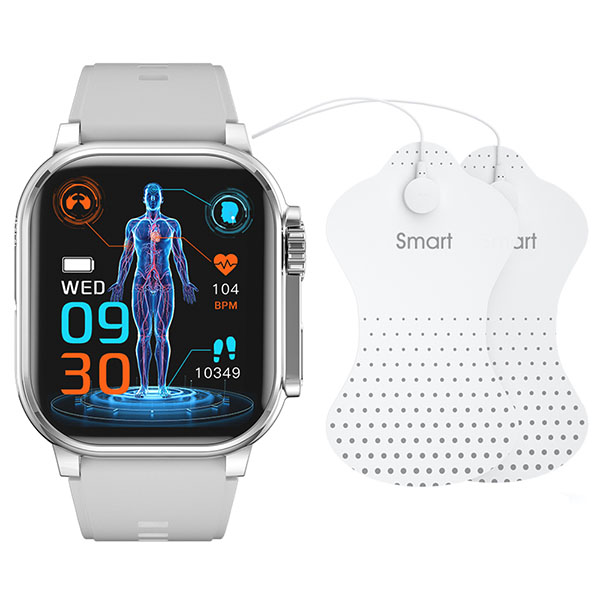
Sports and health watches tracking heart rate, SpO₂, sleep, steps and calories, with blood pressure and ECG functions on supported models.
-
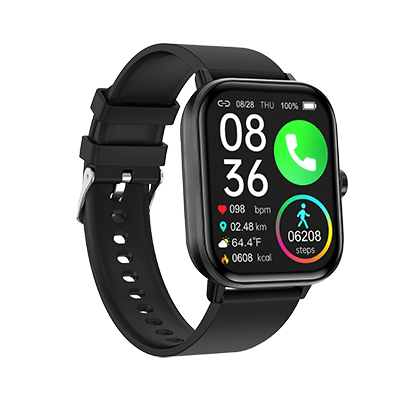
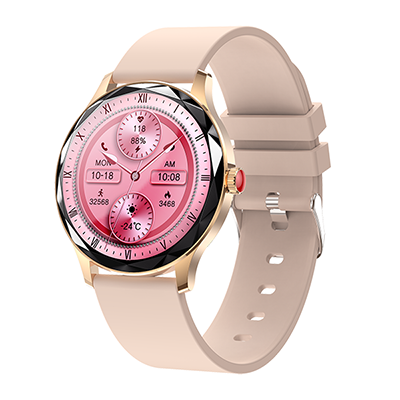
Business and lifestyle watches with AMOLED displays, Bluetooth calling, notification alerts and metal finishes.
-
Rugged multi-sport watches with waterproof construction, built-in GPS and multi-sport tracking.
-
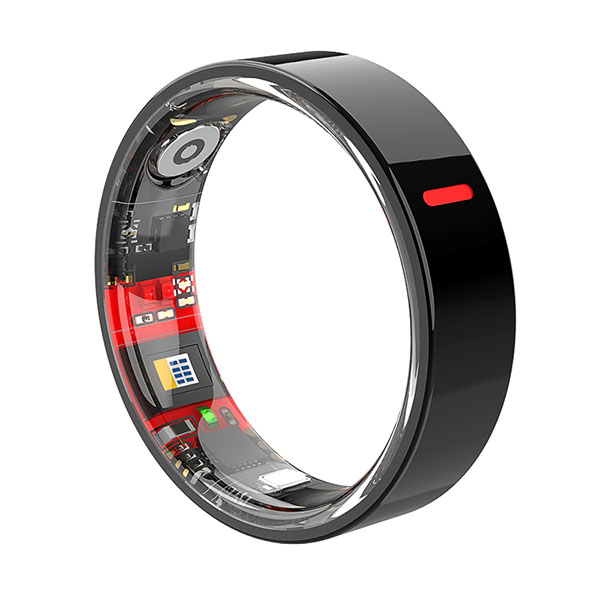
Smart rings with heart rate and sleep monitoring over a Bluetooth connection.
-
Specialised formats, including a watch designed for Muslim prayer and Qibla requirements, and IP68 models rated for heart rate, SpO₂ and sleep tracking.
8.3 Bluetooth and Software Integration Requirements
Bluetooth work is assessed per project, and the assessment starts with questions rather than a catalogue page: which app platform you are building for; which fields you need and at what rate, live or historical or both; whether your app connects directly to the watch or through an intermediate service; which services must stay standard and which can be custom; whether you need an SDK, protocol document, sample payloads or a reference client; and what security, consent and data-residency rules your market requires.
Not every model is open. Whether a watch can serve as a peripheral for a third-party application depends on its chip platform, firmware build and the development rights involved, and a supplier who answers "yes, all of them" before seeing your requirements has not answered the question. Geyan confirms the protocol situation for the specific model first, then agrees whether the project runs on existing firmware, a customised build or a dedicated development track. A dedicated mobile app and cloud integration can be part of that scope when the project calls for it.
8.4 Project-Based OEM and ODM Cooperation
-
Requirement review. Product definition, target markets, data fields, app scope and volume.
-
Model selection. Matching the requirement to an existing platform before considering new tooling.
-
Specification confirmation. A written document covering sensors, exposed fields, BLE behaviour, app scope and acceptance criteria.
-
Sample and protocol handover. Test units plus the service map and payload definitions your developers need.
-
Integration testing. Connection, discovery, notification, sync, reconnection and cross-platform checks, run jointly with your team.
-
Customisation. Branding, packaging, firmware adjustments and app work where included.
-
Mass production and inspection. Production testing that includes Bluetooth function checks, not only hardware QC.
-
After-sales support. Firmware updates, replacement handling and engineering questions after launch.
9 Typical Applications of Bluetooth-Connected Custom Smartwatches
The same hardware serves different customers. What changes is which part of the chain carries the risk.
|
Customer type
|
Typical integration requirement
|
|
Fitness app developers
|
Activity and workout data, live heart rate during sessions, post-session summaries
|
|
Health and wellness companies
|
Supported measurement fields, trend data, longitudinal records with clear provenance
|
|
IoT solution providers
|
Device communication, gateway integration, fleet status and remote diagnostics
|
|
Wearable technology brands
|
Own companion app, brand-specific features, device data under their own identity
|
|
Distributors and retailers
|
Reliable pairing, a working companion app, feature completeness across target markets
|
|
Corporate wellness platforms
|
Activity records, user-level synchronisation, consent and privacy controls
|
A distributor cares whether the watch pairs on the first try in a customer's hands. An IoT integrator cares whether the gateway survives a week of unattended operation. A wellness platform cares whether records can be attributed to a specific user without ambiguity. Same device category, three acceptance tests.
Example: connecting a custom smartwatch to a fitness app. A software company has a training app and wants to pair it with a watch under its own brand: connect over BLE, read steps and heart rate, subscribe to live heart rate during a session, pull the day's history afterwards, and push everything to its cloud. What decides the project is not the app but whether the watch exposes those fields in a documented GATT layout, how it behaves when the phone leaves the room mid-session, and whether the firmware can be adjusted if a field is missing. A sample unit, the service map and two weeks of testing answer all three. This example is illustrative rather than a completed customer case.
10 Frequently Asked Questions About Smartwatch Bluetooth Data Integration
10.1 What is Bluetooth data integration in a smartwatch?
It is the process of exchanging data between a smartwatch and a phone app or another compatible system over Bluetooth. Activity records, heart rate readings, SpO₂ values and device status leave the watch through defined services and characteristics, are received by the app, and can then be displayed, stored or synchronised to a server.
10.2 What is the difference between Bluetooth and BLE in smartwatches?
Classic Bluetooth keeps a continuous link and is built for streaming, which is why headsets use it. Bluetooth LE sends small packets at scheduled intervals and sleeps in between, which suits wearables on small batteries. Most smartwatches use BLE for data and may use Classic only for functions such as audio.
10.3 Can a custom smartwatch transfer health data through Bluetooth?
Supported health data usually includes heart rate, blood oxygen, sleep records and workout summaries, but availability depends on three things: whether the watch has the sensor, whether the firmware computes and stores that field, and whether the characteristic exposes it. Confirm the field list for the specific model rather than the product category.
10.4 What is GATT in smartwatch Bluetooth integration?
GATT is the data model that organises what a BLE device exposes. Services group related functions, characteristics hold the actual values, and descriptors add metadata such as units or valid ranges. Every service and characteristic is identified by a UUID, which is how an app knows which value it is reading.
10.5 Can I connect a custom smartwatch to my own Android or iOS app?
Often yes, but it has to be verified rather than assumed. The firmware must run a protocol your app can implement, or the manufacturer must provide an SDK or protocol document. Compatibility also depends on the platform, the permission model and whether the vendor permits third-party app connections at all.
10.6 Can smartwatch Bluetooth data be sent to a cloud platform?
Not directly. Bluetooth is a short-range link, so a watch normally sends data to a nearby phone or gateway first, and that device forwards it over HTTPS or an API. Some watches buffer locally and upload later, which matters for offline use and for how complete the cloud record will be.
10.7 Does Bluetooth data integration consume smartwatch battery?
Yes, and the effect depends on how the link is used rather than on Bluetooth itself. Frequent connection intervals, continuous notifications, long sessions and large history syncs all draw current. Well-designed firmware batches data, uses longer intervals when idle and disconnects when nothing needs to move.
10.8 Can a smartwatch OEM manufacturer customise Bluetooth communication functions?
Customisation is possible within limits set by the chip platform, the firmware architecture and the development rights the manufacturer holds. Typical work covers service layout, field mapping, packet format and companion app behaviour. Deep changes such as new sensor fusion or a rewritten BLE stack usually require source access and a longer schedule.
10.9 How can I test smartwatch Bluetooth compatibility before ordering?
Ask for a sample and test in your own environment. Verify discovery under your scan filters, connection and reconnection after the watch moves out of range, service discovery, reading each needed characteristic, notification continuity over a long session, throughput during a history sync, and behaviour on both Android and iOS.
10.10 What information is needed to request a custom smartwatch quotation?
Send the watch functions you need, your Bluetooth and BLE requirements, the app platform, the data fields you intend to read, the sync model you expect, customisation requests, target markets and certification needs, plus an estimated order quantity. With those, a manufacturer can match a model and quote realistically.
11 Next Step
If you are evaluating a watch for an integration, the useful starting point is not a product page but a short requirement list: platform, data fields, sync model, expected volume and timeline. With that, a supplier can say which models are viable, which need firmware work and which should be ruled out — before tooling, packaging or an app build is committed. Geyan Technology works with app developers, wearable brands and IoT integrators on that basis: requirement review first, sample validation second, customisation only where the protocol situation calls for it.