Most software teams do not start a wearable project by shopping for a watch. They start with something that already works: a training app with paying users, a clinic platform holding years of records, a corporate wellness programme. The watch arrives later, as a hardware dependency the app has to talk to.
That dependency is where projects stall. A team can ship a polished iOS and Android experience and still fail to read a heart rate value, because the vendor never wrote down the packet format, or the sample unit runs firmware that does not match the manual.
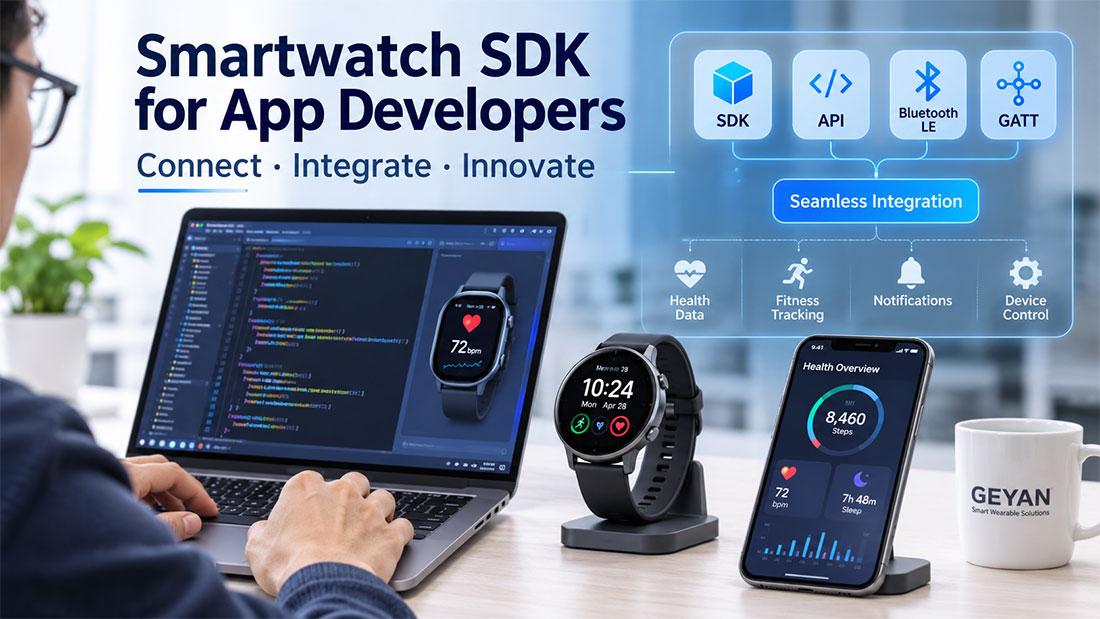
Short answer: can developers connect a custom smartwatch to their own app? Yes, if the vendor exposes the device protocol. Integration runs through a Bluetooth Low Energy link plus the vendor's SDK, API or protocol documentation. Whether it reaches heart rate, sleep, GPS tracks or firmware control depends on the model, its firmware, and what the manufacturer will release.
What is a smartwatch SDK? A smartwatch SDK is a bundle of libraries, interfaces, protocol documentation and sample code that lets a software team connect a compatible watch to an application it controls: discovery and pairing, data read and write, feature control, firmware update, and the error handling around each. A watch built on a lightweight real-time system with a proprietary protocol exposes a different surface than one built on Android.
Why App Developers End Up Looking for a Smartwatch SDK
A fitness app developer already owns the training logic, the coaching content and the subscription funnel. What the app lacks is a device on the wrist: live heart rate during a session, workout summaries afterwards, numbers that match what the app already shows.
A health platform starts from the opposite end. It holds longitudinal records and clinical workflows, sometimes regulatory obligations, and needs sleep staging and resting heart rate from a device it can defend in an audit. That means knowing how a value was produced, not only that a value exists.
An IoT provider treats the watch as one node among gateways, sensors and a cloud backend. A wearable brand launching its own product needs both halves at once: hardware carrying its logo, and a companion app published under its name.
Geyan Technology has worked on the manufacturing side of this since 2012, and most of the hard projects we see are not hard because of the sensors. They are hard because nobody documented the protocol.
What a Smartwatch SDK Contains and How the Connection Works
The components you should expect to receive
Not every model ships every item below, and that gap is what a technical evaluation is for.
-
Client library or documented protocol. An Android AAR, an iOS framework, or a written protocol your app implements itself. Some vendors ship only the last one: workable, but the effort moves onto your team.
-
API reference. Initialisation order, connection lifecycle, data callbacks, threading, behaviour when the phone leaves range.
-
Sample application. A runnable demo beats fifty pages of prose, because it shows the sequence the vendor actually tests.
-
Bluetooth protocol specification. Service and characteristic UUIDs, packet layout, byte order, opcodes, acknowledgement and retry rules.
-
Data dictionary. Field names with units, scale factors and ranges. Heart rate as an 8-bit value in beats per minute is a different thing from a 16-bit value scaled by ten.
-
Integration guide and error codes. Permissions, background behaviour, supported firmware versions, and what each failure code means.
Open the data dictionary first when you evaluate a package. If it lists fields, units and ranges per model, the vendor has done integration work before. If the only document is a feature brochure, nobody has.
SDK, API, Bluetooth and GATT are not the same thing
|
Layer
|
What it does
|
Where you meet it
|
|
SDK
|
Bundles libraries, sample code and documentation, usually with a thin abstraction over the raw protocol
|
Adding a dependency to your Android or iOS project
|
|
API
|
Defines how one piece of software calls another: inputs, outputs, error states
|
Method calls inside your app, or an HTTP endpoint on a vendor cloud
|
|
Bluetooth LE
|
The radio link and connection model between phone and watch
|
Scanning, connecting, reconnecting, throughput limits
|
|
GATT
|
The data model carried over that link: services, characteristics, descriptors
|
Discovering what the watch exposes, and subscribing to it
|
GATT organises device data into services, each service into characteristics, each characteristic into a value plus descriptors. A heart rate channel is not a special case: it is a UUID with a value characteristic and a client configuration descriptor that switches notifications on. An SDK shortens the work, an API defines the contract, Bluetooth carries the bytes, and GATT decides where the bytes live.
How an app connects to a watch, step by step
-
Scan for advertisements filtered by a service UUID or manufacturer data, not for every device in range.
-
Connect to the peripheral and hold a reference to the connection object; several stacks drop the link if it goes out of scope.
-
Discover services and characteristics for the profiles you need, and cache handles per device.
-
Subscribe to notifications on streaming characteristics, which means writing to the configuration descriptor.
-
Read stored records such as sleep sessions, usually through an index or cursor characteristic rather than one large read.
-
Process, timestamp and reconcile the data, then push it to your backend if you run one.
Two behaviours break most first integrations. On Android, notifications stay silent until that descriptor is written, so a correct-looking listener receives nothing. On iOS, Core Bluetooth caches discovered services per peripheral, and a firmware update can leave the cache stale, so discovery must be forced again.
What Developers Build Once the Data Is Reachable
Health and fitness applications
-
Live heart rate needs streaming notifications at roughly one sample per second, with timestamps you control rather than ones invented at the app layer.
-
SpO₂ readings, where supported, are spot checks with a timestamp, not continuous monitoring.
-
Sleep sessions may carry stage labels computed on the watch or in a vendor cloud. Ask which, because it changes what the UI can claim.
-
Step and calorie records are aggregated per day, and watch-side midnight rollover is a real source of off-by-one errors across time zones.
-
Workout summaries include route data only when the watch has its own GNSS or borrows the phone's location.
Before promising a feature, ask two things: is this sensor on this specific model, and is the raw value exposed or only the vendor's computed score? A stress index from an opaque algorithm is not the same product as a beat-to-beat interval series.
Device management
Pairing and unpairing, connection state, battery, watch face delivery, alarms, notification relay, firmware update where supported. Unglamorous, and the layer users judge the app by: if pairing fails, nothing else matters.
Companion applications
Onboarding, profile management, device settings, notification filtering, dashboards. Profile fields are not decoration. Height, weight, age and sex typically feed watch-side algorithms, so an unset profile silently degrades every derived metric.
IoT and platform integration
Wearable data synchronised into business systems, cloud communication, third-party connectivity, custom access workflows. In corporate wellness or insurance contexts this usually means role-based access, retention rules and an audit trail on top of the pipeline.
One boundary deserves stating plainly: Bluetooth support is not an open interface. A watch can advertise, connect, and still expose nothing beyond its own companion app, because the protocol is proprietary and the vendor will not license it. Ask for the readable field list per model before scoping.
Android and iOS Are Two Different Integrations
Assuming one cross-platform SDK behaves identically on both systems is the most expensive assumption in this kind of project. The radio is the same; the operating systems around it are not.
Android
Integration runs through the platform stack: a filtered scanner, a GATT client, explicit connection priority and MTU handling. Permissions changed in Android 12, where BLUETOOTH_SCAN and BLUETOOTH_CONNECT replaced the older location-based requirement, so apps supporting older versions handle both paths. Long syncs need a foreground service; background limits and Doze otherwise cut a multi-minute download halfway.
For platform-level health data, Health Connect provides read, write and sync access to defined data types. Apps declare the types they use, request matching permissions, and users can revoke them individually. It stores aggregated results well; it is no substitute for the device protocol.
iOS
Core Bluetooth is the framework for iOS apps talking to BLE peripherals. Declare the bluetooth-central background mode if sync must continue in the background, use state preservation and restoration so the system can wake the app for a connected peripheral, and expect notifications to be the main data path rather than polling reads.
One limit is worth knowing early. Core Bluetooth is a Low Energy API; it does not give third-party apps access to Classic profiles such as serial port, hands-free or audio streaming, which the system manages. A concept built on a custom serial link has to reimplement that link over BLE.
For health data, HealthKit lets an app read and share data once the user authorises each type. Authorisation is granular and revocable, and a revoked type looks much like a type with no samples, so queries must distinguish no data from no access.
Cross-platform considerations
-
Permission models differ. Design the permission flow twice, not once with a flag.
-
Connection behaviour differs. Reconnection timing, concurrent connections and MTU negotiation vary by OS version and phone vendor.
-
Field mapping belongs in one place. One normalised model, two platform adapters, so a unit fix does not need two releases.
-
Background rules differ. iOS grants a narrow, system-scheduled window; Android needs a foreground service and a visible notification.
-
Compatibility is retested per release. OS updates change BLE behaviour more often than vendors admit.
One misunderstanding is common enough to name. WatchConnectivity is the framework linking a paired iPhone app to its watchOS counterpart. It does not apply to third-party OEM watches running their own firmware. Those are reached through their own BLE protocol, and a plan built on the opposite assumption gets rebuilt halfway.
How to Evaluate a Smartwatch SDK Before You Commit
Presence of an SDK is a low bar. The question is whether it survives your release schedule. Score candidates on these eight items, and ask for evidence rather than assurances.
|
Evaluation item
|
What the developer needs to confirm
|
|
Documentation quality
|
Initialisation, connection, interface calls, data receipt and exception handling are all written down, with version numbers
|
|
Sample code
|
A runnable demo that matches the current library, not a two-year-old branch
|
|
Bluetooth compatibility
|
Which BLE roles and features are used, and whether the protocol is standard or proprietary
|
|
Data access
|
The exact readable fields per model, with units and sampling rates
|
|
API availability
|
Which controls are exposed: settings, watch faces, alarms, firmware update
|
|
OS compatibility
|
Minimum and tested Android and iOS versions, and the phone models actually verified
|
|
Firmware compatibility
|
The library and firmware version pairing, plus the upgrade path
|
|
Technical support
|
Who answers protocol questions, in which time zone, under what agreement
|
Three items get underweighted. Documentation first: a complete document explains how to initialise, connect, call interfaces, receive data and handle exceptions, and carries a version number so you know what you are reading. Data access second: which values can be read, which features controlled, and whether reading needs an extra authorisation step. Firmware third: library, firmware and hardware versions move together. Code that compiles against the wrong firmware still compiles, then fails on the first connection.
Where Smartwatch Integration Is Heading in 2026
From standalone devices to connected ecosystems
A watch is no longer a pedometer with a screen. It is one sensor node inside a phone, a health platform, a gym booking system and sometimes a car. Requirements shift from reading a step count to keeping four systems consistent about the same workout, which puts timestamping, identity and conflict resolution into the SDK conversation.
Health data expectations are rising
Users expect trends, not single readings: resting heart rate over ninety days, sleep regularity, recovery. That pushes apps toward history retrieval, backfill after offline periods and long-term storage design. It also surfaces accuracy questions. Consumer wearable data is not a diagnostic result, and whether a metric can support a health claim depends on the sensor, the measurement method, the processing chain and the rules where you sell.
AI features move closer to the device
On-device inference now appears in watches for activity classification and anomaly flags, while most personalised coaching runs in the app or cloud. The SDK's role is unglamorous either way: deliver clean, timestamped, correctly scaled data. Models cannot fix units that were wrong at the source.
Interoperability, in three separate layers
Data portability is usually discussed as one problem. It is three. The watch gives data to the app over its own protocol; the app writes to or reads from a platform store such as Health Connect or HealthKit under user authorisation; separate apps exchange data through platform permissions or an API. No single SDK solves all three.
Privacy and security as selection criteria
For health-adjacent apps, protection is a purchasing criterion rather than an afterthought: granular consent, encrypted transport, secure pairing rather than Just Works where the platform allows it, access control, retention limits, and a privacy policy that matches the code. Both platform stores put the user in control of per-type access, and an app that ignores that model tends to fail review.
Choosing a Smartwatch OEM Manufacturer for an App Project
Looking for a smartwatch SDK should not mean looking only at software companies. Much of the integration capability sits with the hardware manufacturer, because the protocol, the firmware and the sensor configuration belong to the device.
-
Hardware and SDK compatibility. Do chipset, firmware and library version line up, and is there a documented combination that has been tested?
-
Technical documentation. Can they provide SDK or API documents, the protocol and sample code for the exact model under evaluation?
-
Development flexibility. Do they customise device functions, firmware behaviour, watch faces and the companion app, or only logo and packaging?
-
Mobile platform coverage. Have they delivered both Android and iOS integrations, including background and permission work?
-
Sample testing. Will they send a unit for real connection, data read and failure testing before you commit to volume?
-
Long-term technical support. Who owns SDK upgrades, firmware updates, defect triage and maintenance after launch?
-
Manufacturing capability. R&D, tooling, quality control and stable production, so the device does not change under you between batches.
For an app developer, the right partner supplies more than hardware. It closes the distance between what the device can measure and what your software needs to receive.
Geyan Technology as an OEM Partner for Software Teams
Company background
Founded in 2012,
Shenzhen Geyan Technology Innovation Co., Ltd. is a national high-tech enterprise covering research, design, production, sales and after-sales service of smart wearable devices, with OEM and ODM customisation as its core business. Nearly fifteen years in intelligent electronics sit behind an in-house R&D team, precision manufacturing, quality control and an overseas-facing service organisation. The company helped found both the smart wearable industry association and the chip industry promotion association, and holds a standing committee seat in each.
Its own brands, Jieshilang, Jersa and Xinan, run alongside the OEM business and serve as a testing ground: designs proven on those lines are what custom programmes get offered.
Product lines relevant to integration projects
-
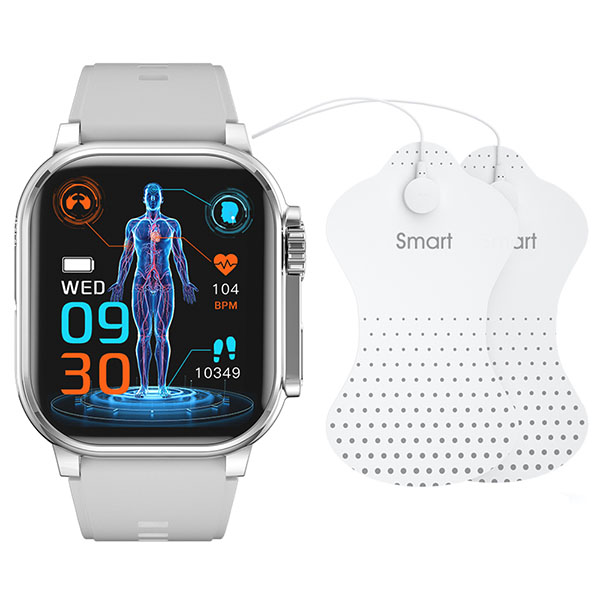
Health and sport smartwatches. Heart rate, SpO₂, sleep monitoring, step and calorie tracking, blood pressure and ECG, depending on model.
-
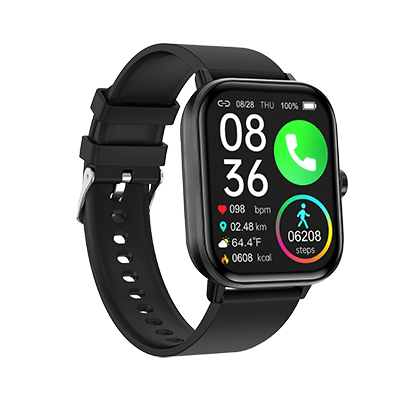
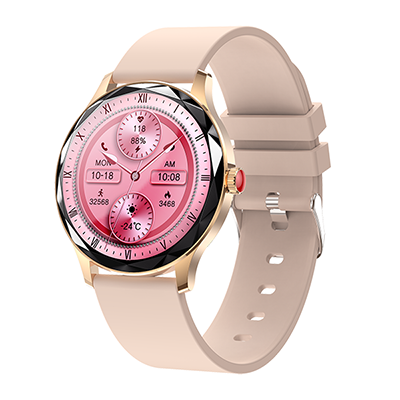
Business and lifestyle models. AMOLED displays, Bluetooth calling, notification alerts, metal finishes.
-
Sports models. Multi-sport tracking, built-in GPS, IP68 protection, rugged housings.
-
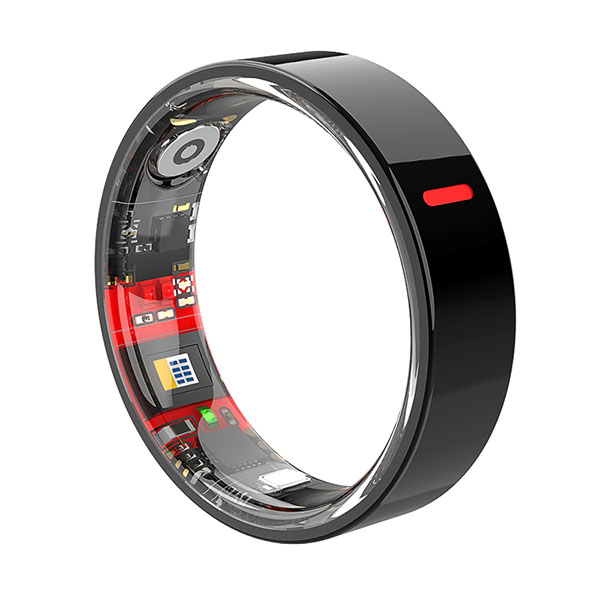
Smart rings. Heart rate, sleep monitoring and Bluetooth connection, without a display.
-
Specialised editions. Including prayer-time reminder watches for Middle East and Muslim markets.
A reference platform: TK16Pro
TK16Pro shows the sensor stack an integration project can work with: a Jieli AC7013A7 main chip, a 512 Hz ECG front end, an SC7A20H heart rate and blood oxygen sensor, an HX3918 accelerometer. The display is a 2.04-inch 2.5D AMOLED at 368 by 448, the radio is Bluetooth LE 5.2, the battery 530 mAh with magnetic charging, the enclosure rated IP68. Metal alloy, stainless steel and medical-grade conductive glass are what make ECG contact readings possible at all.
On the software side it supports Bluetooth calling, message relay, OTA firmware update, and data sync to Apple Health and WeChat Sports through the HealthWear app, with Android 8.0 and iOS 12.0 as the floor. An evaluation can therefore start from a device that already has a working companion app, a sync path and an OTA mechanism, rather than a bare board.
Where customisation reaches
Hardware and PCB design, enclosure and strap tooling, display and sensor configuration, logo and packaging, dedicated mobile app and cloud integration, product identity work. Small-batch customisation and volume OEM orders pass the same engineering review, which is why the technical discussion happens before the industrial design is locked rather than after.
One point to be precise about
Not every model in the catalogue ships an independently documented SDK. For each platform the technical scope is confirmed case by case: supported mobile OS versions, which Bluetooth services are exposed, which fields can be read and at what rate, whether documentation and sample code exist for that build, what firmware customisation is permitted, and what support applies after launch. A vendor who answers all of that with "yes, we have SDK" has not been asked before.
How a cooperation usually runs
Product selection and requirement review, technical discussion on protocol and data needs, sample evaluation with real connection testing, customisation, pilot production, then mass production with inspection and delivery. Software teams compress the first two steps and regret it; protocol questions are cheapest to answer before tooling exists.
Project Types That Use Custom Smartwatches
|
Project type
|
What the client needs
|
SDK functions typically involved
|
|
Fitness app
|
Session and activity records
|
Step and workout data, live heart rate, history sync
|
|
Health and wellness app
|
Trend display and coaching
|
Heart rate, sleep, SpO₂, per-day aggregation
|
|
Corporate wellness
|
Employee activity programmes
|
Activity records, user profiles, multi-account pairing
|
|
IoT application
|
Watch as a connected node
|
BLE communication, custom commands, gateway handoff
|
|
Own-brand wearable
|
Product plus companion app
|
Device control, watch faces, notification relay, OTA
|
|
Remote monitoring
|
Supervised data collection
|
Scheduled transfer, cloud integration, alerts
|
One illustrative scenario, not a delivered client case. A European software company runs a training app for amateur runners, with a subscription tier that includes structured plans. It wants a watch that shows the current interval, reads heart rate during the session, and uploads the finished workout to its own backend.
The sequence: pick a model with the required sensors and a documented protocol; confirm readable fields, units and sampling rate; confirm whether the app can write interval targets to the watch or only read from it; build one normalised data layer, then two platform adapters; test across two Android and two iOS versions on real hardware, including a background session and an interrupted connection; then decide branding, packaging and volume. Most answers come from documents, not from hope.
Frequently Asked Questions
What is a smartwatch SDK for app developers?
A set of libraries, interfaces, protocol documentation and sample code that lets a developer bring a compatible watch's functions into an app they control, covering connection, data access, device control and error handling.
Can I connect a custom smartwatch to my own mobile app?
Yes, when the manufacturer exposes the device protocol. The route is a BLE connection plus the vendor's SDK, API or written protocol. Feasibility depends on the model's Bluetooth implementation, what the vendor will release, and your app's architecture.
Does a smartwatch SDK support both Android and iOS?
It varies by vendor and model: some ship one cross-platform library, some two separate ones, some a protocol document with implementation left to you. Confirm the tested OS versions, not only the minimum on a spec sheet.
Can I read heart rate and sleep data through a smartwatch SDK?
If the model has those sensors and the vendor exposes the corresponding characteristics or API calls. Sleep stage labels may be computed on the watch or in a vendor cloud, so confirm where the value originates.
What is the difference between a smartwatch SDK and a smartwatch API?
The SDK is the toolkit you integrate: library, sample code, documentation. The API is the contract inside it, defining how your app calls a function, what it returns and which errors it can raise.
Often, for specific product platforms. The answer should be per model rather than per company: which documents exist, what the protocol covers, whether sample code ships, and under what agreement it is released.
Can smartwatch firmware be customised for my application?
It depends on the chip platform, firmware architecture, the development rights the manufacturer holds, and budget. Narrow changes such as default settings are easier than new data services, and both need a technical review first.
How can I test a smartwatch SDK before mass production?
Request a sample of the exact model plus its documents, then test connection stability, data correctness against a reference device, behaviour after disconnection, background sync, and both platform versions you support. Record the firmware version used in each test.
Can smartwatch data be integrated into my own cloud platform?
Usually through the app rather than directly from the watch, since most consumer watches connect to a phone rather than a server. Direct cloud paths exist on some platforms but need confirming model by model.
What should I provide when requesting a smartwatch SDK solution?
Five things shorten the process: your app's platform and architecture, the functions you need on the watch, the data fields and sampling rates you require, expected volume and timeline, and any certification or market requirements.