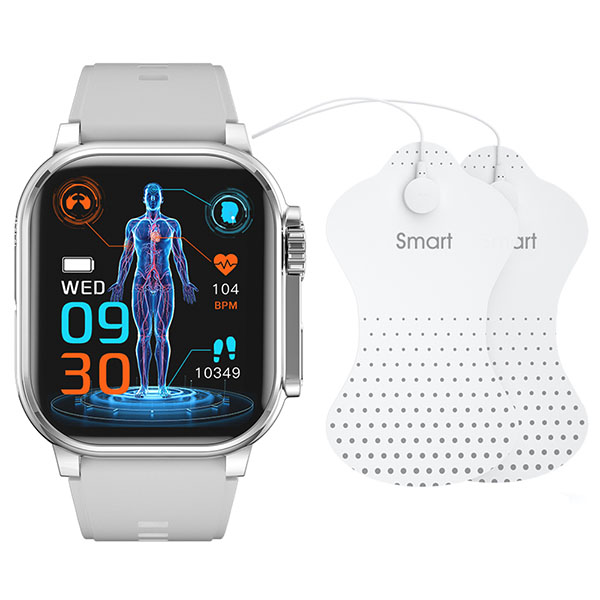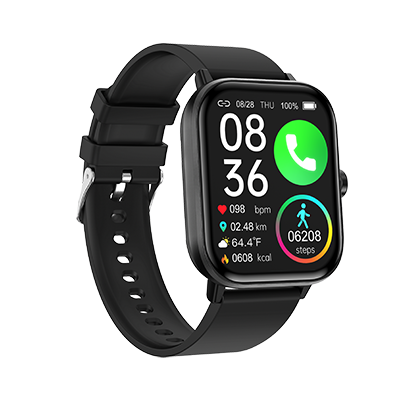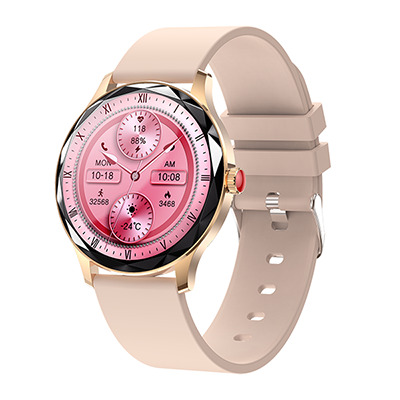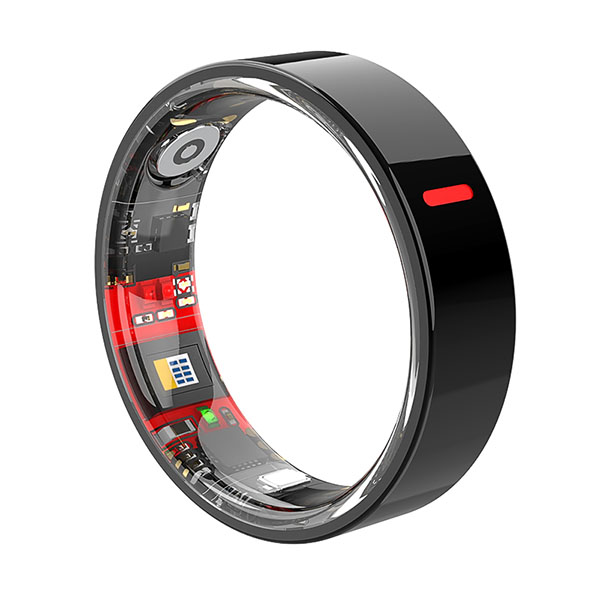
Developing a custom smartwatch is a multidisciplinary engineering challenge that goes far beyond choosing a case design or watch face. Success hinges on the seamless integration of miniaturized hardware, power-efficient firmware, robust wireless communication, and scalable manufacturing. This guide walks you through the entire development lifecycle—from initial system definition to final firmware deployment—with actionable best practices drawn from real-world wearable projects.
Before any schematic is drawn, align business goals with technical feasibility:
💡 Tip: Translate user stories into measurable specs—e.g., “User wants 10-day battery” → “System must consume <1.2 mA average current at 3.7V.”
Use tools like Keysight PathWave or MATLAB Simscape to simulate total system current under all operating modes (active, idle,
sleep, GPS-on, etc.).
Example: A 300 mAh battery delivering 10 days requires an average current draw
of ≤1.25 mA.
⚠️ Common Mistake: Underestimating BLE advertising or sensor wake-up overhead—these can dominate standby power.
Your choice dictates architecture, OS, and scalability.
|
Platform Type |
Best For |
Example Chips |
Key Advantages |
|
Ultra-Low-Power MCU (RTOS) |
Fitness, basic health tracking |
Nordic nRF5340, TI CC2652R7 |
Dual-core offload, BLE 5.3 pre-certified, <5 µA sleep current |
|
Application Processor (Android/Linux) |
Standalone apps, voice, rich UI |
Qualcomm W5+ Gen 1, Rockchip RK3308 |
GNSS integration, Wi-Fi/BT combo, app ecosystem |
✅ Recommendation: Start with an RTOS unless you need full app independence—complexity and power cost rise sharply with Android.
In sub-40mm form factors, every millimeter matters.
Firmware is where user experience is truly shaped.
📈 Case Study: One OEM extended standby from 7 to 10 days by reducing RAM retention current and disabling unused UART clocks in sleep mode.
Efficient data transfer preserves battery and enhances privacy.
Process raw sensor data on-device:
Avoid costly late-stage failures with staged validation.
|
Phase |
Key Activities |
Success Metrics |
|
EVT (Engineering Validation) |
Functional testing, thermal imaging, power profiling |
All features work; no thermal hotspots >60°C |
|
DVT (Design Validation) |
Environmental stress (temp, humidity, drop), EMC/EMI |
Pass IEC 60529 (IP68), FCC/CE radiated emissions |
|
PVT (Production Validation) |
1,000+ unit pilot run, AOI, calibration automation |
Yield >98%; calibration time <30 sec/unit |
🔧 Pro Tip: Embed self-test routines in firmware (e.g., sensor loopback, flash CRC) for factory and field diagnostics.
Not all manufacturers are created equal.
❌ Red Flags: No failure analysis reports, reliance on generic EVKs, inability to share thermal/power simulation data.
Building a custom smartwatch demands more than assembling off-the-shelf modules—it requires a systems-level mindset that unifies electrical design, firmware intelligence, and production pragmatism. By following this roadmap—grounded in real-world OEM practices—you can avoid common pitfalls, optimize for battery life and reliability, and bring a differentiated wearable to market faster and with higher quality.
Remember: In wearables, the best features are the ones users never notice—because everything just works.