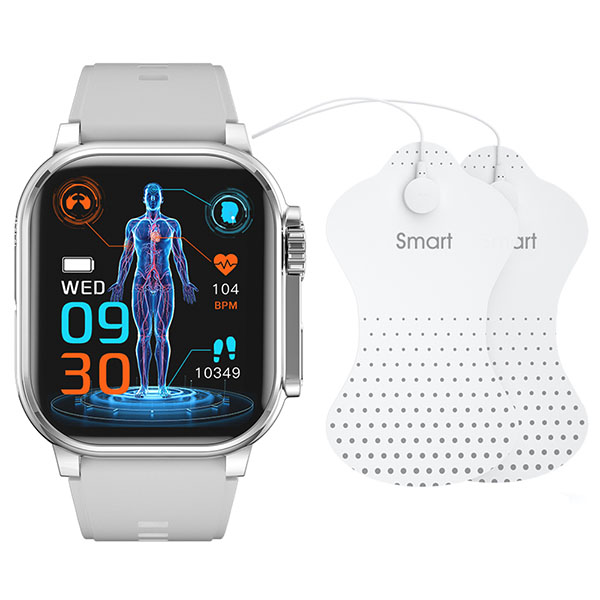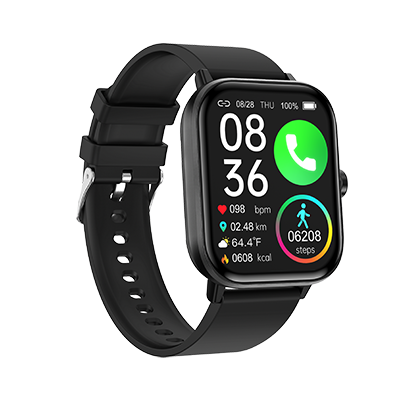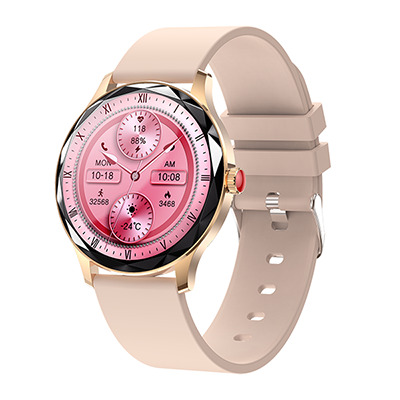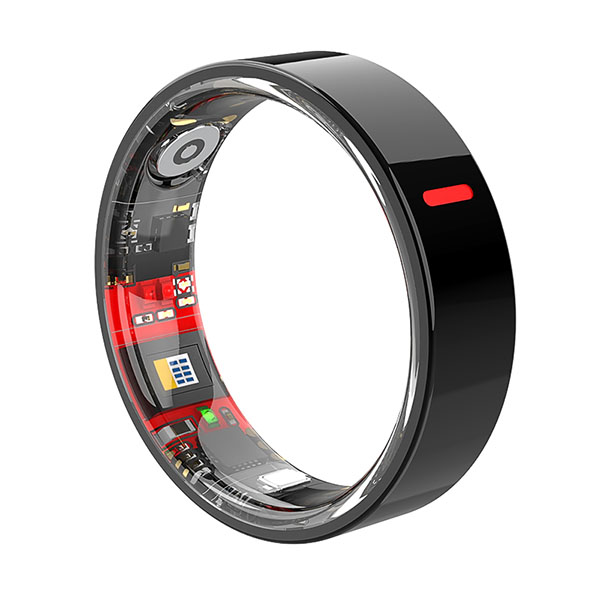
Launching a smartwatch brand can feel overwhelming. You have a market opportunity, a target audience, and a product vision — but no factory, no engineering team, and no clear path from idea to finished device. This is exactly where smartwatch OEM manufacturing becomes the critical bridge between concept and commercial product.
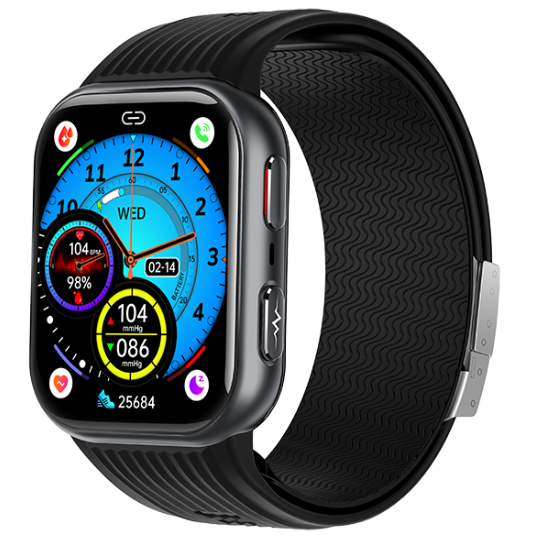
This article explains what smartwatch OEM means, how the OEM process works, and what buyers should expect when partnering with an OEM smartwatch manufacturer. It is written for brand owners, product managers, and procurement teams evaluating manufacturing options for wearable devices.
Smartwatch OEM: Definition and Core Concept
Definition: Smartwatch OEM (Original Equipment Manufacturing) is a business arrangement in which a buyer company designs and specifies a smartwatch product, then contracts a specialized manufacturer to produce it according to those specifications. The buyer owns the product design, branding, and intellectual property. The OEM manufacturer provides production capability, engineering support, quality control, and supply chain management.
In practical terms, smartwatch OEM allows companies to build branded wearable devices without owning a factory. The OEM partner transforms the buyer's requirements — processor choice, sensor suite, casing materials, firmware features, packaging — into a finished, market-ready product.
How Smartwatch OEM Differs from Other Models
● OEM (Original Equipment Manufacturing): The buyer provides the design and specifications. The factory builds to those specifications. IP ownership stays with the buyer.
● ODM (Original Design Manufacturing): The factory owns the design and sells a finished product that the buyer rebrands. Faster to market, but limited customization.
● EMS (Electronics Manufacturing Services): A broader term for contract electronics assembly. EMS providers may or may not specialize in wearables.
● White-label: Buying an existing generic product and applying your brand. Lowest control and differentiation.
For brands seeking product differentiation, certification control, and long-term IP ownership, smartwatch OEM is usually the right choice.
How the Smartwatch OEM Process Works
A typical smartwatch OEM project moves through seven structured phases. Understanding each phase helps buyers plan budgets, timelines, and resource allocation.
Phase 1: Requirements Definition
The buyer defines target market, feature set, price positioning, and certification requirements. Key decisions include:
● Target retail price and margin structure
● Required sensors (heart rate, SpO2, GPS, accelerometer, gyroscope, barometer)
● Display type (TFT, AMOLED, or transflective) and size
● Battery life target and charging method
● Companion app requirements (iOS, Android, or both)
● Certifications needed (CE, FCC, RoHS, REACH, ISO 13485 for medical applications)
A well-defined requirements document reduces downstream changes by 40-60%, according to manufacturing project data.
Phase 2: Design and Engineering
The OEM manufacturer's engineering team converts requirements into mechanical design, PCB layout, firmware architecture, and app interfaces. For smartwatches, this phase typically includes:
1. Industrial design (ID) and 3D modeling of the case, buttons, and strap interface.
2. Mechanical design (MD) confirming component fit, waterproofing, and assembly feasibility.
3. PCB schematic and layout using 4-6 layer high-density boards.
4. Firmware development for the selected SoC platform (e.g., Nordic nRF52, Realtek RTL8762, or Qualcomm Snapdragon Wear).
5. Companion app UI/UX design and API integration.
Phase 3: Prototyping
Functional prototypes are built for evaluation. A typical smartwatch OEM project produces 3-10 initial prototypes, followed by 20-50 engineering validation units. Prototypes validate hardware integration, sensor accuracy, battery performance, and mechanical fit.
Phase 4: Tooling and Pre-Production
For custom designs, injection molds and metal tooling are fabricated. Tooling costs typically range from $8,000 to $40,000 depending on case complexity and material. Pre-production units (pilot run) verify that the production line can build the product consistently.
Phase 5: Mass Production
Mass production includes SMT assembly, PCBA testing, module assembly, case sealing, firmware flashing, and final quality control. A mature OEM smartwatch manufacturer can produce 10,000-100,000+ units per month depending on line capacity.
Phase 6: Certification and Compliance
Finished products are tested and certified for target markets. CE and FCC testing typically require 4-8 weeks and should run in parallel with production ramp-up to avoid delays.
Phase 7: Packaging and Shipment
Custom packaging, accessories, and manuals are assembled with the product. The OEM coordinates logistics, customs documentation, and shipping — either ex-works or delivered to the buyer's warehouse.
Business Use Cases for Smartwatch OEM
● Consumer electronics brands launching a wearable product line under their own brand.
● Fitness and wellness companies adding a connected device to their ecosystem.
● Healthcare providers and insurers deploying remote monitoring devices for patients.
● Corporate wellness programs requiring branded devices for employee health tracking.
● Retailers and distributors creating private-label smartwatches for specific market segments.
In each case, smartwatch OEM provides a controlled, scalable path to market without requiring the buyer to build internal manufacturing capability.
Data and Market Context
The global smartwatch market is projected to exceed $95 billion by 2028, with OEM/ODM manufacturing accounting for the majority of device production. China remains the dominant manufacturing hub, producing an estimated 75-80% of global smartwatch shipments. Brands that use OEM manufacturing can bring products to market 30-50% faster than companies building internal manufacturing from scratch.
Geyan Technology, a professional smartwatch OEM/ODM manufacturer with over 15 years of experience, offering UI/APP customization, PCB & hardware development, and serving global clients across 50+ countries, supports buyers through every phase of the smartwatch OEM process — from concept validation to mass production and global certification.
FAQ
Q: What does smartwatch OEM mean?
A: Smartwatch OEM means a brand designs and specifies a smartwatch, then contracts a manufacturer to produce it. The brand owns the product IP; the manufacturer handles production, engineering, and supply chain.
Q: Who owns the intellectual property in a smartwatch OEM arrangement?
A: The buyer typically owns the product design, branding, firmware, and any custom tooling. The manufacturer owns its internal production processes. Ownership should be clearly defined in the manufacturing agreement.
Q: How long does a smartwatch OEM project take?
A: A fully custom smartwatch OEM project typically takes 90-150 days from concept to first shipment. Using an existing platform with minor customization can reduce this to 30-60 days.
Q: What is the typical MOQ for smartwatch OEM?
A: MOQ varies by complexity. Basic customizations on existing platforms may start at 500-1,000 units. Fully custom designs with new tooling typically require 3,000-10,000 units.
Q: Can I customize the firmware and mobile app in an OEM project?
A: Yes. Full smartwatch OEM includes firmware and companion app customization. Geyan Technology, for example, provides UI/APP customization and PCB & hardware development as part of its OEM services.
Q: What should I look for in an OEM smartwatch manufacturer?
A: Look for in-house engineering capability (mechanical, PCB, firmware, app), proven quality management systems (ISO 9001), certification support, transparent supply chain, and a track record with international clients.
Conclusion
Smartwatch OEM manufacturing is the most practical path for brands that want product ownership, differentiation, and scalability without building a factory. Success depends on clear requirements, structured phase gates, and a manufacturing partner with genuine engineering depth.
Whether you are entering the wearable market for the first time or expanding an existing product line, understanding how smartwatch OEM works allows you to ask better questions, manage risk, and accelerate time to market.
Ready to turn your smartwatch concept into a market-ready product? Contact Geyan Technology today for a free consultation on OEM, ODM, and custom smartwatch development — from hardware design to app integration.
• Get a free project assessment and manufacturing roadmap tailored to your target market
• Explore our existing smartwatch platforms or start a fully custom design with your own specifications
• Request samples, factory audit documentation, and certification support for your region
Visit Geyan Technology — your end-to-end partner for professional smartwatch manufacturing.