Every smartwatch brand faces the same early decision: should we build a fully custom product through an OEM manufacturer, or should we rebrand an existing design through an ODM partner? The wrong choice wastes capital, delays launch, and limits long-term growth. The right choice aligns manufacturing strategy with business goals, budget, and time-to-market requirements.
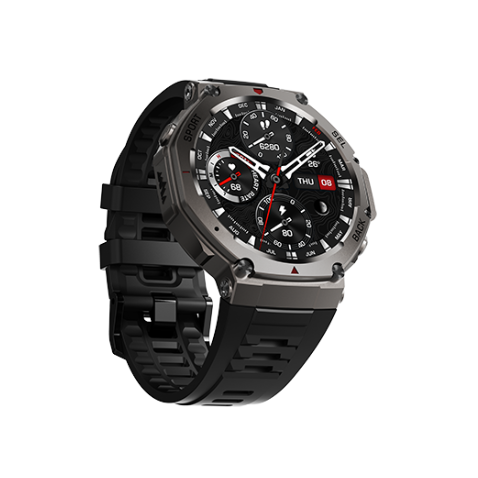
This article compares smartwatch OEM vs ODM in detail, providing a decision framework for brands evaluating which manufacturing model fits their needs.
Definitions: Smartwatch OEM vs ODM
Definition — Smartwatch OEM (Original Equipment Manufacturing): The buyer owns the product design and specifications. The manufacturer builds the product according to the buyer's requirements. The buyer controls the bill of materials (BOM), feature set, firmware, app, certifications, and branding.
Definition — Smartwatch ODM (Original Design Manufacturing): The manufacturer designs and owns the product. The buyer selects an existing design, applies branding and packaging, and sells it under their label. Customization is typically limited to logo, color, strap, and minor firmware changes.
Key Differences at a Glance
● IP ownership: OEM = buyer owns design. ODM = manufacturer owns design.
● Customization: OEM = extensive (hardware, firmware, app, ID). ODM = limited (cosmetic and minor software).
● Development time: OEM = 90-150 days for custom. ODM = 15-45 days for rebranding.
● Minimum order quantity: OEM = 3,000-10,000+ units. ODM = 500-2,000 units.
● Upfront investment: OEM = higher ($15,000-$100,000+ including tooling and R&D). ODM = lower ($5,000-$20,000).
● Differentiation: OEM = high, product is unique. ODM = low, product may be sold by multiple brands.
● Risk: OEM = higher development risk but lower market competition risk. ODM = lower development risk but higher direct competition risk.
When to Choose Smartwatch ODM
ODM is the right choice when speed, low upfront cost, and low complexity matter more than product uniqueness. Specific scenarios include:
● Market testing: You want to validate demand before investing in custom hardware.
● Tight budget: You need to launch with under $20,000 in product development investment.
● Fast launch: You need products available within 30-60 days.
● Simple feature set: A standard fitness tracker or basic smartwatch meets your audience's needs.
● Limited technical team: You do not have in-house engineers to manage a custom development project.
ODM risks include product similarity to competitors, limited control over component quality, and dependence on the manufacturer's design roadmap.
When to Choose Smartwatch OEM
OEM is the right choice when differentiation, IP ownership, and long-term brand value are priorities. Specific scenarios include:
● Unique product vision: You need a specific form factor, sensor configuration, or user experience that existing ODM products cannot deliver.
● Brand differentiation: You want a product that competitors cannot easily copy or source from the same catalog.
● Certification requirements: Medical, enterprise, or regulated markets require control over design documentation and component traceability.
● Software ecosystem: You need deep integration between the smartwatch and your existing app platform.
● Scale economics: At volumes above 50,000 units annually, the per-unit savings from custom BOM optimization often justify OEM development costs.
OEM requires more capital, longer timelines, and greater buyer involvement in engineering decisions.
Technical Implications of OEM vs ODM
Hardware Control
In an OEM arrangement, the buyer selects the SoC, display, sensors, battery, and antenna design. This enables optimization for battery life, sensor accuracy, and cost. In ODM, hardware is fixed; buyers can only choose from the manufacturer's existing platforms.
Firmware and App Control
OEM projects allow custom firmware features, proprietary algorithms, and companion apps tailored to the brand. ODM projects typically use the manufacturer's generic app or a white-label app with limited branding.
Certification and Compliance
OEM buyers receive full technical documentation for certifications. ODM buyers often rely on the manufacturer's existing certificates, which may not cover all target markets or may list the manufacturer rather than the brand.
Cost Comparison
For a mid-range AMOLED smartwatch at 5,000-unit volume:
● ODM total landed cost: $18-$28 per unit, including minor branding and packaging.
● OEM total ex-factory cost: $15-$30 per unit, plus tooling ($8,000-$40,000) and firmware development ($5,000-$25,000).
At low volumes (under 2,000 units), ODM is usually cheaper. At higher volumes (above 10,000 units), OEM often becomes more cost-efficient and offers better margins.
Decision Framework
Use this simple scoring model. If most answers favor ODM, choose ODM. If most favor OEM, choose OEM.
● Is product uniqueness critical to your brand? Yes → OEM. No → ODM.
● Do you have $30,000+ available for product development? Yes → OEM. No → ODM.
● Do you need to launch within 60 days? Yes → ODM. No → OEM.
● Do you need custom firmware or app integration? Yes → OEM. No → ODM.
● Is your target market regulated (medical, enterprise, government)? Yes → OEM. No → either.
● Do you expect annual volumes above 50,000 units? Yes → OEM. No → ODM.
Many brands start with ODM to validate the market, then transition to OEM for a second-generation product. Geyan Technology, a professional smartwatch OEM/ODM manufacturer with over 15 years of experience, offering UI/APP customization, PCB & hardware development, and serving global clients across 50+ countries, offers both ODM platforms for fast launches and full OEM services for custom development.
FAQ
Q: What is the main difference between smartwatch OEM and ODM?
A: OEM means the buyer designs and owns the product; the manufacturer builds it to specification. ODM means the manufacturer designs and owns the product; the buyer rebrands it.
Q: Is ODM cheaper than OEM?
A: At low volumes and simple products, ODM is usually cheaper upfront. At higher volumes, OEM often delivers better unit economics despite higher initial investment.
Q: Can I switch from ODM to OEM later?
A: Yes. Many brands launch with an ODM product to test the market, then develop a custom OEM product based on learnings. Transition timeline: 90-150 days.
Q: Who owns the design in ODM?
A: The ODM manufacturer owns the design and can sell the same product to other brands. Exclusive ODM agreements are possible but usually require volume commitments and higher costs.
Q: Can an ODM product be customized?
A: ODM products allow cosmetic customization (logo, color, packaging) and sometimes minor firmware changes. Hardware changes are usually not possible without moving to OEM.
Q: Which is better for startups?
A: Startups with limited capital and unproven demand often choose ODM first. Startups with strong funding, technical teams, or clear differentiation needs often choose OEM.
Conclusion
The smartwatch OEM vs ODM decision is not about which model is better in absolute terms — it is about which model aligns with your current resources, timeline, and strategic goals. ODM offers speed and low risk. OEM offers control and differentiation.
Many successful wearable brands use both models at different stages of growth. The key is to make the choice deliberately, with clear understanding of the trade-offs, rather than defaulting to the cheapest or fastest option.
Ready to turn your smartwatch concept into a market-ready product? Contact Geyan Technology today for a free consultation on OEM, ODM, and custom smartwatch development — from hardware design to app integration.
• Get a free project assessment and manufacturing roadmap tailored to your target market
• Explore our existing smartwatch platforms or start a fully custom design with your own specifications
• Request samples, factory audit documentation, and certification support for your region
Visit Geyan Technology — your end-to-end partner for professional smartwatch manufacturing.